
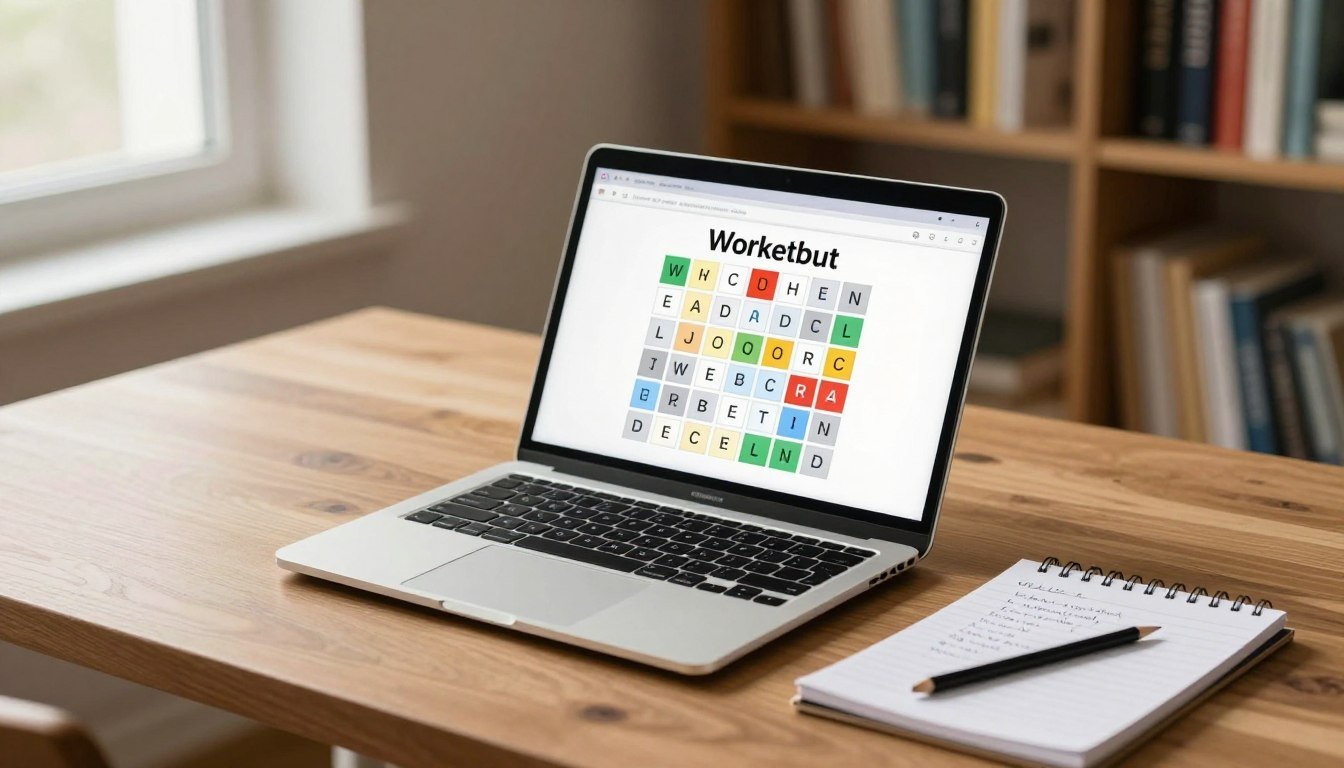
How Wordle Trains Your Brain Without You Realizing 2026 ? Did you know over 2 million people play Wordle every day? They’re sharpening their minds without even realizing it. This simple game has become a global hit, loved for its easy gameplay and brain challenge.
Wordle is more than just fun. It’s a brain game that boosts your vocabulary and thinking skills. It’s a great way to train your brain without feeling like you’re doing homework.
We’ll look at what makes Wordle a great vocabulary game. We’ll see how it helps keep our minds sharp and healthy.
Key Takeaways
- Wordle enhances cognitive skills through its word-guessing mechanism.
- It improves vocabulary by introducing new words daily.
- The game’s simplicity makes it accessible to a wide range of players.
- Wordle subtly trains the brain without feeling like a chore.
- Its daily challenge keeps the mind engaged and active.
The Wordle Phenomenon: More Than Just a Game
Wordle has become a big deal, not just a simple game. It’s known for its daily puzzles and easy rules. So, what makes Wordle stand out from other word games?
What Makes Wordle Different from Other Word Games
Several things make Wordle unique. Its simplicity is a big reason why it’s loved by many. The daily puzzle format keeps players coming back for more. Plus, sharing results on social media without giving away answers helps build a community.
- Simple and intuitive gameplay
- Daily puzzles that encourage regular play
- Social sharing features that promote community engagement
The Psychology Behind Its Viral Success
Wordle’s success comes from how it engages players. It creates a healthy dose of competition and curiosity. This motivates players to solve the puzzle every day. When they do, it feels rewarding, releasing happy chemicals in the brain.
How Wordle Trains Your Cognitive Functions Daily
Wordle is more than a game; it’s a daily workout for our brains. By playing regularly, we see big improvements in our thinking skills.
Vocabulary Expansion and Retrieval
Playing Wordle boosts our vocabulary. We learn new words and get better at remembering them. This strengthens our memory for words.
Building Word Recognition Skills
Wordle also sharpens our word recognition skills. We see many word patterns, making it easier to spot words fast. This skill helps in reading and talking better.
Activating Dormant Vocabulary
Wordle also wakes up words we don’t use often. It makes us remember and use these words more. This is called activating dormant vocabulary.
Pattern Recognition Development
Wordle improves our pattern recognition skills. We learn to spot letter patterns to solve words. This skill is useful in many areas of life.
Here’s a table showing how starting words affect Wordle outcomes:
| Starting Word | Number of Possible Solutions | Average Attempts to Solve |
|---|---|---|
| House | 15 | 4.2 |
| Stamp | 20 | 4.5 |
| Cloud | 12 | 4.0 |
Working Memory Enhancement
Wordle also boosts our working memory. We remember letters and their positions. This strengthens our ability to hold and use information in our minds.
As we play more, we see our skills get better. We can track our progress with Wordle stats. This motivates us to keep practicing and shows us how far we’ve come.
The Science Behind Word Games and Brain Health
Recent studies have shown that daily word puzzles can boost brain health. Activities like Wordle improve our brain functions. This can lead to better neurological health.
Neurological Benefits of Daily Word Puzzles
Daily word puzzles have many neurological benefits. They enhance our cognitive flexibility and problem-solving skills. Regular brain challenges help build cognitive reserve.
Research on Puzzle Solving and Cognitive Maintenance
Research shows that puzzle solving helps maintain cognitive health. People who solve puzzles often face less cognitive decline.
Short-term Memory Improvements
Word games like Wordle improve short-term memory. These games require remembering words and patterns.
Long-term Cognitive Protection
Also, puzzle solving offers long-term cognitive protection. It may delay age-related cognitive disorders.
| Cognitive Benefit | Description |
|---|---|
| Short-term Memory Improvement | Enhanced ability to recall information over short periods. |
| Long-term Cognitive Protection | Potential delay in the onset of age-related cognitive decline. |
| Cognitive Flexibility | Improved ability to switch between different mental tasks. |
Step-by-Step Guide: How to Play Wordle Strategically
Mastering Wordle is more than just guessing. We’ll show you how to play it well with a step-by-step guide.
Step 1: Selecting Optimal Starting Words
Picking the right starting word is key. Look for words with lots of vowels and common consonants.
Vowel-Rich Options
- Words like “house” and “arise” are great starts because they have many vowels.
- These words help you figure out if the target word has vowels.
Common Consonant Combinations
- Words with common pairs like “th” or “sh” are good choices.
- Try words like “theme” and “shame” for common consonant combos.
Step 2: Using Color Feedback Effectively
The color feedback after each guess is very helpful. Green means a letter is in the right spot, yellow means it’s in the word but not right, and gray means it’s not in the word.
- Use green letters to confirm their spots.
- Try different spots for yellow letters.
- Don’t use gray letters again.

Step 3: Adapting Your Strategy Based on Results
Change your strategy based on the feedback. If you get many green or yellow letters, keep going in that direction. If you get mostly gray, try something new.
Step 4: Maintaining a Consistent Practice Schedule
Playing regularly is important for getting better at Wordle. Set aside time each day to play.
- Playing often helps you learn word patterns and letter frequencies.
- It also makes you better at thinking quickly.
By following these steps and playing regularly, you can really improve at Wordle.
How Wordle Trains Strategic Thinking Abilities
Wordle is more than a simple word game. It’s a complex exercise in strategic thinking. This skill involves making smart decisions with the data we have. Wordle is the perfect place to improve this skill.
Probability Assessment and Decision Making
In Wordle, we constantly assess probabilities and make decisions. After guessing a word, the color-coded feedback helps us adjust our next guess. This process requires probability assessment and decision making.
We weigh the likelihood of certain letters appearing in the correct word. This helps us narrow down our options.
Elimination Strategies for Faster Solving
Wordle teaches us to use elimination strategies. By eliminating letters or letter combinations that don’t fit, we can find the correct answer faster. This skill is crucial for solving puzzles efficiently.
Hard Mode Benefits for Enhanced Learning
Playing Wordle in Hard Mode boosts cognitive benefits. In Hard Mode, every hint must be used in subsequent guesses. This makes the game more challenging and mentally stimulating.
Challenging Your Brain with Constraints
The constraints of Hard Mode require creative thinking and strategy. This challenges our brains and promotes cognitive flexibility.
Building Mental Flexibility
Adapting to Hard Mode’s constraints helps us develop mental flexibility. We learn to adjust our thinking and strategies based on new information and challenges.
In conclusion, Wordle is more than a game. It’s a tool for developing strategic thinking skills. By using these skills daily, we can improve our cognitive abilities and mental flexibility.
Tracking Your Cognitive Progress Through Wordle Stats
As we keep playing Wordle, tracking our progress is key. Wordle statistics let us see how our minds are growing. They help us spot where we can get better.
Understanding Your Wordle Statistics
Wordle stats give us a peek into how we solve puzzles and think. Looking at our daily streaks and guesses helps us understand our brain better.

Setting Personal Improvement Goals
Setting goals is vital for getting smarter. We can aim for two main things:
Daily Streak Maintenance
Keeping a daily streak means we practice every day. It pushes us to think better and stay excited about playing.
Reducing Average Guesses
Another goal is to guess words faster. This means we need to get better at solving puzzles and learn new words.
Using Wordle as a Daily Brain Training Routine
Adding Wordle to our daily routine makes our brains stronger. Regular play boosts our thinking skills and sharpens our minds.
By using Wordle stats and setting goals, we can make our daily Wordle habit even more beneficial for our brains.
Conclusion: Making the Most of Your Daily Wordle Habit
Keeping up with a daily Wordle habit can really boost your brain. It makes you smarter by improving your vocabulary and memory. It also helps you get better at recognizing patterns.
Being part of the Wordle community is special. It connects you with millions of fans worldwide. This shared experience is fun and makes you think harder.
So, keep playing Wordle every day. Try new ways to solve puzzles and get better. You’ll grow smarter and join a global fun movement. Let’s keep learning and enjoying together.
FAQ
What is Wordle, and how do I play it?
Wordle is a daily word-guessing game. We try to guess a five-letter word in six attempts or less. We guess a word and get color-coded feedback to help us guess again.
What are the best starting words for Wordle?
Start with words rich in vowels or common consonant pairs. Words like “house” or “arise” are good. They help us get at least one or two letters right.
How does Wordle’s color feedback work?
The color feedback shows how close we are to the correct word. Green means a letter is in the right spot. Yellow means it’s in the word but not in the right spot. Gray means it’s not in the word at all.
Can I play Wordle in Hard Mode, and what are the benefits?
Yes, we can play Wordle in Hard Mode. In this mode, we must use all correct letters from previous guesses in our next attempts. It makes us think strategically and be more flexible.
How can I track my progress in Wordle?
We can track our progress by looking at our daily streak and average guesses. The Wordle game or third-party tools also provide statistics.
Is there a way to solve Wordle in fewer attempts?
To solve Wordle quickly, start with the best words and use feedback well. Adjust your strategy based on the results.
Can playing Wordle daily improve my cognitive functions?
Yes, playing Wordle daily can boost our brain. It expands our vocabulary, improves pattern recognition, and enhances working memory and strategic thinking.
How does Wordle compare to other word games in terms of cognitive benefits?
Wordle is special because of its daily puzzle, simplicity, and social sharing. It’s a great tool for brain training and improving cognitive skills.