
What Is WordleBot and How Does It Work?
What is WordleBot?
WordleBot is an analysis tool created by the New York Times to help players review their completed Wordle games. Rather than solving puzzles for you, it evaluates your guesses and explains how efficiently you played.
Many players search for what is wordlebot how it works because they want to understand why certain guesses perform better than others. After you finish a puzzle, the tool analyzes every move and compares your choices against statistically optimal plays.
The bot looks at factors such as:
- Skill level shown by each guess
- Efficiency of word selection
- Remaining possible solutions after every turn
- Comparison with the bot’s own strategy
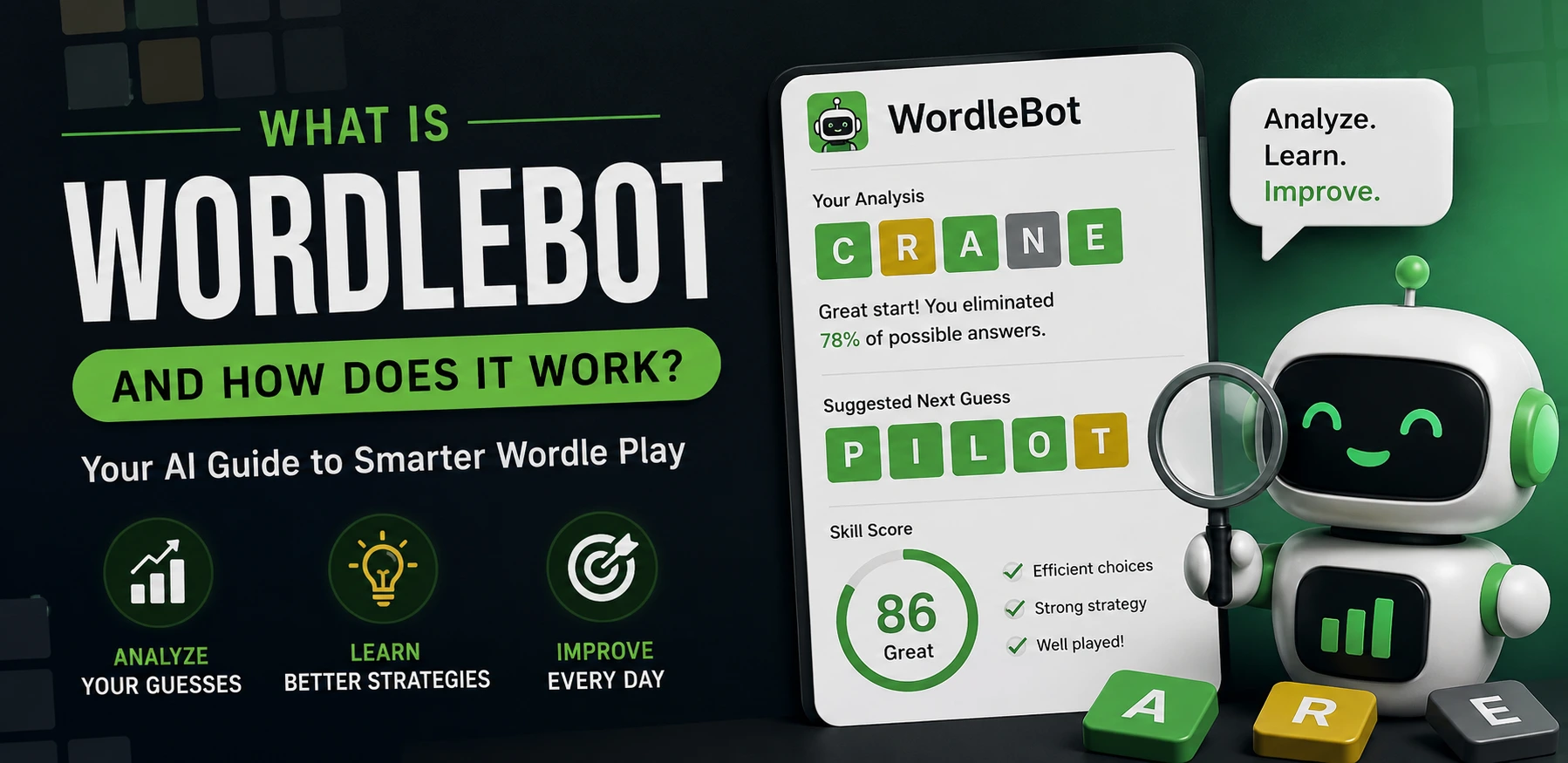
For example, if your opening word is CRANE and WordleBot also considers it a strong starter, your score may be higher than someone who begins with a less informative word.
Players often use WordleBot as a learning companion rather than a competition tool. It provides insight into decision making and helps identify patterns that can improve future games.
Why WordleBot Matters for Wordle Players
Wordle is simple on the surface, but long term success depends on strategy. Random guessing may occasionally lead to a quick win, yet consistent performance comes from understanding letter frequency, word patterns, and elimination techniques.
WordleBot matters because it transforms a completed puzzle into a learning experience.
Here are a few reasons players rely on it:
- It highlights stronger alternative guesses.
- It teaches efficient puzzle solving strategies.
- It reveals mistakes that may not be obvious.
- It helps reduce average guesses over time.
- It compares your performance against an advanced algorithm.
Many casual players discover that their favorite starting word is not as effective as they assumed. For instance, AUDIO contains several vowels, but WordleBot often favors words like CRANE or STARE because they reveal a better balance of common vowels and consonants.
WordleBot vs Regular Wordle Play
| Feature | Regular Wordle | WordleBot |
|---|---|---|
| Solves the daily puzzle | Yes | Analyzes after completion |
| Provides feedback | Limited | Detailed analysis |
| Measures efficiency | No | Yes |
| Suggests better moves | No | Yes |
| Tracks strategic quality | No | Yes |
Understanding these differences helps players see why the tool has become popular among dedicated Wordle fans.
How WordleBot Works
Tip 1: It Evaluates Your Starting Word
The first guess is one of the most important decisions in Wordle. WordleBot examines how much information your opening word reveals.
Consider these examples:
| Starting Word | Typical Strength |
|---|---|
| CRANE | Very strong |
| STARE | Very strong |
| SLATE | Strong |
| AUDIO | Moderate |
| XYLYL | Poor |
Words such as CRANE and STARE contain frequently used letters that appear in many possible solutions. This allows players to narrow the answer pool more quickly.
If you choose a less efficient opening word, the analysis may show that there were significantly more possible solutions remaining after your first turn.
Tip 2: It Calculates Remaining Possibilities
After each guess, WordleBot estimates how many potential answers remain.
Imagine the answer is BRICK.
Your first guess is STARE.
The game reveals that R is present but several other letters are absent.
Instead of randomly guessing next, WordleBot calculates which words would eliminate the greatest number of remaining possibilities. This process resembles how experienced puzzle solvers think.
The tool uses probability and pattern matching to determine which guess offers the most useful information.
This is one reason many players improve after reviewing their reports regularly. They begin thinking about information gathering rather than simply chasing likely answers.
Tip 3: It Compares Your Decisions to Optimal Play
One of the most interesting features is comparison scoring.
For every turn, WordleBot asks:
“Was this the best available move?”
You might solve a puzzle in four guesses and feel satisfied. However, the bot may reveal that a different second guess could have reduced the solution pool much faster.
For example:
- CRANE
- PILOT
- BRICK
- Solve
The bot may identify a stronger second guess that would have produced more useful letter information.
This feedback helps players develop a more analytical approach and gradually improve their average score.
Common Mistakes Players Make
Even experienced players develop habits that reduce efficiency.
Focusing Too Much on Vowels
Many people begin with words such as AUDIO because they want to reveal vowels immediately.
While vowels are important, common consonants often provide more valuable information. Words like STARE and CRANE balance both elements effectively.
Reusing Confirmed Information Poorly
Some players repeatedly guess words with very similar structures.
Suppose you know the answer pattern is:
_ R A _ E
Instead of testing new letters, you might cycle through multiple similar words one at a time.
WordleBot frequently recommends guesses that maximize information rather than simply testing another possible answer.
Ignoring Letter Frequency
English contains certain letters far more often than others.
Letters such as E, A, R, S, T, N, and L appear frequently in Wordle solutions. Prioritizing these letters usually leads to stronger results.
Chasing an Immediate Solution Too Early
Many players become fixated on finding the answer after only one or two clues.
A stronger approach is often to gather additional information before attempting a final solution.
WordleBot rewards strategic elimination because it generally leads to more consistent performance over time.
Expert Tips for UK/US Players
Wordle players across different English speaking regions occasionally encounter spelling differences.
Words may use British or American conventions, creating confusion for some users.
Understand Accepted Vocabulary
The puzzle answer list includes a wide variety of English words. Familiarity with both UK and US spellings can be helpful.
For example, players from Australia or the UK may recognize words that feel less common to American audiences and vice versa.
Prioritize High Frequency Letters
Strong opening words often include:
- S
- T
- R
- A
- E
- N
- L
Words such as STARE, CRANE, and SLATE continue to perform well because they combine several of these letters.
Study Post Game Analysis
One of the fastest ways to improve is reviewing completed games.
Instead of focusing only on wins and losses, examine:
- Why a guess was effective
- How many solutions remained
- Which alternative word performed better
- What information was missed
Over time, these lessons become instinctive.
Build a Consistent Opening Strategy
Changing your starting word every day can be fun, but many successful players use a small group of trusted openers.
Popular examples include:
- CRANE
- STARE
- SLATE
- TRACE
- LEAST
Consistency makes it easier to compare results and identify areas for improvement.


One Comment