Dordle Consonant Clusters: 8 Proven Ways to Master Blends
Mastering dordle consonant clusters turns scary letter pairs into easy solves. Blends like ST, TR, and CH hide in plain sight, and players who read them fast win both grids sooner. In this guide you will learn 8 proven ways to use dordle consonant clusters so that no blend ever stalls your game again.
Why Dordle Consonant Clusters Matter
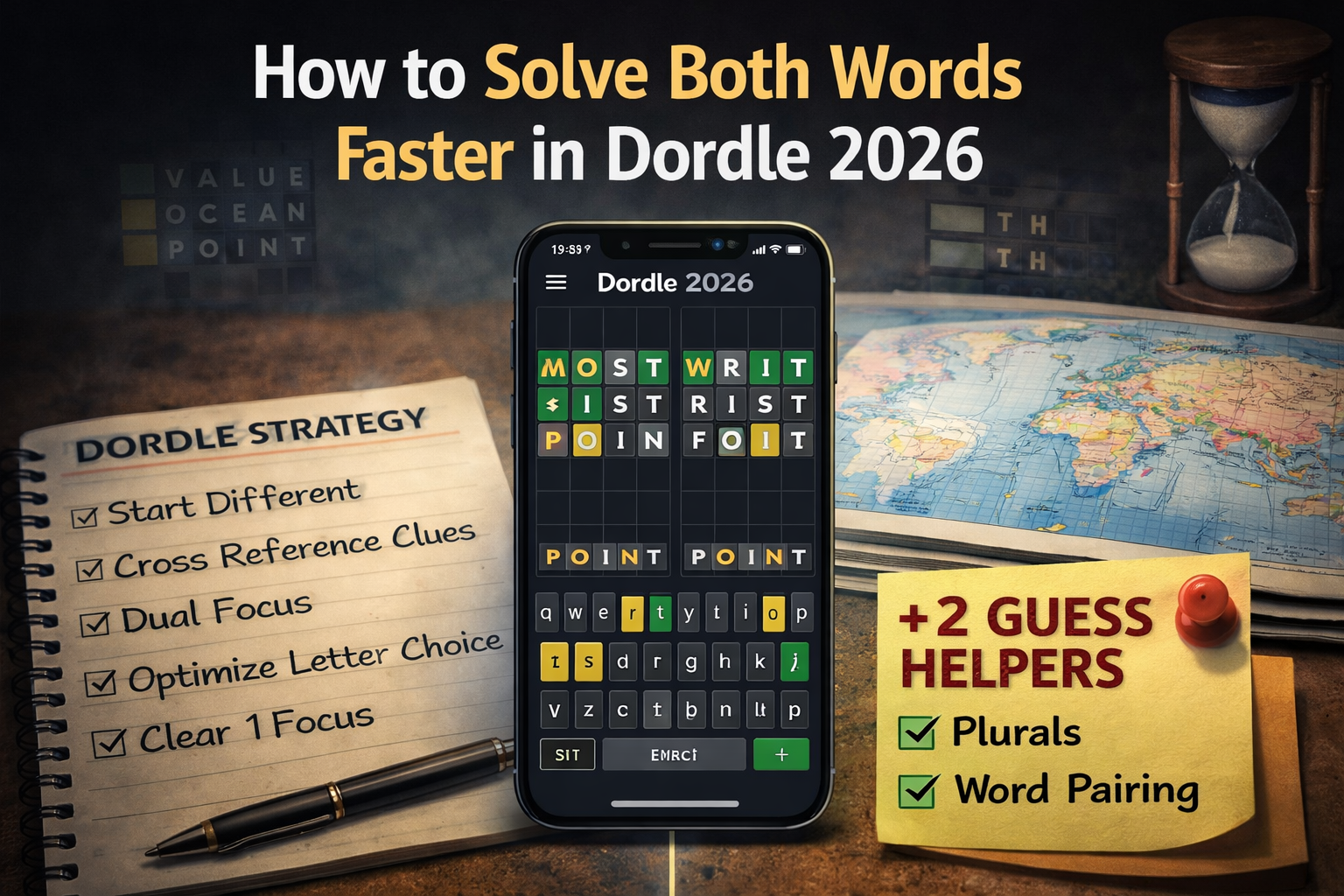
Dordle consonant clusters matter because blends appear in a huge share of five letter answers. Two letter pairs like TH, ST, and CR are everywhere, and three letter groups like STR and SCH show up more than you expect. If you read blends slowly, you lose guesses.
Clusters also create trap words. When a cluster fits several answers, like ST in STAMP, STONE, and STARE, the wrong guess costs you. Players who study dordle consonant clusters spot these traps before they fall in.
The eight ways below build your blend reading from the ground up. Start with the common pairs, add the tricky triples, then drill them until they feel automatic. Your grids will thank you.
Way One: Learn the Common Pairs First
Start your dordle consonant clusters study with the most common pairs: ST, TH, TR, CR, CH, SH, PR, and GR. These eight pairs cover a large part of the answers you will ever see, so learning them first pays the most.
Write each pair on a card and say three words that start with it. STAMP, STONE, STARE. TRICK, TRACK, TRADE. Speaking the words builds the mental link between the letters and the sounds, which speeds up reading.
If you are new to clue reading, the Dordle beginner guide covers the basics. Come back here when the green and yellow clues feel comfortable.
Way Two: Spot Clusters in Yellow Clues
Yellow clues are where dordle consonant clusters hide. When S is yellow and T is yellow, ask whether they belong together as ST. Testing the pair as a unit often solves the position puzzle faster than moving each letter alone.
Keep a mental list of pairs that fit your yellow letters. If you have C, H, and R in yellow, CH and CR are the candidates. Trying the most common pair first is usually right.
Do not force pairs that do not fit. Sometimes the yellow letters belong apart. But asking the cluster question first, before random placement, saves guesses in most games.
Way Three: Test Clusters as Units
When you test letters, test dordle consonant clusters as units. A probe word like CRASH tests CR together, which tells you about both letters in one turn. Testing pairs is twice as efficient as testing singles.
Build test words around the cluster you suspect. If you think the answer starts with ST, play a word that keeps ST together. The clue on the pair confirms or kills the whole idea at once.
The Dordle probe guesses guide shows how to design test words. Pair that method with cluster thinking for maximum information per guess.
Way Four: Learn the Tricky Triples
After the pairs, study the triples: STR, SCH, THR, SPR, and SPL. These dordle consonant clusters are rarer but they cause long stalls when players do not know them. One triple can eat three guesses if you place letters one at a time.
Triples usually sit at the start of a word. When your clues show S, T, and R all present, try STR before anything else. Starting position triples are the most common, so test them early.
Make a short list of triple words you have seen and review it weekly. Triples reward memorization more than any other cluster type, and a small list goes a long way.
Way Five: Use Clusters to Escape Traps
Trap words are often cluster traps. When ST fits five possible answers, the trap is not the letters but the blend. Dordle consonant clusters knowledge tells you to test the ending letters, not the cluster itself.
If ST is locked and the trap is STAMP, STONE, or STARE, burn a guess on the middles and endings. A word like MOPER tests M, O, P, and E at once. Kill the trap by testing what differs, not what is shared.
The Dordle trap words guide covers trap escapes in full. Combine trap play with cluster reading and lookalike answers stop scaring you.
Way Six: Read Endings Too
Clusters live at the ends of words too. Endings like TCH, NCH, and CK appear often, and players who only study starts miss them. Dordle consonant clusters work on both sides of the word.
When your end letters are unclear, list the common ending clusters. If the word ends in a vowel plus two unknown letters, CH, CK, and SH are strong candidates. Test the most common ending first.
Read the Dordle letter patterns guide for more on word shapes. Patterns and clusters together make your endgame reads much faster.
Way Seven: Drill Blends Daily
Drill dordle consonant clusters with a daily five minute exercise. Pick one pair, like TR, and write ten words that contain it. Then play a free game and watch for that pair in the clues. Focused attention builds fast recognition.
Rotate the pair each day: TR on Monday, ST on Tuesday, CH on Wednesday. In a month you will have drilled every common blend several times. Spaced repetition is the fastest way to make blends automatic.
Keep score of how fast you spot the drilled pair in games. When spotting takes seconds instead of minutes, the drill worked. Move on to the next pair with confidence.
Way Eight: Trust Clusters in the Endgame
In the endgame, trust dordle consonant clusters over hunches. With two guesses left and letters confirmed, the most common cluster that fits is usually right. Guessing a rare pattern when a common blend fits is how games are lost.
Write down the candidate words before you guess. Seeing the options on paper makes the cluster choice obvious. The word that uses the most common blend is the smart money guess.
Endgame calm comes from preparation. Players who drilled clusters all month do not panic with two guesses left. They read the blend, pick the word, and win.
Frequently Asked Questions About Dordle Consonant Clusters
What are the most common consonant clusters in Dordle? ST, TH, TR, CR, CH, SH, PR, and GR lead the list. Learn these eight pairs first, then add triples like STR and SCH. Common pairs cover most of what you will see.
How do clusters help with yellow letters? When two yellows might form a pair, test them together. Dordle consonant clusters turn two separate placement puzzles into one unit puzzle, which solves faster.
Should I memorize cluster lists? A short list of common pairs and triples is worth memorizing. Long lists are not. Focus on the blends you actually see in games, and review them weekly.
Master Blends Like a Pro
Pros read dordle consonant clusters without thinking. They see S and T in yellow and their brain says ST instantly. That speed comes from hundreds of games and deliberate drills, not from talent.
Start your own blend journey today. Pick one pair, drill it for a week, and notice the difference. Small focused practice beats scattered play every time.
Extra Dordle Consonant Clusters Habits
Keep a blend notebook beside you while you play. When a cluster helps you solve, write the word down. Your personal collection of dordle consonant clusters wins becomes a custom study guide.
Review your notebook before each session. Two minutes of review primes your brain to spot blends. Players who prime play faster than players who start cold.
Share blend tips with a friend who plays Dordle. Comparing cluster lists doubles both players’ knowledge. Study partners make every skill stick faster.
More Dordle Consonant Clusters Study Ideas
Keep a dordle consonant clusters journal for a month. Note which blends you spotted fast and which ones stalled you. The stall list is your personal curriculum for next month.
Replay tough games and find the cluster you missed. Hindsight shows the blend clearly, and that clarity trains your eye. Missed clusters are the best teachers.
Test yourself with blank grids. Write five letters with a hidden blend and try to spot it in ten seconds. Speed drills turn knowledge into reflex.
Bonus Dordle Consonant Clusters Drills
Drill one: pick three pairs and find five words for each before you play today. This warm up primes blend spotting. Primed players read dordle consonant clusters twice as fast.
Drill two: play a free game and circle every cluster in your guesses. Marking blends trains your eye to see them. What gets marked gets noticed.
Drill three: solve a game using only cluster based guesses for the last three turns. This constraint drill forces blend thinking. Hard rules build easy habits.
When you are ready to practice, open the official Dordle site and start your first game. Sharp dordle consonant clusters reading is the simplest upgrade any player can make.