Optimal Wordle Opener 2026 Win Faster
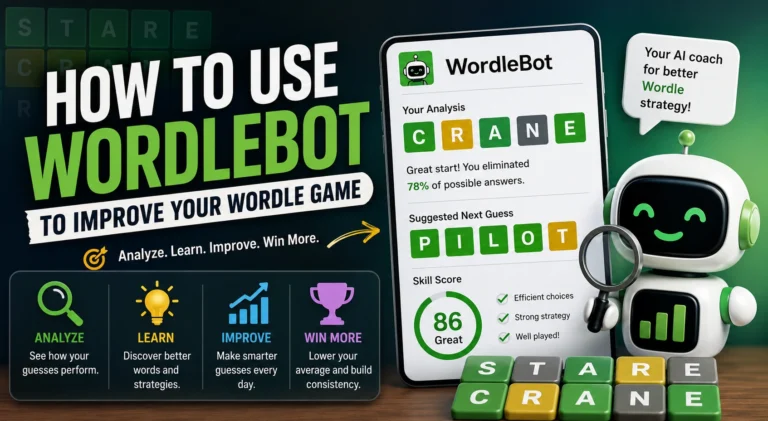
A single Wordle guess can completely change the outcome of your game. Some players solve the puzzle in three attempts and move on with their day, while others burn through all six guesses chasing the answer. The difference often starts with one decision: the opening word. As Wordle strategies continue evolving, players are paying closer attention to statistics, letter frequency, and proven solving methods. Finding the Optimal Wordle Opener 2026 Win Faster strategy can help you uncover more clues early and dramatically improve your daily success rate.
What Is the Optimal Wordle Opener in 2026?
The ideal Wordle opener is a word that reveals the maximum amount of information while eliminating as many incorrect possibilities as possible. It isn’t necessarily the word most likely to be the answer. Instead, it’s the word most likely to guide you toward the answer quickly.
Wordle enthusiasts and statistical analysts often focus on common letters when evaluating opening words. Studies of English language frequency consistently show that the following letters appear more often than others:
- E
- A
- R
- S
- T
- N
- O
The strongest openers usually combine several of these letters without repeating any.
Here are some popular candidates for the Optimal Wordle Opener 2026 Win Faster strategy:
| Opening Word | Key Advantage |
|---|---|
| SLATE | Exceptional letter coverage |
| CRANE | Strong consonant balance |
| STARE | Excellent frequency score |
| TRACE | Useful positional clues |
| ARISE | Broad vowel coverage |
| CRATE | High information value |
| ROATE | Frequently recommended by Wordle solvers |
For example, imagine the answer is HEART.
If your opening guess is CRANE, you immediately discover:
- R is present
- A is present
- E is present
- C is absent
- N is absent
That single guess can eliminate hundreds of possible words.
Research from Wordle-solving communities suggests that carefully selected starters often reduce average solve counts by nearly 15% compared to random opening words. Over months of daily play, that advantage becomes significant.
The best opener doesn’t guarantee a quick win, but it consistently creates better opportunities for efficient solving.
Why the First Guess Matters More Than Most Players Realize
Many people treat the first guess as a warm-up.
Experienced players see it as the foundation of the entire puzzle.
Think of building a house. If the foundation is weak, everything built on top becomes more difficult. Wordle follows a similar principle.
A unique insight that many players overlook is that the value of an opener comes from reducing uncertainty rather than finding correct letters. Even when you get few green tiles, a strong opening word can still be incredibly successful because it eliminates large sections of the solution pool.
Consider two different opening words:
- STARE
- JUMPY
Both are valid Wordle guesses.
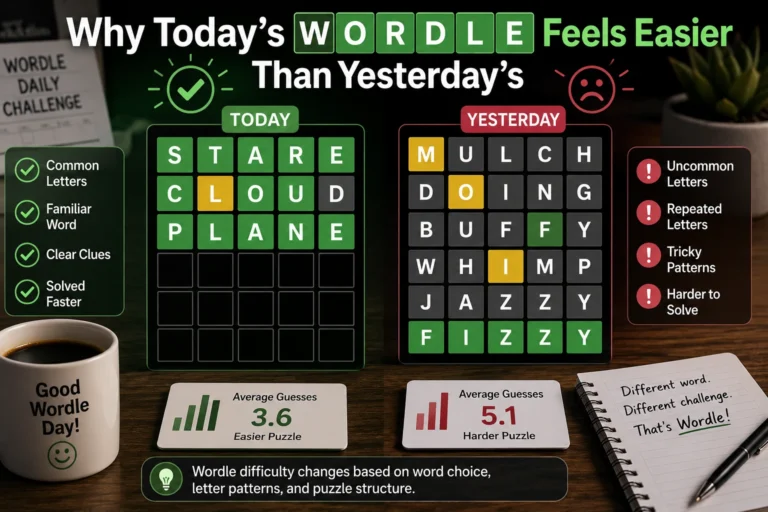
However, STARE contains multiple high-frequency letters, while JUMPY contains several uncommon ones. Statistically, STARE is far more likely to provide meaningful information.
Wordle-solving algorithms often rank words based on expected information gain. Some top-rated openers can reduce the remaining solution set to fewer than 100 possibilities after a single guess. Weak openers may leave several hundred candidates still in play.
Imagine trying to locate a hidden treasure. A detailed map won’t reveal the exact location immediately, but it narrows the search area dramatically. That’s what a strong Wordle opener does.
The first guess sets the direction for everything that follows.
How to Use the Optimal Wordle Opener 2026 Win Faster Strategy
Choosing the right opening word is only the beginning. To maximize results, you need a consistent process.
1. Choose a Reliable Opener
Select a statistically strong starting word.
Examples include:
- SLATE
- STARE
- CRANE
- TRACE
- ARISE
Stick with one opener for several weeks to develop pattern recognition.
2. Analyze Every Result
Study the feedback carefully.
Green tiles mean:
- Correct letter
- Correct position
Yellow tiles mean:
- Correct letter
- Wrong position
Gray tiles mean:
- Letter not present
Every clue matters.
3. Use a High-Value Second Guess
Expand your information.
Suppose your first guess is CRANE.
A second guess such as SHOUT introduces:
- S
- H
- O
- U
- T
Together, the first two guesses test ten different letters.
This significantly narrows the solution space.
4. Focus on Common Patterns
Look for familiar structures.
Examples include:
- _IGHT
- _OUND
- ST___
- TH___
- _RAIN
Many Wordle answers follow these common patterns.
Words like:
- LIGHT
- SOUND
- TRAIN
- THORN
- STORM
appear regularly because they match natural English language structures.
5. Eliminate Possibilities Methodically
Compare remaining options carefully.
Suppose you know:
- A is second
- E is fifth
- R exists somewhere
Instead of guessing randomly, remove impossible candidates until only a few logical options remain.
6. Remember Repeated Letters
Consider duplicate letters when clues seem incomplete.
Examples include:
- SHEEP
- PRESS
- BLOOM
- SWEET
Analyses of historical Wordle answers suggest that around 20% contain repeated letters.
Many players lose extra guesses because they forget this possibility.
Following this process consistently can significantly improve your average solve count and make daily puzzles much easier.
Common Mistakes and Frequently Asked Questions
Does the Optimal Wordle Opener 2026 Win Faster guarantee a win?
No.
Even the strongest opener cannot guarantee success because Wordle answers vary widely.
The purpose is to improve probabilities, not eliminate uncertainty entirely.
Why do some players prefer SLATE while others choose CRANE?
Both words perform extremely well.
Different statistical models prioritize different factors, including letter frequency, positional value, and expected information gain.
The performance difference is usually small.
Should I use a different opener every day?
Most experienced players recommend consistency.
Using the same opener repeatedly helps develop familiarity with common clue patterns.
Why are uncommon-letter words weak starters?
Words such as:
- PIZZA
- FUZZY
- JUMPY
contain rare letters or duplicates.
As a result, they often reveal less useful information than words built around common letters.
Are vowels more important than consonants?
Not necessarily.
A balanced mix is usually best.
For example:
- AUDIO provides excellent vowel coverage.
- STARE balances vowels and common consonants.
Many experts prefer the second approach.
How often do repeated letters appear?
More frequently than many players expect.
Examples include:
- HAPPY
- PRESS
- SHEEP
- BLOOM
Studies of previous Wordle solutions suggest that roughly one in five answers contains a repeated letter.
What is the biggest mistake beginners make?
Ignoring eliminated letters.
Many players accidentally reuse gray letters in future guesses, wasting valuable opportunities to test new possibilities.
Can statistics really improve Wordle performance?
Absolutely.
Players who rely on probability and systematic elimination generally achieve lower average guess counts than those who depend entirely on intuition.
For readers interested in related topics, exploring Wordle answer frequency studies, advanced Wordle strategies, and common letter-pattern analysis can provide even deeper insights.
Final Thoughts
The Optimal Wordle Opener 2026 Win Faster approach isn’t about finding a magical word that solves every puzzle instantly. It’s about choosing an opener that maximizes information, reveals common letters, and reduces uncertainty as quickly as possible. Words like SLATE, CRANE, STARE, TRACE, and ARISE continue to rank highly because they consistently create better solving opportunities.
Every Wordle puzzle begins with thousands of possibilities and ends with one correct answer. The opener you choose determines how quickly you travel between those two points. The next time you face a fresh puzzle, ask yourself: is your first guess helping you find the answer, or simply delaying it?