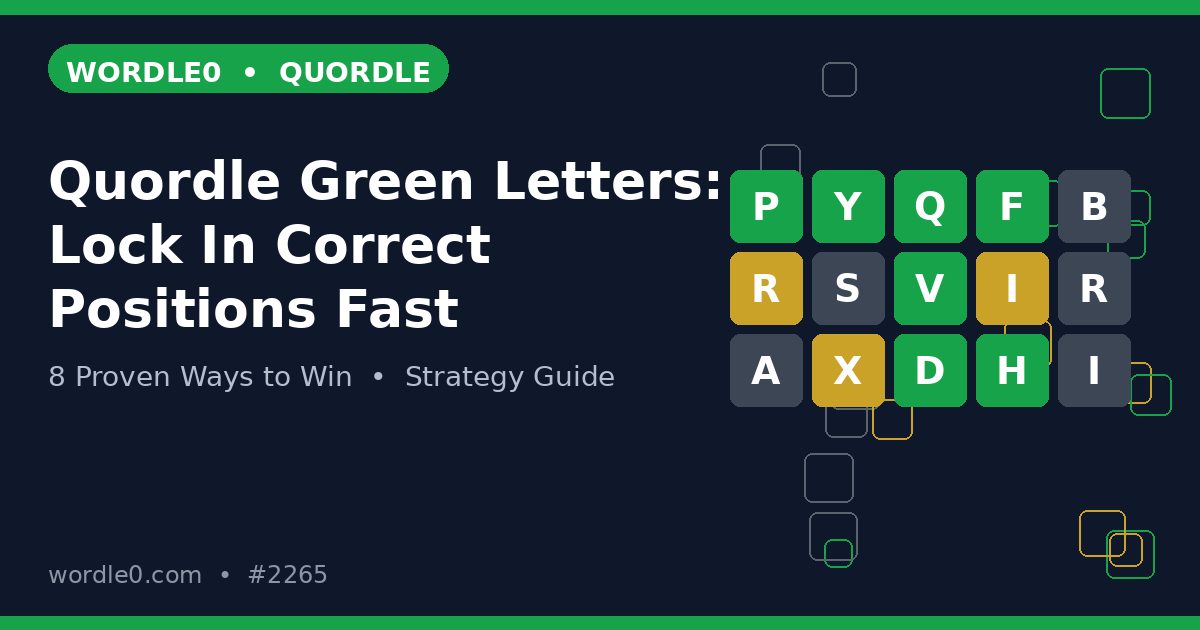
Quordle Green Letters: Lock In Correct Positions Fast
A green tile is the best feeling in Quordle, but most players waste it. They celebrate the green and then guess around it instead of building on it. The players who master quordle green letters treat every green as an anchor that shapes every guess that follows.
This guide shows you how to use quordle green letters to lock in positions fast, combine them with yellows, and avoid the traps that greens can hide. Build on your greens and your win rate will climb.

What Green Letters Really Lock In
A green letter locks both a letter and a position. That is two pieces of certainty in a game built on uncertainty, which makes quordle green letters the most valuable tiles on the board. Every future guess in that grid should respect both facts.
The mistake is treating a green as decoration. A green is a command: keep this letter here, and build the word around it. Players who internalize that command solve grids in half the guesses.
Build Around Greens, Not Away From Them
Once a grid shows quordle green letters, every guess should keep them in place and test the unknown slots. Guessing a word that moves a green elsewhere, or drops it entirely, throws away hard won information.
Think of the green as the skeleton of the word. Your job is to add flesh: try new letters in the empty positions while the green holds its ground. This discipline alone saves two or three guesses per game.
The Anchor Guess Strategy
The anchor strategy is simple: with one or two quordle green letters in place, list every word that fits the pattern before you guess. If the list is short, guess the most likely word. If it is long, you are facing a trap family and need an elimination guess.
Anchoring turns greens into decision tools. Instead of guessing blindly, you measure the candidate pool and choose the tactic that fits. Our Quordle trap words guide covers the elimination side in depth.
Greens Plus Yellows: The Fastest Combos
Greens plus yellows is the fastest solving combination in the game. The greens fix the word’s shape while quordle green letters pair with misplaced yellows to narrow the answer to a handful of candidates. Two greens and two yellows often means the word is one guess away.
When combining, place yellows only in slots the greens leave open, and never in a slot a yellow has already ruled out. For the yellow side of the combo, see our Quordle yellow letters guide.
When Greens Mislead: Trap Families
Greens can lie by omission. A pattern like _IGHT with a green GHT still hides LIGHT, NIGHT, RIGHT, FIGHT and TIGHT. Quordle green letters that lock the ending but leave the start open are classic trap setups, and guessing into them blindly is expensive.
The defense is the candidate count. When greens leave four or more possibilities, stop guessing answers and start guessing information. One elimination guess beats three hopeful ones.
Protecting Greens Across Four Grids
In Quordle, quordle green letters in one grid do not help the other grids directly, but the guess budget is shared. A grid with three greens is nearly solved, so finish it quickly and cheaply rather than letting it linger while you work elsewhere.
Prioritize nearly solved grids. Each finished grid removes pressure from the shared budget and lets you spend guesses freely on the harder ones. Leaving a three green grid unsolved while fighting elsewhere is a classic blunder.
Green Letter Timing: When to Commit
Commit to building around quordle green letters the moment they appear, but commit to solving only when the candidate pool is small. Early greens deserve respect in every guess, yet the final answer guess should wait until you have real information.
This timing separates good players from great ones. Good players keep their greens. Great players keep their greens and still test new letters aggressively in the open slots.
Practice Drills for Green Letter Speed
Drill one: take any pattern with two quordle green letters and list all candidates in sixty seconds. Drill two: build one guess that keeps the greens and tests three new letters. Drill three: replay a game where you had an early green and count how many guesses ignored it.
Run these drills in practice mode on the official Quordle site, where rounds are free and unlimited.
Common Green Letter Mistakes to Avoid
The biggest mistake is dropping a green to test new letters elsewhere. The second is freezing: keeping quordle green letters but repeating the same filler letters instead of testing new ones. The third is solving too early, guessing the first word that fits instead of checking the candidate pool.
Another error is celebrating a green in a solved grid while another grid burns. Greens only count when all four grids fall, so keep your eyes on the whole board. Our Quordle endgame guide shows how to close out tight finishes.
Frequently Asked Questions About Quordle Green Letters
Should you ever move a green letter? No. A green is confirmed in that position, so every guess should keep it there.
Can greens still lead to traps? Yes. Greens that fix only part of the word can hide trap families, so always count candidates.
How many greens mean the word is solved? Three greens usually leave very few candidates, but check for traps before guessing.
Where can you practice green letter play? On the official Quordle site, practice mode lets you drill anchor strategies without pressure.
Respect every green and quordle green letters will repay you with faster solves. They are the anchors that turn guessing into building, and building into winning.
The next time a tile turns green, pause and smile. You have a piece of the answer locked forever. Build around your quordle green letters with discipline, count your candidates, and watch the other tiles fall into place.
Start your next daily by committing to the anchor rule: no guess ever drops a green. That single habit will cut wasted guesses and stretch your streak. Let quordle green letters do the heavy lifting they were meant to do.
Watch how top players treat quordle green letters and you will notice a pattern: they never celebrate early. A green on guess two is the start of the plan, not the end of the worry. They immediately ask what the green allows and what it forbids, then build the next guess around the answer.
Another advanced habit is the green inventory. Once per game, glance at all four grids and count your quordle green letters. Grids with two or more greens are close to done, so schedule them for quick finishes. Grids with none need openers and exploration. This thirty second scan keeps your guess budget aimed at the right targets.
Finally, teach the anchor rule to anyone you play with. When a group plays Quordle together, the player who respects quordle green letters the most usually calls the winning guesses. Shared discipline turns four casual players into one sharp solving team.
Review one old game tonight and mark every guess that ignored a green. Count the waste, then promise yourself it never happens again. Small reviews like this are how good players become great, one quordle green letters habit at a time.