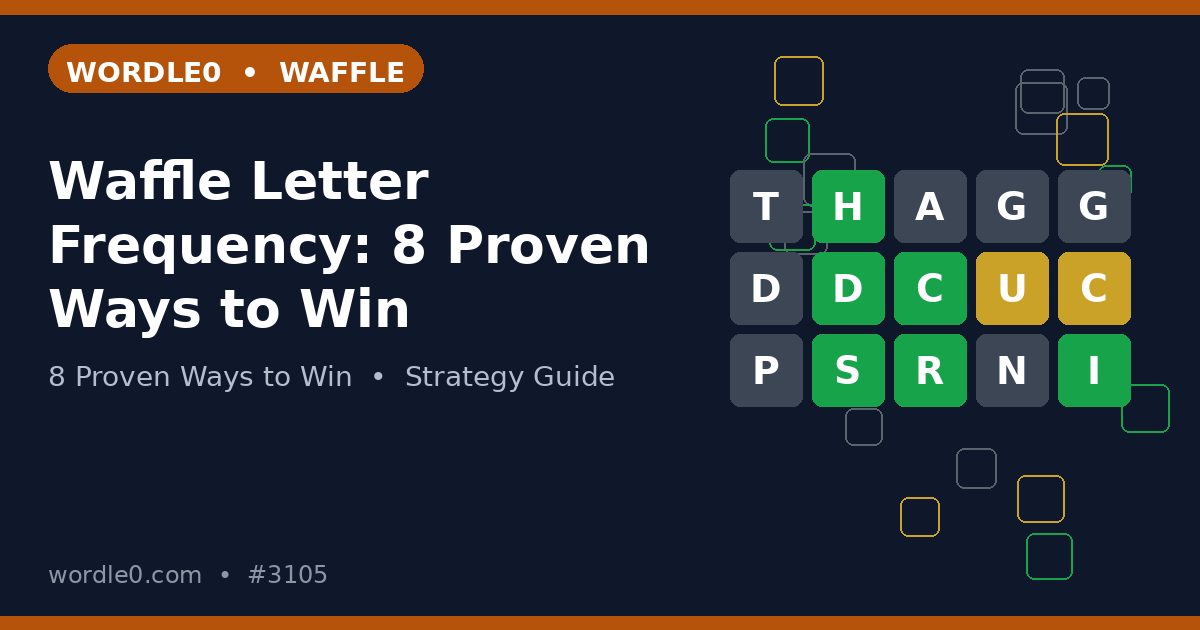
Waffle Letter Frequency: 8 Proven Ways to Win
Waffle letter frequency is the simple observation that some letters show up far more often than others in five letter words. Players who know which letters are common can read the grid faster and spend fewer swaps on unlikely placements.
Think of waffle letter frequency as a habit, not a formula. You learn the usual suspects by playing, then let that sense guide where each letter belongs. That habit quietly saves swaps every single day.
1. Learn the usual vowel crew
The best entry point for waffle letter frequency is the vowel crew. A, E, and O appear in countless five letter words, so treat them as safe bets when the grid shows an empty slot with no clues.
When a slot could hold any letter, test a common vowel first. If the word still does not look right, you have spent almost nothing to rule out a strong candidate. Frequency thinking turns guesses into quick checks.
2. Trust the friendly consonants
Consonants like R, T, L, S, and N turn up again and again in everyday words. Watching waffle letter frequency means giving these letters priority when you place crossing letters that affect two words at once.
Rare letters like Q, Z, X, and J appear far less often, so park them at the back of your mind. Reach for them only when the crossing pattern demands something unusual. Friendly consonants first is the calm default.
3. Read the grid for frequency hints
Your current grid is the best teacher of waffle letter frequency. Look at which letters the puzzle already gives you and notice how many of them are the common crew. The game quietly confirms your habits.
Green tiles with common letters are easy anchors. Build outward from them, filling the unknown slots with likely partners. Frequency and color clues work as a team.
4. Place rare letters with care
Waffle letter frequency also warns you about rare letters. When a tile shows Z or Q, pause before swapping it away, because the word it sits in is unusual and deserves attention, not speed.
Ask yourself what words that rare letter could form. If nothing comes to mind, the letter may belong in a crossing word instead. Rare letters are puzzles inside the puzzle.
5. Use vowels to unlock words
Slotting the right vowel into a stubborn word often reveals the whole answer. Strong waffle letter frequency play means hunting for the vowel shape of each word before you touch its consonants.
Try each of the common vowels in the empty slot and read the word aloud in your head. The one that sounds natural is usually the answer. Sound is a powerful frequency tool.
6. Track letters across the week
Keep a tiny log of the letters that troubled you this week to sharpen your waffle letter frequency sense. A glance at your notes shows whether you underuse common letters or chase rare ones too often.
The Waffle game tips guide covers the core mechanics, so pair your letter notes with the basics there. Small logs create big habits.
7. Match letters to word shapes
Five letter words have familiar shapes, and waffle letter frequency helps you spot them. A word ending in a common letter pair or starting with a friendly consonant cluster is far more likely than an exotic shape.
When two candidate placements compete, choose the shape that looks like a real word you have seen before. Frequency is memory in disguise, and your memory is better than you think.
8. Master waffle letter frequency
Putting it together, winning waffle letter frequency play means trusting common vowels and consonants, treating rare letters with care, reading the grid for hints, and tracking your misses across the week.
The Waffle strategy guide pairs frequency thinking with swap planning, and the daily puzzle waits at wafflegame.net. Play the odds, and watch your swaps shrink.