
Quordle Vowels First: Build Openers That Cover Fast
Vowels are the skeleton of every English word, yet most Quordle players test them by accident instead of by plan. A vowel heavy opener tells you more about four grids in one guess than any clever consonant play. The players who master quordle vowels first openers cover the word space faster, burn fewer guesses, and reach the endgame with room to spare.
This guide shows you how to build openers that test quordle vowels first, combine them with high value consonants, and adapt the plan when vowels hide. Smart vowel coverage is the foundation every other Quordle skill builds on.
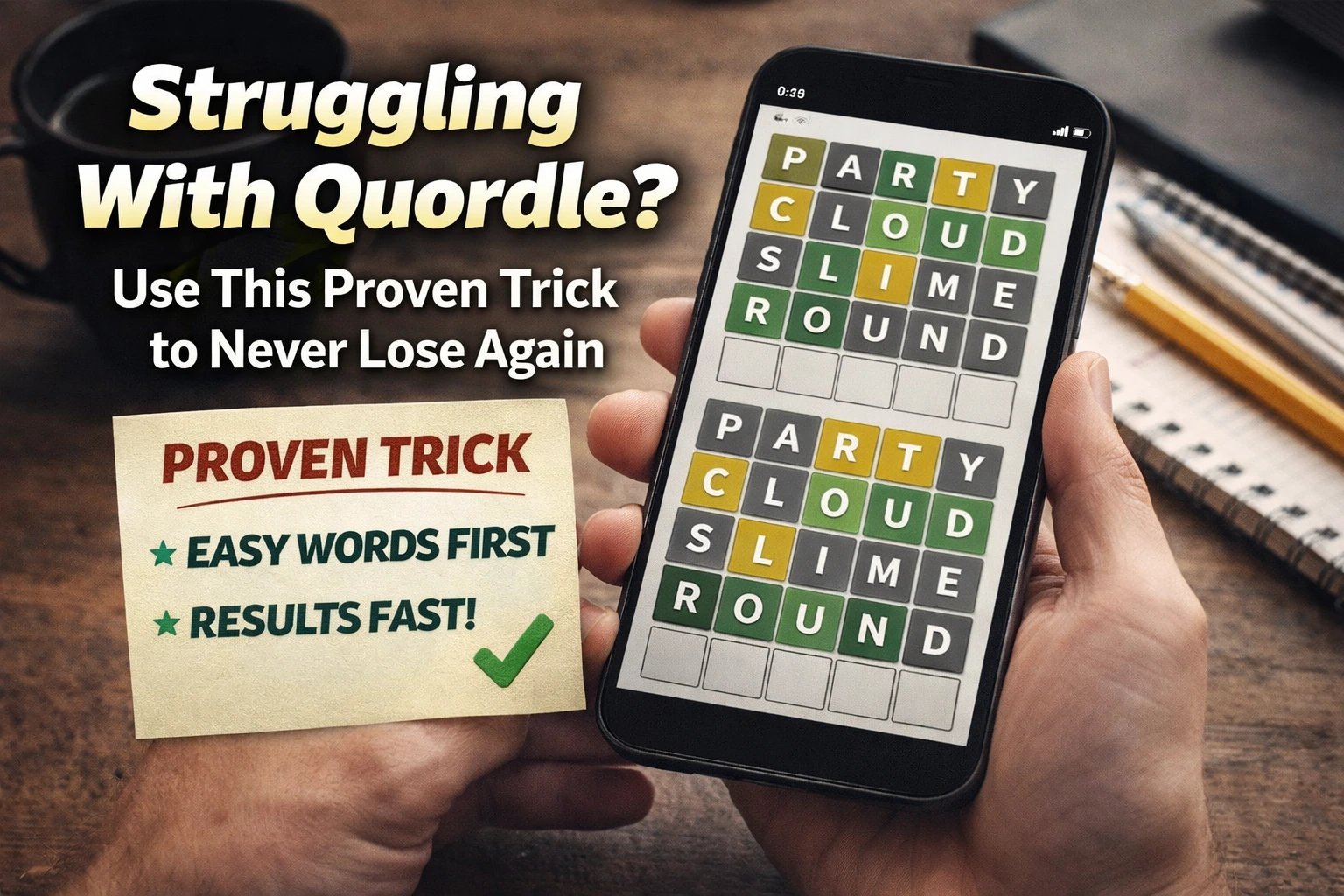
Why Vowels Carry More Information Than Consonants
Every five letter word has at least one vowel, and most have two. A quordle vowels first opener that tests four vowels in two guesses maps the vowel skeleton of all four answers at once, and that skeleton narrows candidates more than any consonant pattern. This is why vowel coverage beats clever consonant tricks.
Information theory agrees. Eliminating a vowel family wipes out huge branches of the word list. Testing quordle vowels first is not a preference, it is the mathematically strongest opening strategy in the game.
The Two Guess Vowel Sweep: Cover All Five Fast
The classic plan tests four vowels in the first two guesses, using words that overlap nothing. Think of pairs like RAISE and CLOUD style openers, vowel heavy and letter unique, that together cover A, E, I, O, U across ten fresh letters. Two guesses, the whole vowel map.
The vowel sweep is the backbone of the Quordle letter frequency guide, which ranks which letters pay for their slot. Learn the sweep before you customize anything else.
Picking Your Vowel Openers: The Rules
Good quordle vowels first openers follow three rules. They test at least two new vowels each, they share no letters with each other, and they avoid repeating letters entirely. Double letters in an opener waste a slot that could map new vowel information across the grids.
Build a personal pair and memorize it. When your openers are automatic, your brain is free to read the four grids instead of choosing words, and that attention is worth more than a marginally better opener.
Combining Vowels With High Value Consonants
Vowels alone are not enough. The best quordle vowels first openers pair vowels with the hardest working consonants: R, T, N, S, and L. A word that tests A, E plus R and T gives vowel and consonant information in one guess, which is double duty across four grids.
This combination logic is the same thinking in the Quordle common mistakes guide, which warns against openers that test the same ground twice. Cover new letters every guess until the vowel map is drawn.
Reading Vowel Results: What Each Pattern Means
Green and yellow vowels are anchors. They tell you the word’s skeleton, and skeletons make the consonants guessable. A gray vowel is even better news: it eliminates a huge family of words across all four grids at once. Celebrate gray vowels, they are information too.
Watch the patterns across grids. When quordle vowels first testing shows A green in one grid and gray in three, you know exactly where A belongs and where it does not. That is the four grid reading skill that separates winners from strugglers.
When the Sweep Fails: Words That Hide Vowels
Some answers resist the sweep. Words with Y as the vowel, words with repeated vowels, and words where vowels sit in unusual spots can survive two clean vowel guesses with nothing to show. Do not panic when the sweep comes back empty, it eliminated far more than it seems.
The fix is the third guess: a word that tests the leftover vowel, Y, and fresh consonants. Our Quordle double letters guide covers the repeated vowel cases that confuse players most. Expect them and they cost you nothing.
Adjusting the Plan for Weird Vowel Days
Not every day needs the full sweep. If guess one reveals three vowels already, skip the second sweep word and pivot to consonants. Quordle rewards players who read results, not players who follow scripts. The sweep is a default, not a law.
This adaptability pairs with the Quordle green letters guide, which shows how to build on confirmed letters fast. Vowels get you the skeleton, greens let you build the body.
Common Vowel Opener Mistakes to Avoid
The biggest mistake is starting with a consonant heavy word and discovering vowels by accident on guess four. The second is repeating letters across your two openers, which wastes the sweep’s whole point. The third is changing openers every day, which costs the familiarity that makes reading grids automatic.
Another error is ignoring a gray vowel’s power. Gray means gone everywhere, in every grid. Update all four mental models at once and the vowel sweep pays off in the midgame too.
Practice Drills for Vowel Coverage Speed
Drill one: write your two opener words from memory in ten seconds. Drill two: after any practice game, list which vowels each guess tested and spot the overlaps. Run these drills on the official Quordle site, where free practice rounds make repetition painless.
Drill three: play a round where your only goal is a perfect vowel map by guess three, ignoring wins. That focused repetition is how quordle vowels first play becomes instinct instead of effort.
Frequently Asked Questions About Quordle Vowels First
Should you always test vowels in the first two guesses? In most games, yes. The information return is the highest available, and the rare exceptions reveal themselves quickly enough to adapt.
What if your opener reveals no vowels at all? That is strong information too. Gray vowels eliminate huge word families, so pivot to consonant mapping with a clear field.
Is Y a vowel in Quordle openers? Functionally, yes. Y acts as a vowel in many answers, so include it in your third guess testing when the main vowels come back gray.
Where can you practice vowel first openings? On the official Quordle site, practice mode lets you repeat the sweep until your openers are automatic.
Make quordle vowels first your default and your whole game improves. The skeleton reveals the word, the word reveals the grid, and the grids reveal the win.
Test your new openers in practice mode for a full week before judging them. Track how many vowels each opening pair reveals and how often guess three starts with a clear skeleton. Players who commit to quordle vowels first openers for seven straight days almost always keep them, because the results are too clear to argue with.
Finally, share your opener pair with a friend who plays and compare notes after a week. Friendly competition around quordle vowels first strategy makes the habit stick, and two players testing the same openers will discover edge cases faster than one. The vowel sweep is simple, proven, and waiting to raise your win rate.
Open your next daily with confidence: the first two guesses belong to the vowel sweep, and everything after builds on what the sweep reveals. Write your opener pair on a sticky note if you must, then play until quordle vowels first is the way you start every single game.



3 Comments