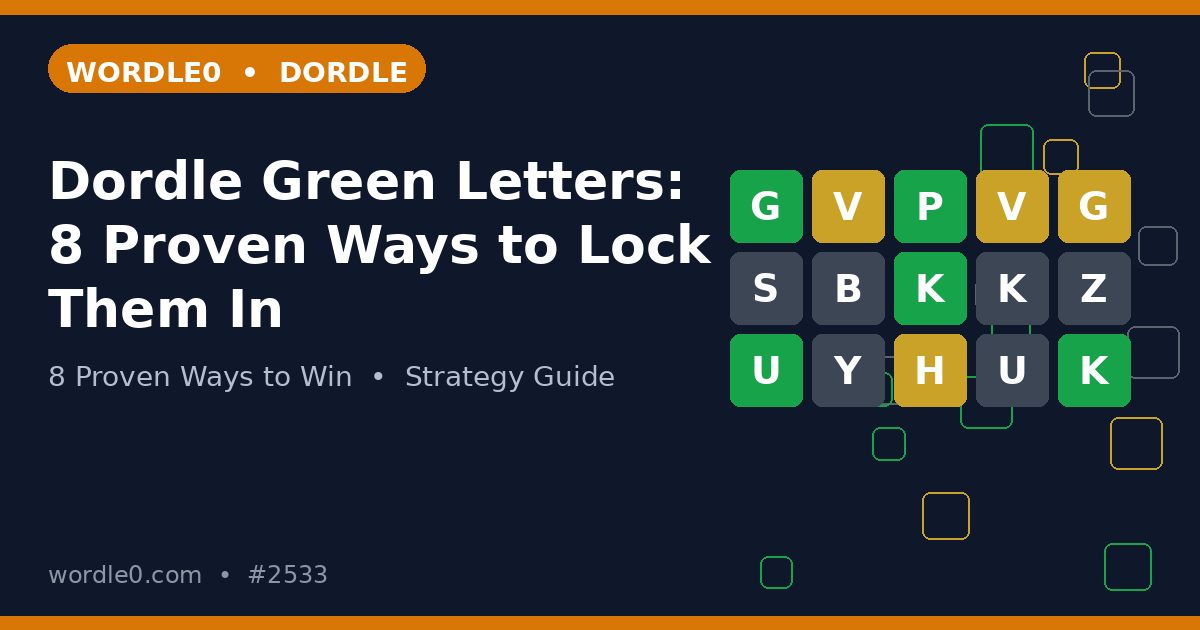
Dordle Green Letters: 8 Proven Ways to Lock Them In
Dordle green letters are the strongest clues in the game, and the players who treat them like anchors win far more often. A green letter is locked in place, so every guess from that point forward should build around it instead of wandering. Yet many players keep testing new words even after the greens appear, which wastes the best information they have.
This guide gives you 8 proven ways to use green letters with a system. You will learn how to anchor both grids, how to let greens shrink the word list, and how to finish games without ever moving a confirmed letter. Lock in your greens and the rest of the game gets simple.
Why Dordle Green Letters Matter
A green letter removes all doubt about one position, which is pure gold when you must solve two words in seven guesses. Smart dordle green letters play turns each confirmed position into a searchlight that narrows every later guess.
Players who ignore greens and keep probing waste the one clue type that never lies. Respect the anchor, and your average guesses per game will drop quickly.
Way One: Anchor Every Guess on the Greens
After guess two, list the green letters for each grid and keep them fixed in every later guess. A green in slot one stays in slot one, no exceptions. This dordle green letters rule alone prevents the most painful self sabotage in the game.
New to the two grid game? Our Dordle beginner guide explains how the color clues work on each grid before you build anchor habits.
Way Two: Count Greens to Pick a Target Grid
The grid with more greens is closer to solved, so make it your priority. Finish it early and you free up your whole attention for the other word. This dordle green letters habit also banks a sure win before you gamble on the harder grid.
If both grids show one green each, choose the one with more yellows to join the greens. Combined clues always beat a single lonely green.
Way Three: Never Move a Confirmed Letter
It sounds obvious, yet players slide greens into new slots when they guess fast. Type slowly around anchors, and double check the keyboard before pressing enter. Our Dordle common mistakes guide lists this slip as one of the costliest errors.
A useful trick is to type the green letters first, then fill the unknown slots around them. Anchors first, exploration second, every time.
Way Four: Pair Greens With Yellows
Greens narrow the word shape, which tells you where the yellows can legally go. When a grid has two greens, a yellow often has only one or two live slots left. This dordle green letters combination turns vague clues into near certain placements.
Our Dordle yellow letters guide shows a two column system for tracking yellows beside your green anchors.
Way Five: Let Greens Shrink the Word List
Before guess five, write down every word shape your greens allow. If the pattern is _ O _ _ T, your mind should scan for fits like about, shout, or trout. A short dordle green letters candidate list beats blind guessing in the late game.
Cross out any candidate that reuses a gray letter. The remaining list is usually shorter than you expect, which makes the final guesses calm instead of frantic.
Way Six: Use Greens Across Both Grids
A letter that is green on the left grid is often present on the right grid too, even in a different slot. When you lock a green, test that letter early on the other side. This dordle green letters cross grid habit finds hidden clues for free.
Our Dordle strategy guide explains how information transfers between grids when you read both keyboards together.
Way Seven: Guard Greens in the Final Two Guesses
On guesses six and seven, panic makes players type fast and move anchors by accident. Slow down instead. Read the greens aloud, confirm each is in its slot, then finish the word. Disciplined dordle green letters play wins the games that panic loses.
If only one unknown slot remains, list every possible letter before guessing. The answer is in that list, and rushing past it is the classic way to lose a solved game.
Way Eight: Review Games Where Greens Failed You
Sometimes greens do not lead to a win, and those games are worth studying. Did you keep a green while ignoring a yellow, or did you solve the wrong grid first? Our Dordle endgame guide pairs well with this review.
Keep notes on the trap patterns that beat your anchors. A short dordle green letters review each week turns green stalls into future wins.
Frequently Asked Questions About Dordle Green Letters
Should I always keep every green in place? Yes, with almost no exceptions. A green is a confirmed fact, and moving it throws away the strongest clue the game gives you.
What if two grids both have greens? Finish the grid with the most total clues first, then turn your full attention to the other one.
Can a green letter appear twice in the answer? Yes, and the game shows green for each copy in its correct slot. Do not assume one green means one copy.
Do greens help with yellows? Greatly. Anchors limit the legal slots for yellows, so pair them whenever a grid shows both colors.
Lock Them In Like a Pro
Tomorrow, type your green letters first on every guess after the openers. Anchoring dordle green letters first and exploring second builds a habit that survives even your worst rushed game.
Extra Dordle Green Letters Habits
After each game, count how many of your guesses kept every green in place. A perfect score here means your anchor discipline is solid.
Practice one game where you never type a word that breaks an anchor. Strict rounds train the habit faster than relaxed ones.
More Dordle Green Letters Study Ideas
Deepen your two grid skills with our Dordle starting words guide and test your anchor discipline on the official Dordle site until greens feel like permanent fixtures. A week of anchored play will steady every part of your game.
Bonus Dordle Green Letters Drills
Train your anchor discipline with a daily two minute drill. Replay a recent game, cover the answers, and rebuild your guesses keeping every green fixed. This dordle green letters exercise makes anchoring automatic within a week.
Practice typing greens first on every guess for one full week. Open each guess by placing the confirmed letters, then fill the unknowns. The rhythm becomes muscle memory, and your dordle green letters play stops depending on focus alone.
Run a slow game drill where you read each grid aloud after every guess. Say the greens, the yellows, and the gray letters in a fixed order. Verbal review locks the dordle green letters anchors in your working memory.
End each week by listing your three best anchored games. Noting what worked builds confidence, and confidence keeps you calm when guess seven arrives.
Quiz yourself with flash patterns. Write a green pattern like G _ E E _ on a card and list every word that fits in thirty seconds. Fast dordle green letters pattern recall speeds up your real games without any screen time.
Review your weekly green stats every Sunday. Count the games where you anchored perfectly and the games where a green slipped. Steady dordle green letters numbers prove the habit is real, and the review keeps it honest.