Dordle Opening Pairs: 8 Proven Ways to Start Every Game
Mastering dordle opening pairs gives every game its strongest possible start. Two well chosen opening words can cover ten unique letters, test every vowel, and reveal the consonants that matter most. In this guide you will learn 8 proven ways to choose and use your first two guesses so that no game ever starts cold.
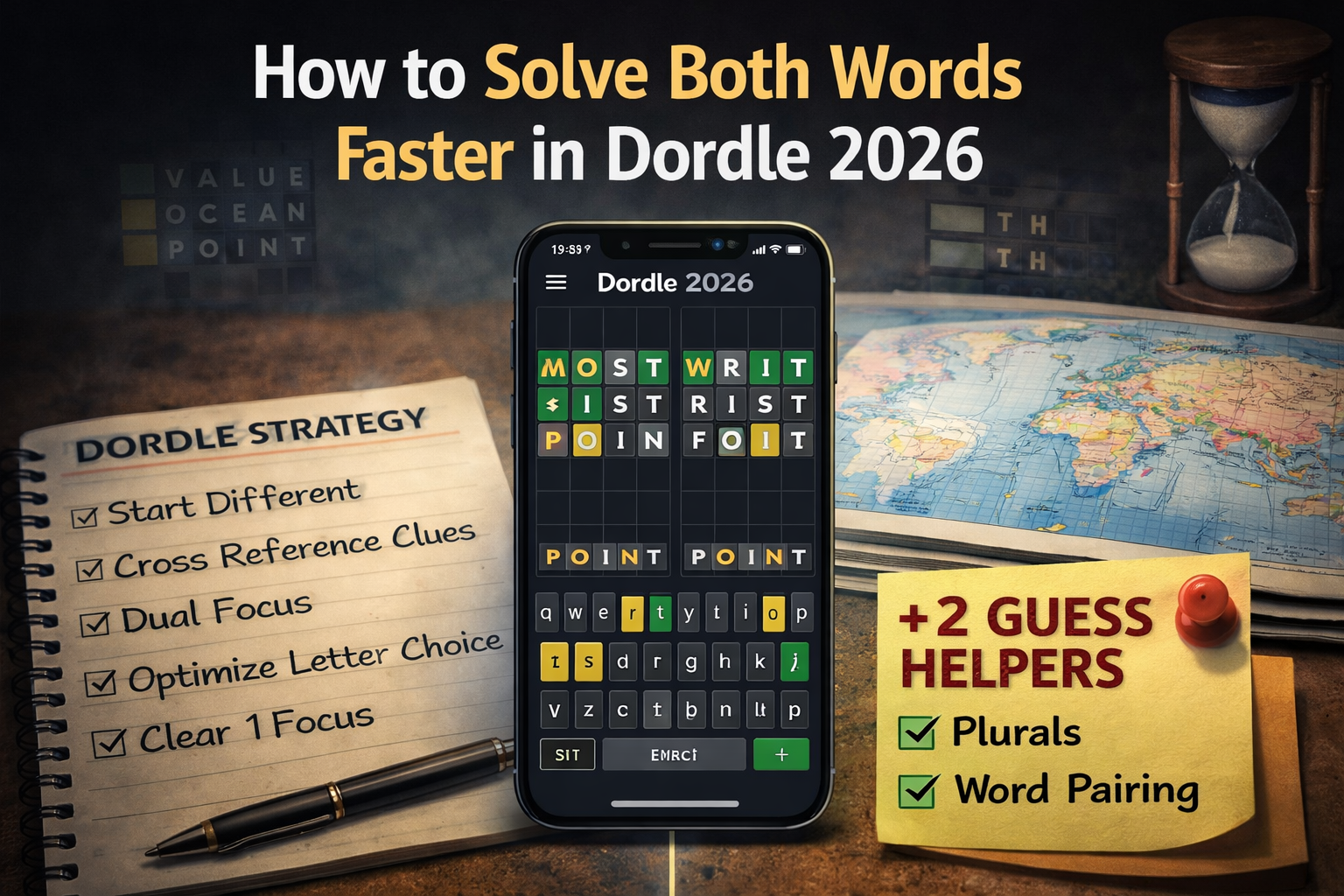
Why Dordle Opening Pairs Matter
Your first two guesses set the information budget for the whole game. A strong pair tests ten letters at once, while two random words might repeat letters and waste clues. Good dordle opening pairs buy information cheaply and feed both grids at the same time.
With two boards to solve, openers work twice as hard as in single word games. Every letter you test informs both answers, so a smart two word start pays off double. Weak openers starve both grids from the very first guess.
The eight ways below build your opening game from the ground up. Start with letter coverage, then add vowel balance, consonant weight, and pair testing.
Way One: Cover Ten Unique Letters
The golden rule is simple: your two openers should share no letters. Ten unique letters across two guesses gives you maximum coverage before guess three. Repeated letters in your opening two words waste precious clue space.
Build your pair to avoid overlap deliberately. If your first word uses A, E, and R, your second word must skip those letters. This discipline is the foundation of strong dordle opening pairs.
If you are new to Dordle, the Dordle beginner guide covers the basics. Come back here when the rules and color clues feel comfortable.
Way Two: Test Every Vowel Fast
Vowels unlock word shapes, so your two openers should test A, E, I, O, and U between them. Five vowels in two guesses tells you which vowels each answer uses. Vowel rich dordle opening pairs rarely mislead you.
Spread the vowels across both words rather than stacking them. A pair like AUDIO and SPENT covers all five vowels while testing strong consonants too. Balanced vowel placement is a hallmark of a good starting pair.
Do not forget Y as a backup vowel. Some answers hide Y in key spots, and a pair that ignores Y can miss it. The Dordle starting words guide lists vowel strong openers.
Way Three: Weight Common Consonants
After vowels, your openers should test the hardest working consonants: T, N, S, R, H, and L. These letters appear in a huge share of answers, so testing them early pays off. Consonant heavy dordle opening pairs find greens fast.
Pair a vowel heavy word with a consonant heavy word. One word tests A, E, I, O, U while the other tests T, N, S, R, H. This split design makes your two openers efficient and complementary.
Avoid rare letters in your openers. J, Q, X, and Z almost never help in guess one or two. Save exotic letters for later probes. The Dordle letter frequency guide explains which letters deserve early tests.
Way Four: Keep a Fixed Pair
Consistency beats creativity when you pick dordle opening pairs. Playing the same two openers every day builds deep knowledge of how they behave. You will learn exactly what each clue pattern means for your pair.
A fixed pair also makes results comparable across games. When your openers are constant, differences in outcomes come from the answers, not your choices. That clarity speeds up learning.
Change your pair only after a full week of testing a replacement. The Dordle archive play guide shows how to test new openers safely in replay games.
Way Five: Read Both Grids After Openers
After your two openers, read both grids before choosing guess three. Compare which board gained more and plan guess three around the weaker grid. This post opener read is where dordle opening pairs earn their value.
Do not autopilot into guess three. Pause, name the confirmed letters in each grid, and pick a word that serves both. Disciplined follow up turns a good start into a great game.
If both grids look gray after your pair, stay calm. Gray clues still rule out ten letters, which is powerful information. Trust your openers and probe the remaining letters.
Way Six: Adapt Pairs to Your Style
The best dordle opening pairs fit your personal strengths. If you read consonant clues well, weight your pair toward consonants. If vowels confuse you, test them early and often. Personal fit makes your openers stick.
Track which pairs feel comfortable over a month. Comfort matters because a pair you trust lets you play fast and calm. Uncomfortable openers slow your thinking even when the letters are good.
Do not copy someone else’s pair blindly. Test popular pairs in replay games first, then keep what works for you. Your two openers should feel like yours.
Way Seven: Avoid Opener Traps
Some starting pairs look strong but hide traps. Pairs that share a letter, pairs with double letters, and pairs heavy on rare letters all waste clues. Audit your chosen pair for these flaws.
Watch out for the double letter trap. An opener with EE or OO tests one letter twice, halving its value. Clean dordle opening pairs use ten distinct letters with no repeats.
Review your pair monthly. As your skills grow, you may outgrow your first pair. Evolving your openers keeps your opening game sharp.
Way Eight: Test Pairs in Replays
Never debut new dordle opening pairs in the daily game. Test every candidate pair across ten replay games first and compare the clue counts. Data from replays beats hunches about which pair is best.
Score each test pair on letters covered, vowels tested, and greens found. A simple scorecard makes different pairs comparable. Keep the winner and retire the loser.
Retest your champion pair every few months. New habits and new skills can change which pair fits you best. Regular testing keeps your openers honest.
Frequently Asked Questions About Dordle Opening Pairs
What are dordle opening pairs? They are two starting words played as guesses one and two, chosen to cover ten unique letters, test all vowels, and weight common consonants for maximum early information.
Should both openers avoid repeating letters? Yes. Ten unique letters across two guesses gives the most clues. Any repeated letter is a wasted test.
How do I pick my first pair? Start with a vowel heavy word plus a consonant heavy word, test the dordle opening pairs you build in replay games for a week, and keep the ones whose clue counts beat your old openers.
Start Every Game Like a Pro
Pros treat their first two guesses as a science. They cover ten unique letters, test every vowel, weight common consonants, and read both grids after the pair. Their games start strong because their openers are strong.
Build your own pair today. Pick a vowel word and a consonant word with no shared letters, test them in replays, and watch your daily games improve from guess one.
Extra Dordle Opening Pairs Habits
Write your chosen pair on a card by your screen until it is memorized. A visible reminder prevents accidental changes and keeps your opening game consistent.
Record the clues your pair earns each day for a month. Patterns in the log reveal whether your openers truly perform or just feel good.
Teach your pair to a friend who plays Dordle. Explaining why each letter is there deepens your own understanding of how opening words work.
More Dordle Opening Pairs Study Ideas
Study which letters your openers miss most often. If Q, Z, or J keep surprising you, add a third probe word that tests them when the first two guesses come up empty.
Compare your pair against popular pairs in replay games. Play the same replay board with different pairs and see which finds more clues. Head to head tests settle pair debates.
Keep a list of backup pairs for variety weeks. Playing a fresh pair for one week per month keeps your reading skills flexible.
Bonus Dordle Opening Pairs Drills
Drill one: play five replay games with your pair and count the total yellows and greens it earns. This baseline score lets you compare future pairs fairly.
Drill two: build three brand new starting pairs on paper, then test each in three replay games. Designing pairs trains your letter coverage instincts.
Drill three: play a replay game where your two openers must share no letters and cover all five vowels. This constraint drill sharpens pair construction.
When you are ready to practice, open the official Dordle site and start your first game. Strong openers make every game start with confidence.