Nerdle Commutative Swaps: 8 Proven Ways to Use Order Tricks
Nerdle commutative swaps are one of the cleverest tricks in the daily math puzzle, and most players never use them on purpose. The idea is simple, in addition and multiplication the order of the numbers does not change the answer, so swapping two terms gives you a brand new guess that tests the same facts in a new arrangement. This guide gives you 8 proven ways to use nerdle commutative swaps to beat purple tiles, build valid probes, and squeeze more information out of every guess.
Why Nerdle Commutative Swaps Matter
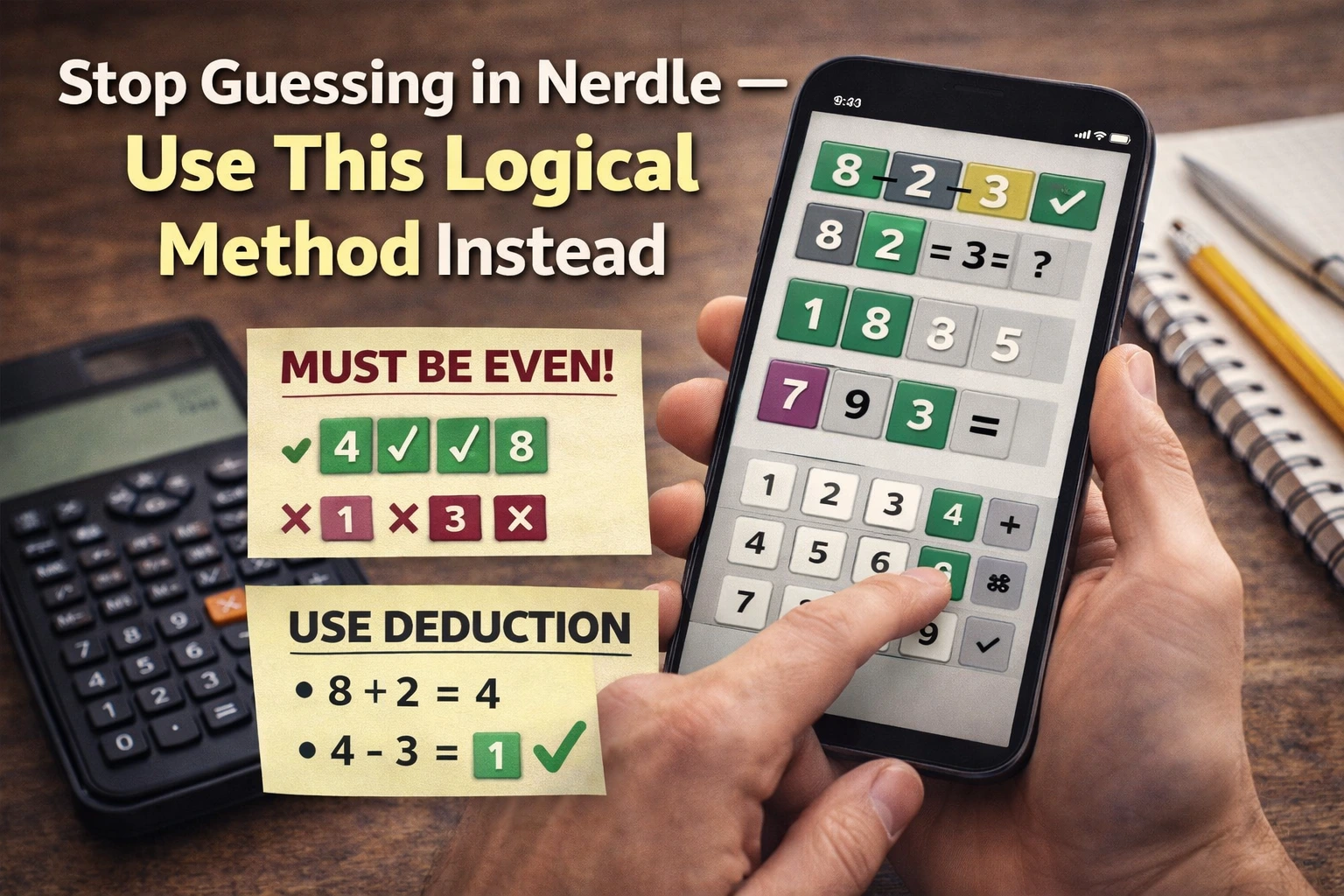
Nerdle gives you only six guesses, so every guess must earn its place. A nerdle commutative swap turns one equation into two, because swapping the terms around the plus sign or the times sign produces a different string that the game reads as a different guess.
This matters most when purple tiles tell you a digit belongs somewhere else. Instead of inventing a whole new equation, you swap the terms and test the new arrangement directly. One swap can resolve a purple clue in a single move, and that efficiency is why strong players keep nerdle commutative swaps in their toolkit.
Way One: Learn What the Commutative Property Really Means
The commutative property says that for addition and multiplication, order does not change the result. 4 plus 7 equals 11, and 7 plus 4 equals 11 as well. 3 times 8 equals 24, and 8 times 3 equals 24 too.
This is the whole foundation of nerdle commutative swaps. If the answer stays the same when you swap, the swap is always a legal move, and the game will accept it as a valid guess. Burn this property into memory before you try the advanced tricks, because every technique in this guide rests on it. Our Nerdle operators guide explains how each sign behaves.
Way Two: Swap Addition Terms to Beat Purple Tiles
Purple tiles are the perfect trigger for a nerdle commutative swap. Imagine your guess was 34 plus 21 equals 55, and the 21 shows purple, meaning those digits belong elsewhere in the equation. Swapping to 21 plus 34 equals 55 keeps the same digits and the same answer but tests a new arrangement.
Sometimes the swapped version goes green, and you have solved the placement in one move. Even when it does not, the new color pattern tells you which term sits where. Practice this move deliberately, because fast nerdle commutative swaps turn purple tile confusion into instant progress. Our Nerdle purple tiles guide shows how to read these clues.
Way Three: Swap Multiplication Factors for New Guesses
Multiplication works the same way, and nerdle commutative swaps with factors are just as powerful. If 6 times 9 equals 54 leaves the 9 purple, try 9 times 6 equals 54 and watch the tiles change. You keep the proven facts and rearrange only the order.
This trick shines in the mid game when you know the digits but not their positions. A swapped multiplication guess is cheap to build, always valid, and often resolves two purple tiles at once. Keep a few factor pairs in mind during every game, so the swap is ready the moment a purple tile appears. Pair this with our Nerdle multiplication tips for full coverage.
Way Four: Never Swap Subtraction Terms
Here is the trap, subtraction is not commutative, so nerdle commutative swaps must never touch a minus sign. 9 minus 4 equals 5, but 4 minus 9 equals negative 5, which is a different answer and usually an invalid guess.
Swapping subtraction terms by accident is one of the most common self inflicted wounds in the game. Before every swap, check the operator, plus and times are safe, minus is never safe. Make this check a habit and you will never waste a guess on an illegal reversal. Our Nerdle subtraction tips cover how minus signs shape games.
Way Five: Never Swap Division Terms
Division is not commutative either, so the same warning applies. 12 divided by 3 equals 4, but 3 divided by 12 is a fraction, not a Nerdle answer. A swapped division guess is almost always invalid, and invalid guesses burn your budget for nothing.
Treat division as a locked pair, the dividend stays left and the divisor stays right, no exceptions. When purple tiles hit a division guess, solve the placement with new numbers instead of a swap. This discipline is part of clean nerdle commutative swaps play, knowing when the trick does not apply. See our Nerdle division tips for division strategy.
Way Six: Use Swaps to Build Valid Probes
A probe guess tests new information, and nerdle commutative swaps make excellent probes. When you are unsure which of two arrangements is correct, play one, read the tiles, then play the swapped version. The pair of results usually pins down the answer.
This two guess sequence is cheaper than it looks, because the first guess was information you needed anyway, and the swap costs no new thinking. Plan probe pairs in advance during tough games, so you never stare at the grid wondering what to try next. For more on smart probing, read our Nerdle elimination guesses guide.
Way Seven: Read Green and Purple Tiles After a Swap
The real skill in nerdle commutative swaps is reading what the swapped guess tells you. Compare the tiles before and after the swap carefully. Digits that stay green in both arrangements are locked in place, while digits that change color are telling you about position.
Write down both color patterns side by side if you need to, because the comparison is where the insight lives. Over time you will start predicting the second pattern before you type the swap, which means your brain is learning the logic, not just following a recipe. This comparative reading is what separates casual swappers from true strategists.
Way Eight: Drill Swaps Until They Feel Instant
Like every Nerdle skill, nerdle commutative swaps get faster with deliberate practice. Take ten addition equations and ten multiplication equations, write each one down, then write the swapped version next to it. Check that the answers match.
Time yourself and repeat the drill weekly until the swapped form appears in your head the moment you see the original. Speed matters because the swap is most valuable under mid game pressure, when slow thinking leads to panic guesses. A drilled swap takes two seconds, and those two seconds can save your whole game.
Frequently Asked Questions About Nerdle Commutative Swaps
Do swapped guesses count as different guesses? Yes, the game reads the string you type, so a swapped equation is a new guess that gives new tile information. Can you swap more than two terms? Yes, in longer chains like 2 plus 3 plus 4, any rearrangement keeps the same sum.
Does swapping work with the equals sign? No, the answer must stay on the right, so only swap terms on the left side. Is this trick cheating? Not at all, it uses a real math property inside the normal rules. You can practice swaps on the official Nerdle site in any daily game.
Swap Smart and Win More
Nerdle commutative swaps turn a basic math fact into a strategic weapon. You already knew that order does not matter in addition and multiplication, and now you know how to spend that knowledge on purple tiles, probes, and mid game rescues.
Add the swap to your standard toolkit this week, and use it the next time purple tiles confuse you. Track how often a single swap resolves the clue, and you will be surprised how often one clever move does the work of two blind guesses. Then keep practicing on the official Nerdle site until the swap feels automatic.
Extra Nerdle Commutative Swaps Habits
Once the basic swap feels natural, layer in habits that keep your nerdle commutative swaps sharp. Before each game, remind yourself which operators allow swaps and which forbid them. After each purple tile, ask whether a swap could test the new arrangement before you invent fresh numbers.
Teach the trick to a friend, because explaining why subtraction cannot swap cements the rule forever. And review your swap successes in your weekly log, so the habit stays visible. Small reminders keep a great trick from fading. Build stronger openers with our Nerdle first guesses guide.