Nerdle Grid Reading: 8 Proven Ways to Read Every Row
nerdle grid reading is the skill that turns random guessing into real solving. Most players type an equation, glance at the colors, and guess again without truly reading the board. When you slow down and read every row with a plan, the grid stops looking like noise and starts telling you exactly what to type next.
A full Nerdle game gives you six rows, and each row is a clue package: eight tiles of position, color, and math information. This nerdle grid reading guide gives you eight proven ways to read every row, from your first opener to your last guess, so nothing on the board goes to waste.
Why Reading the Grid Is a Skill, Not a Reflex
Your eyes land on the grid after every guess, but seeing is not the same as reading. Most players scan for green tiles, celebrate a little, and move on. Strong players slow down and treat each row like a short report. That report tells you which characters are locked, which are misplaced, and which are gone. The habit of nerdle grid reading takes a few extra seconds per row, and it pays for itself in fewer wasted guesses.
Think of the grid as your notebook. Every row records a test you already ran, and the colors are the results. If you skip the reading step, you end up repeating tests you already finished. If you read the grid with care as part of your nerdle grid reading routine, you build on what you know instead of starting over. That difference shows up in your score within a week. For the errors that poor reading causes, review the common Nerdle mistakes that ruin your score so you know what to avoid.
Way One: Read Each Row Left to Right Before You Plan
Start every review at the left edge of the row and move one tile at a time. Say the character and its color in your head as you go: green four, black seven, purple plus. This slow left to right pass stops your eyes from jumping to the exciting tiles and skipping the quiet ones. The black tiles matter as much as the green ones, and you only notice them when you refuse to skip ahead.
On your way across the row, group what you learn into three buckets: locked, moveable, and banned. Locked tiles stay exactly where they are. Moveable tiles belong in the answer but need new homes. Banned tiles leave your plans entirely. This simple nerdle grid reading habit gives your next guess a clean starting point instead of a fuzzy feeling. Good reading starts with a good opener, so study Nerdle first guesses and smart openers to give your rows more information to report.
Way Two: Let the Colors Tell You the Story
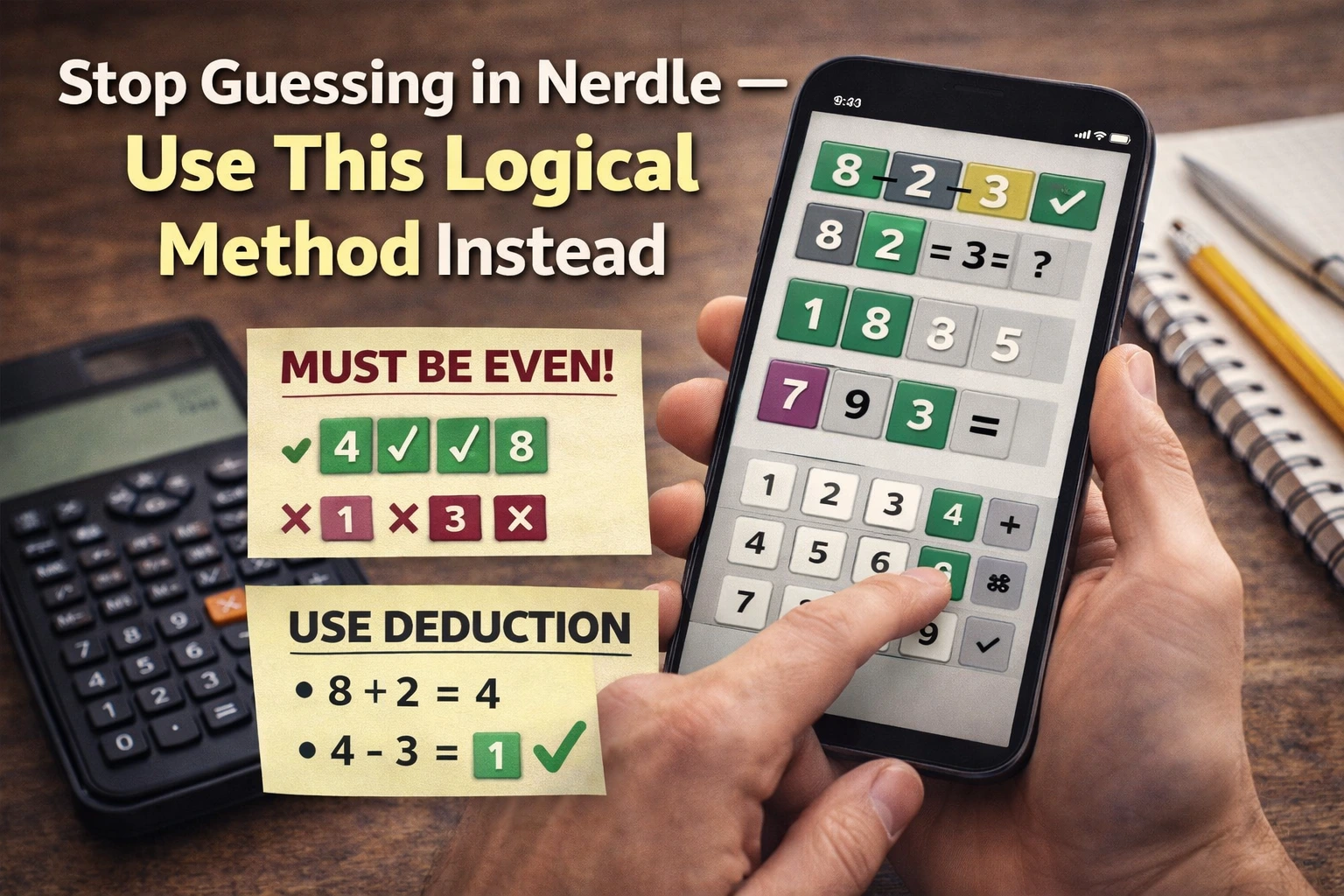
Green means the character is correct and in the correct slot, so write it into your plan in ink. Purple means the character is in the answer but in a different slot, so keep it on your shortlist and try it somewhere new. Black means the character is not in the answer at all, with the usual care around repeated characters. In good nerdle grid reading, read all three colors together and the row becomes a sentence instead of a scatter of tiles.
The story changes as rows pile up. A purple plus in row one that turns green in row three tells you that your relocation worked. A digit that shows black twice is fully out of the picture. When you practice nerdle grid reading daily, you start to notice these small story beats without effort, and your guesses get sharper because each one answers a question the last row asked.
Way Three: Compare Rows, Not Just Tiles
A single row gives you facts, but two rows together give you logic. Put your latest guess next to the one before it and look for what changed. If you moved a purple digit to a new slot and it turned green, you just confirmed a position. If you swapped an operator and the answer stayed black in the same column, the whole family of guesses with that shape is probably wrong.
This comparison habit is where real nerdle grid reading shines. Hold the two rows in your mind and ask what the color changes are telling you. You will catch contradictions early, like a digit you keep typing in a slot where it already showed black. You will also spot confirmations that let you lock in a position with confidence. Each comparison saves you from testing ideas the grid already rejected.
Way Four: Read the Equals Column as an Anchor
Every valid Nerdle guess contains exactly one equals sign, and its column position splits the equation into a left side and a right side. Scan down the grid during your nerdle grid reading and note where the equals sign landed in each row. If it stayed in the same column across guesses, that position is probably locked by green feedback. If you moved it and it turned green, you just found the true split point of the answer.
Use the equals column as your anchor when everything else feels messy. Read the left side of each row for operator and digit clues, then read the right side for answer clues. A strong nerdle grid reading routine always checks the anchor first, because a wrong equals position makes every other deduction shaky. Once the split point is settled, the rest of the row becomes much easier to decode.
Way Five: Scan for What Each Row Ruled Out
Players love what rows confirm and ignore what rows eliminate, but elimination is half the game. After each guess, scan the row for black tiles and cross those characters out of your plans. A black operator is huge news: it removes an entire style of equation from your options. A black digit shrinks your candidate list immediately.
In solid nerdle grid reading, keep a running banned list in your head or on paper, and check it before every guess. The habit takes seconds and prevents the most embarrassing mistake in nerdle grid reading: typing a character the grid already rejected. When black tiles pile up late in the game, they are not bad news. They are the grid doing your narrowing work for you. Let them. For more on spending your six rows well, see Nerdle guess budget and how to spend every guess.
Way Six: Read Your Openers for Structure Clues
Your first two guesses are probes, and their rows deserve the closest reading of the game. They test the most characters, so they return the most information. Read them for structure first: where did the equals sign land, which operators showed color, and which digit pairs earned green or purple. Structure answers these questions before detail questions, because the shape of the equation limits everything else.
A careful nerdle grid reading of your openers often solves the game by guess four. If your opener tested all four operators, you know which math the answer uses. If it tested eight different digits, you know most of the number pool. Players who rush past their opener rows waste the richest information on the board. Read those rows twice if you need to. The official game page is a good place to keep practicing at the official Nerdle site once your reading habit is in place.
Way Seven: Spot Repeats Across Rows
Repeats hide in plain sight. A digit that appears in three rows with different colors is telling you something about its count in the answer. A purple tile that you keep moving without success may mean the answer contains two copies and you have only placed one. Reading across rows is the only way to catch these patterns, because a single row never shows the full picture.
When you practice nerdle grid reading, make repeat spotting a deliberate step. After guess three, ask yourself which characters have appeared most often and what their colors say. If a character keeps showing up purple, plan a guess that tests it in two slots at once where the math allows. Repeats are the grid whispering. Listen across rows and you will hear it.
Way Eight: Read the Grid Again Before Your Last Guess
Before your final guess, stop and read the whole grid from top to bottom. Do not plan your guess first and then glance at the board to confirm it. Read first, plan second. This full reread catches the tired mistakes that cost streaks: a banned digit sneaking back in, a purple tile returned to its old slot, an equals sign drifting from its confirmed column.
This final review is the simplest nerdle grid reading habit and the most valuable. It takes under thirty seconds and it has saved more streaks than any clever opener. Read every row, check your locked positions, confirm your banned list, and only then type. Your last guess should feel like a summary of everything the grid taught you, not a fresh gamble.
Frequently Asked Questions About Nerdle Grid Reading
How long should reading the grid take? About ten to twenty seconds per row once the habit is set. Early on it may take a minute, and that is fine. Speed comes naturally as the color meanings become automatic. Never trade reading time for guessing speed, because a fast guess built on a misread row is just a fast mistake.
Should I read rows in order or start with the latest? Start with the latest row, since it holds the freshest information, then work upward to compare. The upward comparison is where nerdle grid reading finds contradictions and confirmations. End with a quick top to bottom pass before your final guess, as Way Eight describes.
What is the biggest grid reading mistake? Ignoring black tiles. Players remember their greens and chase their purples, but they keep typing characters the grid already banned. If you fix only one reading habit, make it the banned list check before every guess. Pair it with the color by color review in Nerdle purple tiles and how to read their clues and Nerdle keyboard reading for tracking every key.
Can grid reading really improve my score? Yes. Most lost games are lost to repeated information, not hard math. Players retest banned characters, retry failed positions, and ignore structural clues their own rows gave them. Reading the grid fixes all three. Track your progress with Nerdle results analysis and learning from every game and watch your average guesses fall.
Read Every Row and Win More
Great Nerdle players are not better at math. They are better at reading. The grid hands you six rows of honest feedback, and every row you truly read makes the next guess smarter. Pick two of these eight nerdle grid reading ways today and use them in your next game. Add the rest over the coming week.
Your nerdle grid reading will feel slow at first, and then one day it will feel automatic. That is the moment your scores jump. Keep your banned list, honor your locked tiles, and read every row like it matters, because it does. For steady practice between games, visit the official Nerdle site and put these reading habits to work.
Extra Nerdle Grid Reading Habits
First, narrate the grid out loud or in a whisper when you play alone. Hearing yourself say green four, purple plus, black seven forces a complete read and stops your eyes from skimming. Second, after each game, pick the row that taught you the most and note why. Third, teach nerdle grid reading to a friend. Explaining the color logic out loud cements it in your own mind faster than any solo drill. The grid is always talking. Make reading it your favorite part of the game.