

Nerdle Results Analysis: 8 Proven Ways to Learn
Every Nerdle game leaves behind a story: six rows of guesses, a trail of colors, and the answer you found or missed. Most players close the tab and forget it. Smart players study it. These nerdle results analysis tips give you 8 proven ways to learn from every game and turn losses into lessons.
Analysis sounds serious, but it takes five minutes and feels like detective work. The players who improve fastest are not the best at math, they are the best at reviewing. Good nerdle results analysis turns each daily puzzle into a free coaching session.
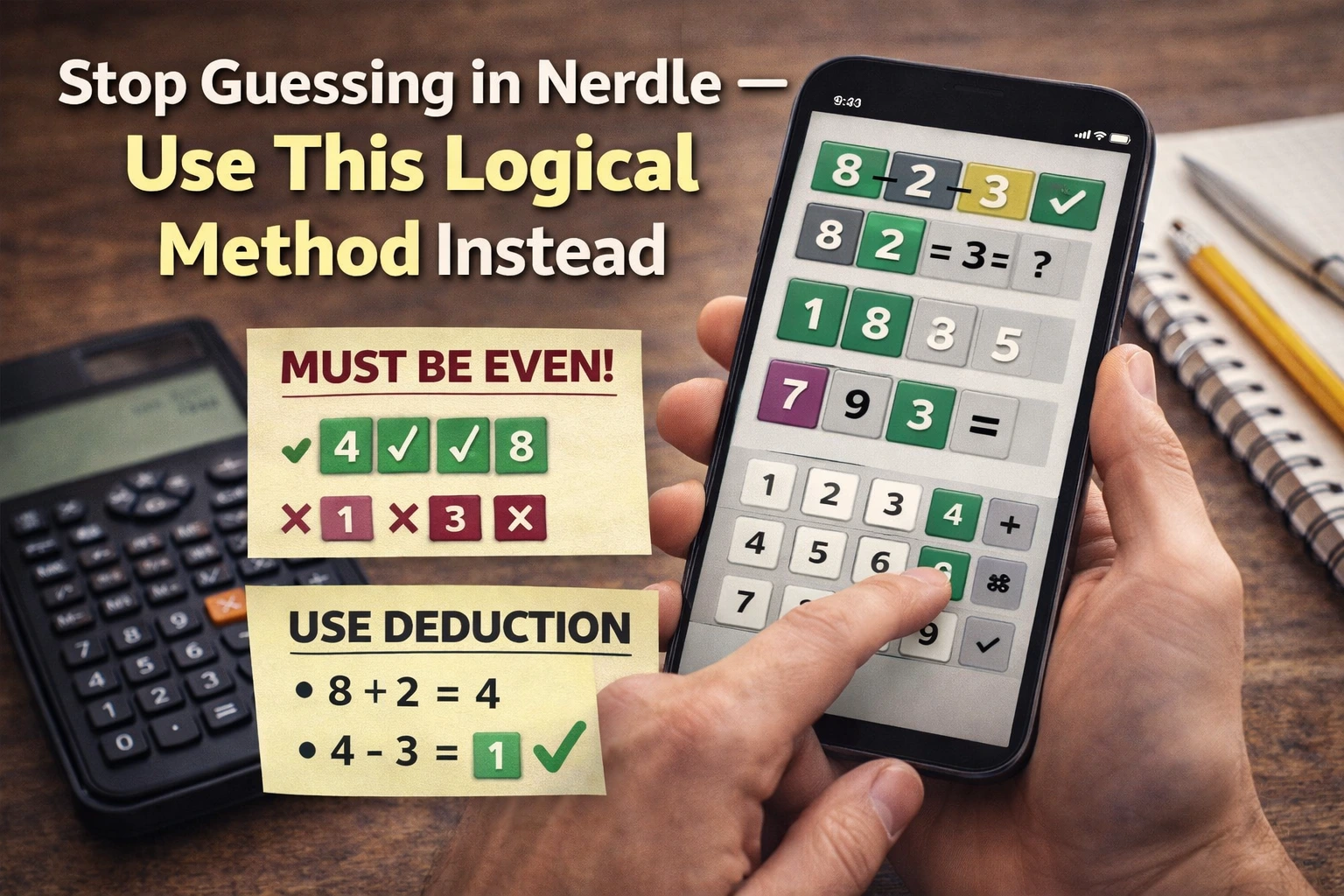
Why Reviewing Beats More Playing
Playing ten games teaches less than analyzing three. Repetition without reflection repeats the same mistakes. A short review after each game spots the pattern behind your errors.
Think of it this way: practice builds habits, but nerdle results analysis fixes them. Players who review cut their average guess count steadily, while players who just play plateau. Five minutes of review beats five extra games.
Way One: Replay Each Guess in Order
After the game, walk back through your guesses one by one. Ask what you knew at that moment and whether the guess used it. This replay shows where your logic broke down.
Most breakdowns happen at guess three or four, where a purple clue gets ignored or a black key returns. Replay catches the exact moment. Honest nerdle results analysis starts with an honest replay.
Way Two: Name Your First Mistake
Every lost game has a first mistake, the guess where things went wrong. Find it and name it: bad opener, ignored purple, wasted probe, rushed endgame. Naming it makes it fixable.
Our common Nerdle mistakes guide lists the usual suspects. Match your first mistake to the list and you will know exactly what to drill next.
Way Three: Grade Your Opener
Your opener sets up everything. After each game, ask whether it gave you useful colors and a workable structure. A great opener earns its place, a weak one gets replaced.
Our Nerdle first guesses guide helps you judge. Regular opener grading is quiet nerdle results analysis that pays off daily.
Way Four: Check Purple Key Moves
Look at every purple tile you earned and trace where it moved. Did each purple find a new home quickly, or did some sit for three guesses? Slow purple moves are a common leak.
Our Nerdle purple tiles guide teaches the moves. Pair it with our Nerdle keyboard reading tips and purple leaks disappear.
Way Five: Audit Your Guess Spending
Count how many guesses went to real progress versus stabs in the dark. If two or more guesses added no information, your spending needs work. Every guess should earn its keep.
Our Nerdle guess budget guide sets the standard. Spending audits are the heart of nerdle results analysis for six guess games.
Way Six: Compare With the Answer
Look at the final answer and ask what made it tricky: a rare operator, a double digit, an unusual structure. Then ask which guess could have revealed it sooner. Answers teach backward.
Do not just admire a clever answer, learn its shape. Players who study answers recognize similar shapes faster. This backward nerdle results analysis builds pattern memory.
Way Seven: Keep a One Line Game Log
Write one line per game: guesses used, first mistake, lesson. A notebook or notes app works. Over weeks, the log shows which mistakes repeat and which lessons stuck.
Review the log every Sunday. Trends jump out: maybe your endgame always rushes, or your probes waste slots. Our Nerdle endgame guide can fix the patterns your log reveals.
Way Eight: Celebrate the Games You Solved Cleanly
Analysis is not only for losses. When you win in four guesses, replay what went right: a great opener, a sharp probe, a calm endgame. Reinforce the good habits too.
Players who only analyze failures start dreading review. Celebrate clean wins on the official Nerdle site and your review habit will last. Good nerdle results analysis covers wins and losses alike.
Frequently Asked Questions About Nerdle Results Analysis
How long should a review take? Five minutes is plenty. Replay the guesses, name the first mistake, write one line in your log. Longer reviews have diminishing returns for a daily puzzle.
Should I review wins too? Yes, briefly. Clean wins show your best habits, and naming them helps you repeat them. One minute on a win is enough.
What if I keep making the same mistake? That is exactly what the log is for. When a mistake repeats three times, make it your drill for the week using our Nerdle practice guide. Targeted drills break stubborn habits.
Does analysis help with streaks? Directly. Most broken streaks come from repeat mistakes, not bad luck. Fewer repeat mistakes means longer streaks, as our Nerdle streak tips explain. Play daily on the official Nerdle site and review daily too.
Learn From Every Game
The 8 proven ways in these nerdle results analysis tips turn every finished puzzle into a lesson. Replay your guesses, name the first mistake, log one line, and celebrate clean wins. Small reviews compound fast.
Start today with the game you just played. Five honest minutes now will save you guesses all week.
Extra Nerdle Results Analysis Habits
Three bonus habits for serious students. First, screenshot interesting games and revisit them monthly. Second, compare your log with a friend and trade lessons. Third, reread your oldest log entries quarterly and notice how far you have come.
These habits turn nerdle results analysis from a chore into a record of your growth, and growth is the most motivating stat of all.
More Nerdle Results Analysis for Daily Growth
Two final nerdle results analysis ideas round out your review system. First, set a weekly theme: one week you review only openers, the next week only endgames. Focused themes turn a general review habit into targeted improvement. Players who theme their reviews fix one weakness at a time instead of drowning in feedback.
Second, share one lesson per week with another player, in a chat group or over coffee. Teaching forces clarity, and other players will share lessons back. A small study circle around the official Nerdle site daily puzzle makes analysis social instead of solitary.
Third, keep a monthly scorecard: average guesses, clean wins, and your most common first mistake. Watch the numbers move over the months. When the average drops and clean wins rise, you have proof that nerdle results analysis works, and proof keeps the habit alive through busy weeks and hard puzzles.
Fourth, revisit your very first log entries after three months and compare them with your recent games. The contrast shows exactly which lessons stuck and which old habits faded. Nothing motivates continued nerdle results analysis like visible proof that the player you were then is weaker than the player you are now.
Fifth, write a short season review every three months: your best game, your worst loss, and the one habit that changed your results most. A season review turns scattered daily nerdle results analysis into a story of improvement, and stories are what keep players coming back to the daily puzzle year after year.
Start your review habit tonight with the game you just finished. Five honest minutes of nerdle results analysis will teach you more than five extra games, and tomorrow your opener, your probes, and your endgame will all be sharper.




3 Comments