

Nerdle Time Management: 8 Proven Ways to Stay Calm
Nerdle has no official timer, but your own sense of time still decides how well you play. Rushing leads to invalid guesses, and overthinking burns your focus before the final rows. This nerdle time management guide gives you 8 proven ways to stay calm, pace your six guesses, and finish each daily game in control.
Good nerdle time management is not about speed. It is about rhythm. Settle into a steady pace, give each guess the attention it deserves, and keep enough mental energy for the endgame where games are won and lost.
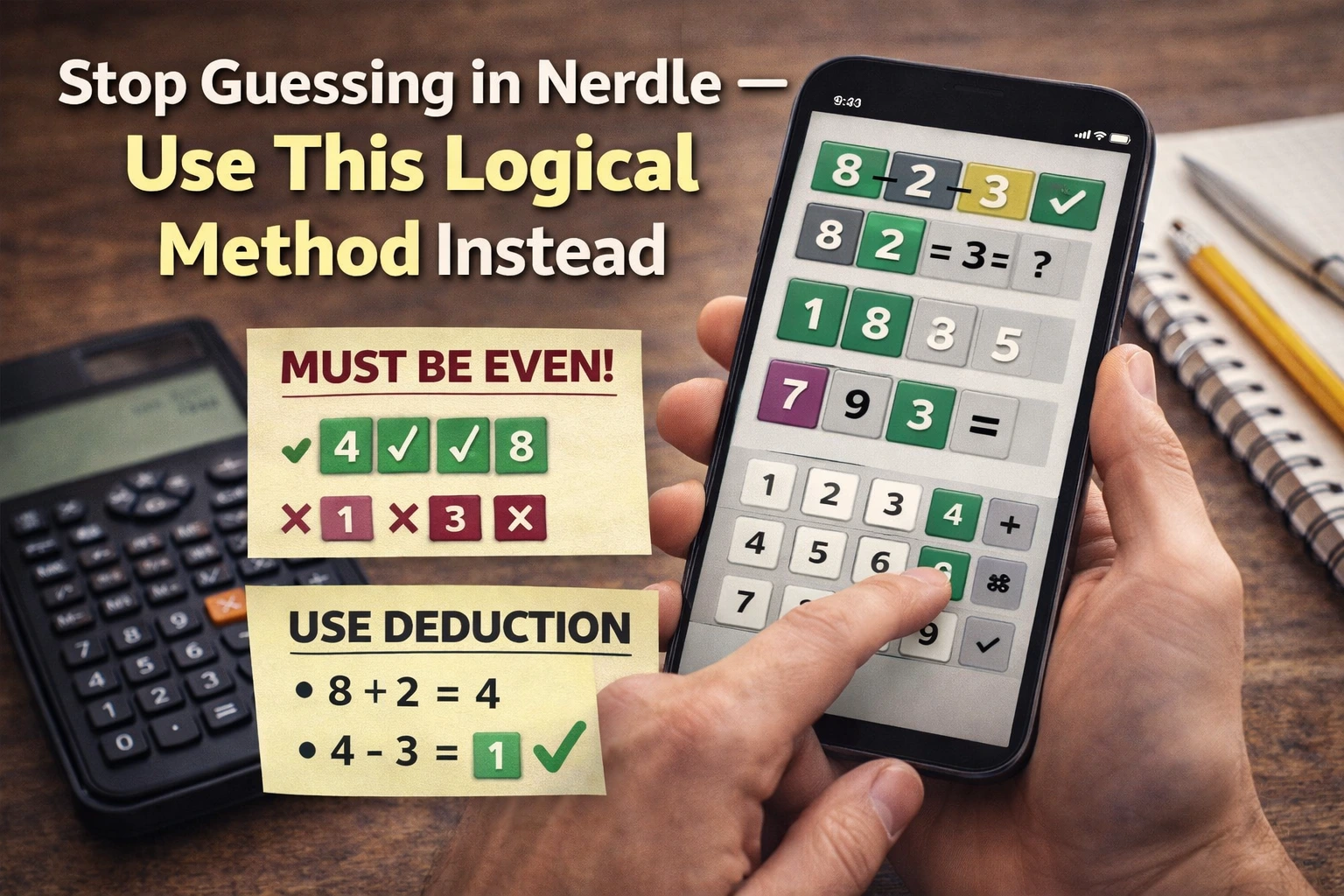
Why Nerdle Time Management Matters
Every guess you submit changes the information you have, and information is easier to use when your mind is calm. Players who rush tend to repeat black tiles, miss purple clues, and build invalid equations. A steady player reads the same grid and sees twice as much.
Nerdle time management starts before guess one. Decide your opener in advance, set aside ten quiet minutes, and play without distractions. That small preparation removes the two biggest time thieves: hesitation and interruption.
Way One: Decide Your Opener Before You Play
The minutes you spend choosing an opening guess are the most expensive minutes of your game, because they buy nothing. Pick one opener, memorize it, and start every game with it. Your brain can then spend its energy on reading results instead of choosing a first move.
Keep a backup opener for days when the first one flops badly. Two prepared openers cover almost every situation. This is the simplest nerdle time management win, and it costs you nothing to adopt today.
Way Two: Give Each Guess a Job
Assign every guess a role before you type it. Guess one gathers coverage. Guess two tests structure. Mid game guesses probe unknowns. Late guesses commit to answers. When each guess has a job, you never stare at the grid wondering what to do next.
Write your plan on paper for a few days until it becomes automatic. Our Nerdle guess budget guide pairs perfectly with this approach. Planned guesses take less time than improvised ones, which is the heart of nerdle time management.
Way Three: Read Colors in One Pass
After each guess, scan the tiles once from left to right and note every color. Do not go back and forth rechecking the same tiles. One deliberate pass trains your eyes to capture green locks, purple moves, and black bans in a single sweep.
If a tile confuses you, mark it and move on, then come back with fresh eyes before your next guess. Lingering on one tile steals time from the rest of the grid. One clean pass is a core nerdle time management skill.
Way Four: Pause Before Guess Four
Guess four is the danger zone. You have enough information to feel confident and enough guesses left to get careless. Take a full thirty second pause before typing guess four. Look at all three results together and ask what story they tell.
This pause catches more mistakes than any other habit. Most lost games trace back to a rushed middle guess that contradicted earlier clues. Thirty seconds of nerdle time management here saves entire games.
Way Five: Keep a Short Candidate List
When the answer starts taking shape, write down two or three candidate equations instead of holding them in your head. Externalizing candidates frees your working memory and stops the mental juggling that slows players down.
Cross out candidates as new clues arrive. By the late game you should have one clear answer and one backup. Short lists keep your thinking fast and your nerdle time management tight when pressure is highest.
Way Six: Play at Your Best Hour
Your brain is not equally sharp all day. Play your daily game when you are alert, not when you are exhausted or distracted. A morning player who forces a midnight game will play worse and slower than usual.
Protect a ten minute window at your best hour and treat it as an appointment. Consistent timing builds a rhythm that makes every game feel familiar. Smart scheduling is underrated nerdle time management.
Way Seven: Stop Rushing the Endgame
Players who managed their time well all game often throw it away on guess six, typing the first thing that fits. The final guess deserves your slowest, most careful thinking. Verify the math, check every tile against your clues, and confirm the equation is valid.
Our Nerdle endgame guide shows how to close games cleanly. One careful minute on the last guess protects everything you built. Endgame patience is advanced nerdle time management.
Way Eight: Review Your Pace Weekly
Once a week, think back over your games and ask where your time went. Did you stall on openers? Rush the middle? Freeze on the last guess? Patterns in your pacing reveal exactly which habit to fix next.
Keep a one line note after tough games: what slowed you down and what felt smooth. Over a month, those notes become a map of your progress. Reviewing pace is how nerdle time management keeps improving long after the basics are set.
Frequently Asked Questions About Nerdle Time Management
Should I use a timer while playing? A gentle personal timer can help, but never let it rush you into bad guesses. Use it to notice pacing, not to force speed. Calm beats fast in Nerdle.
How long should a daily game take? Most focused games take five to fifteen minutes. Faster is fine when clues are kind, but never trade accuracy for speed. Your nerdle time management goal is control, not records.
What if I get stuck and time is passing? Stand up, stretch, and look away for a minute. A fresh look at the grid breaks mental loops faster than staring harder. Breaks are productive, not wasted time.
Does playing faster improve my score? Not directly. Playing calmer improves your score, and calm play often happens to be faster. Focus on rhythm and the speed follows on its own.
Play Calm and Win More
The 8 proven ways in this nerdle time management guide turn rushed guessing into steady solving. Prepare your opener, give each guess a job, read colors in one pass, pause before guess four, keep short lists, play at your best hour, respect the endgame, and review your pace weekly.
Start tomorrow on the official Nerdle site with just one of these habits, then add another each day. Calm players spot clues that rushed players miss, and that is why nerdle time management wins games. Keep practicing on the official Nerdle site and watch your scores climb.
Extra Nerdle Time Management Tips
Here are three bonus habits. First, silence notifications before you play. One interruption can break the focus chain you built across three guesses. Second, play in the same quiet spot each day so your brain links that place with clear thinking.
Third, end each session by writing one sentence about your pacing. Good days teach you what to repeat, and bad days teach you what to fix. Our common Nerdle mistakes guide and Nerdle streak tips both reward the calm rhythm this guide builds.
Fourth, track which way of this nerdle time management guide helped most and repeat it tomorrow. Small steady gains beat dramatic overhauls, and your calmest games will soon become your most common ones.




One Comment