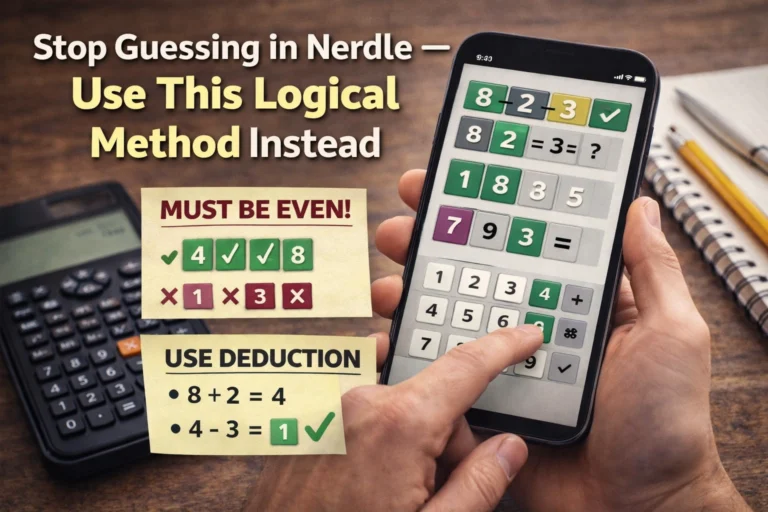
Nerdle Beginner Week: 8 Proven Ways to Start Strong
Your first seven days of Nerdle set the tone for everything that follows. Players who start with a plan win more often and enjoy the game more than players who guess at random. This nerdle beginner week guide gives you 8 proven ways to start strong, one clear focus for each day, and habits that carry into every future game.
Work through this nerdle beginner week plan in order. Each day builds on the one before, so do not skip ahead. By the end of day seven you will read tile colors, build valid guesses with confidence, and manage your six attempts like a seasoned solver.
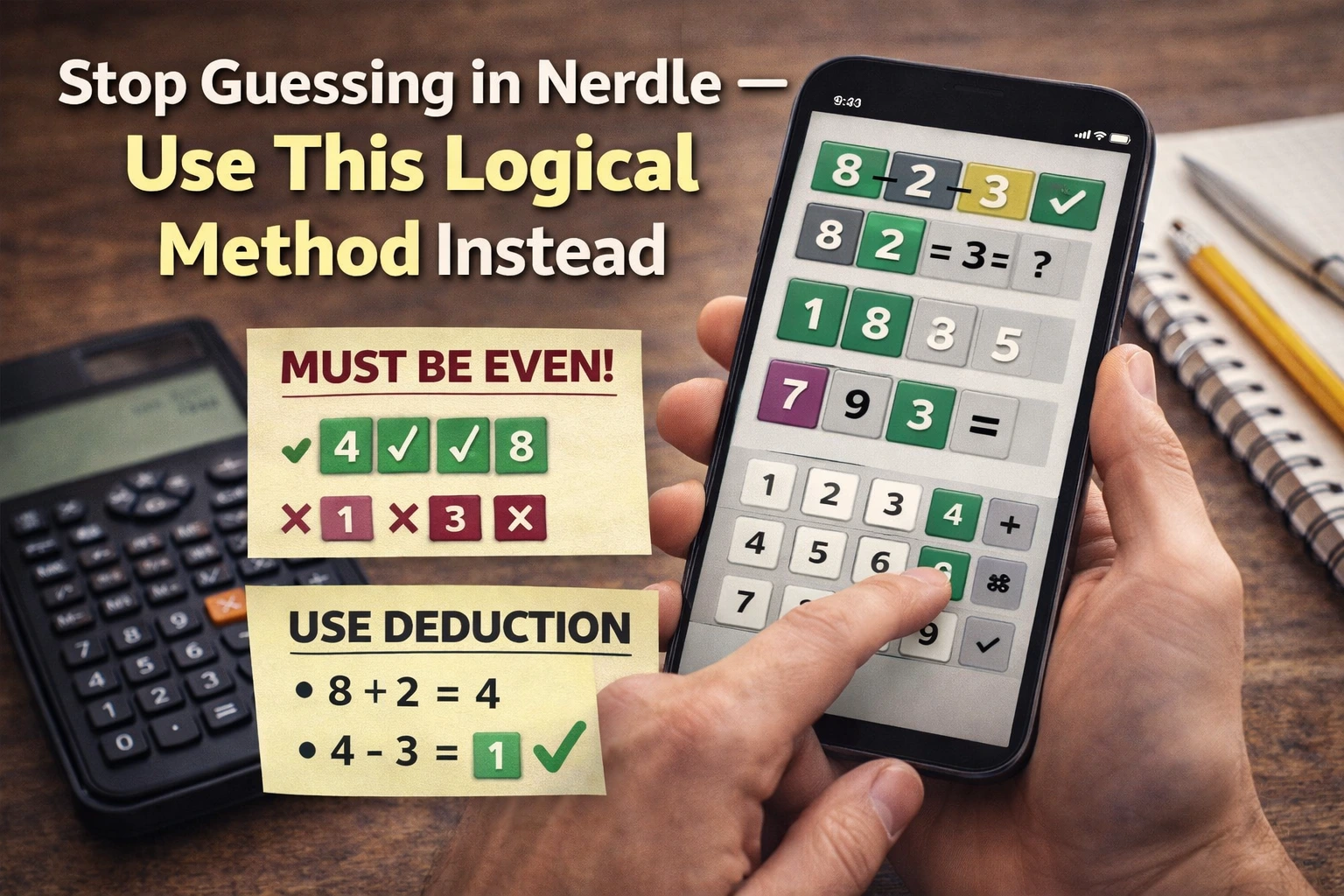
How This Nerdle Beginner Week Works
Each day of this nerdle beginner week has one theme, one drill, and one takeaway. The drill takes about ten minutes on top of your daily game. That small daily investment compounds fast, because Nerdle rewards pattern recognition more than raw math speed.
Keep a small notebook or notes file during your nerdle beginner week. Write down your opener, your mistakes, and one thing you learned each day. That log becomes your personal playbook, and it makes week two far more productive than week one.
Day One: Learn the Rules Cold
Day one is all about the rules. You get six guesses to find a valid equation. Green means the character is correct and in the right slot. Purple means the character is in the answer but in the wrong slot. Black means the character is not in the answer at all. Every guess must be a complete, correct equation with one equals sign.
Play your first daily slowly and read every result. Our how to play Nerdle guide walks through each rule with examples. Rushing on day one creates bad habits, so treat this nerdle beginner week opener day as classroom time, not a race.
Day Two: Build Your First Opener
An opener is the guess you play first in every game. Pick one valid equation and use it every day this week. A good starter covers many different digits and at least two operators. Something like 12+34=46 or 8*7-6=50 works well, because each tests fresh characters across the grid.
Do not change your opener all week. Consistency lets you compare results from day to day and learn what your opener actually tells you. Our Nerdle first guesses guide explains opener design in depth, and day two of your nerdle beginner week is the perfect time to lock one in.
Day Three: Read the Tile Colors
Today, slow down and study every colored tile after each guess. Ask yourself what each green tile locks in, what each purple tile tells you to move, and what each black tile rules out. Beginners often stare at the grid without really reading it, and that is where games slip away.
The most common beginner error is ignoring black tiles and repeating dead characters. Our common Nerdle mistakes guide shows how that habit ruins scores. Day three of your nerdle beginner week fixes it by making tile reading a deliberate ritual after every guess.
Day Four: Respect Operator Order
Multiplication and division happen before addition and subtraction, and your guesses must follow that order. Many beginners build equations that look right but compute wrong, wasting a guess on an invalid line. Before you submit any guess today, do the math in order and confirm both sides balance.
Practice with your opener first, since you already know it is valid. Then check every new guess the same way. Our Nerdle operators guide covers each sign in detail. Operator discipline is the quiet skill that separates a smooth nerdle beginner week from a frustrating one.
Day Five: Try Your First Probe Guess
A probe is a guess designed to gather information rather than solve the puzzle. On day five, spend one guess on purpose to test unknown digits instead of hunting the answer. Pick characters you have not tried yet and place them in fresh slots to maximize what the colors teach you.
Probing feels wasteful at first, but it wins games. One smart probe can turn a stuck grid into a certain solve. Day five of your nerdle beginner week teaches you that information is a resource, and spending a guess on it is often the fastest route to the answer.
Day Six: Plan All Six Guesses
Today, think of your six guesses as a budget. Guess one covers new characters. Guess two tests structure. Guesses three and four probe and narrow. Guess five commits to a likely answer. Guess six is your safety net. Writing this plan down before you play changes how calm you feel.
When you have a plan, a bad result on guess two does not rattle you, because you know what guess three is for. Day six of your nerdle beginner week builds the planning muscle that experienced players use every single day without even thinking about it.
Day Seven: Review the Whole Week
On the final day, read your notebook before you play. Look at the mistakes you repeated and the lessons that stuck. Most beginners find one pattern, like forgetting operator order or reusing black tiles, caused most of their losses. Naming your pattern is the first step to fixing it.
Play day seven slowly and apply everything you learned. Then write a short summary: your opener, your biggest lesson, and the one habit you want to keep. That summary turns your nerdle beginner week into a reference you can revisit whenever your game slips.
Way Eight: Turn Week One Into a Habit
The eighth way is what happens after the week ends. Keep the daily game, keep the notebook, and keep reviewing your mistakes once a week. Skills fade without practice, but they compound with it. A second week of deliberate play is worth more than a month of careless guessing.
Add one new drill each week, such as timing yourself gently or practicing a new opener. Our Nerdle practice guide has structured drills for exactly this stage. Your nerdle beginner week planted the seed; consistent practice grows it.
Frequently Asked Questions About Nerdle Beginner Week
Should I play more than one game a day during my nerdle beginner week? One focused daily game plus a short drill beats five rushed games. Quality of attention matters more than quantity of attempts in your first week.
What if I lose every game this week? That is normal and fine. Your nerdle beginner week is about learning, not winning. Track what went wrong each day and you will see losses turn into wins by week two.
Can I change my opener during the week? Try not to. A stable opener teaches you how to read results. Change it in week two once you understand what your current one tells you.
How long should each session take? About fifteen minutes: ten for the daily game and five for the drill and notes. Short focused sessions build habits that long exhausting ones cannot.
Start Your Nerdle Beginner Week Today
The 8 proven ways in this nerdle beginner week guide take you from confused to confident in seven days. Learn the rules, lock in an opener, read the tiles, respect operator order, probe with purpose, budget your guesses, review your week, and keep the habit alive. Each step is small, but together they transform your game.
Open the official Nerdle site and play day one right now while the plan is fresh. Bring your notebook, play slowly, and write down one lesson. One week from today, check your notes and see how far this nerdle beginner week carried you. Then visit the official Nerdle site daily and keep the streak of learning going.
Extra Nerdle Beginner Week Tips
Here are three bonus habits for your nerdle beginner week. First, play at the same time each day. A fixed slot turns the game into a ritual and protects it from busy schedules. Morning players often focus better, but any consistent time works.
Second, explain your reasoning out loud after each guess. Saying what you learned from the colors forces your brain to process them instead of glossing over them. Third, celebrate small wins, like your first clean probe or your first game with no repeated black tiles. Progress keeps motivation alive through the hard days.