

Octordle Strategy Guide: Solve All Eight Words
Octordle takes the multi word puzzle craze to its extreme: eight five letter words, thirteen guesses, and a single guess that must serve all eight grids at once. If your first Octordle attempts ended in chaos, a clear octordle strategy is the difference between random guessing and steady wins. This guide gives you a complete octordle strategy, from opener pairs that map the alphabet to rescue tactics for your final guesses, so you can solve all eight words before the guess counter hits zero.
Octordle rewards planning more than vocabulary. You do not need to know obscure words. You need a method for gathering information fast, a system for tracking eight puzzles at once, and the discipline to stop exploring and start solving at the right moment. Follow this guide and your win rate will climb within a week.
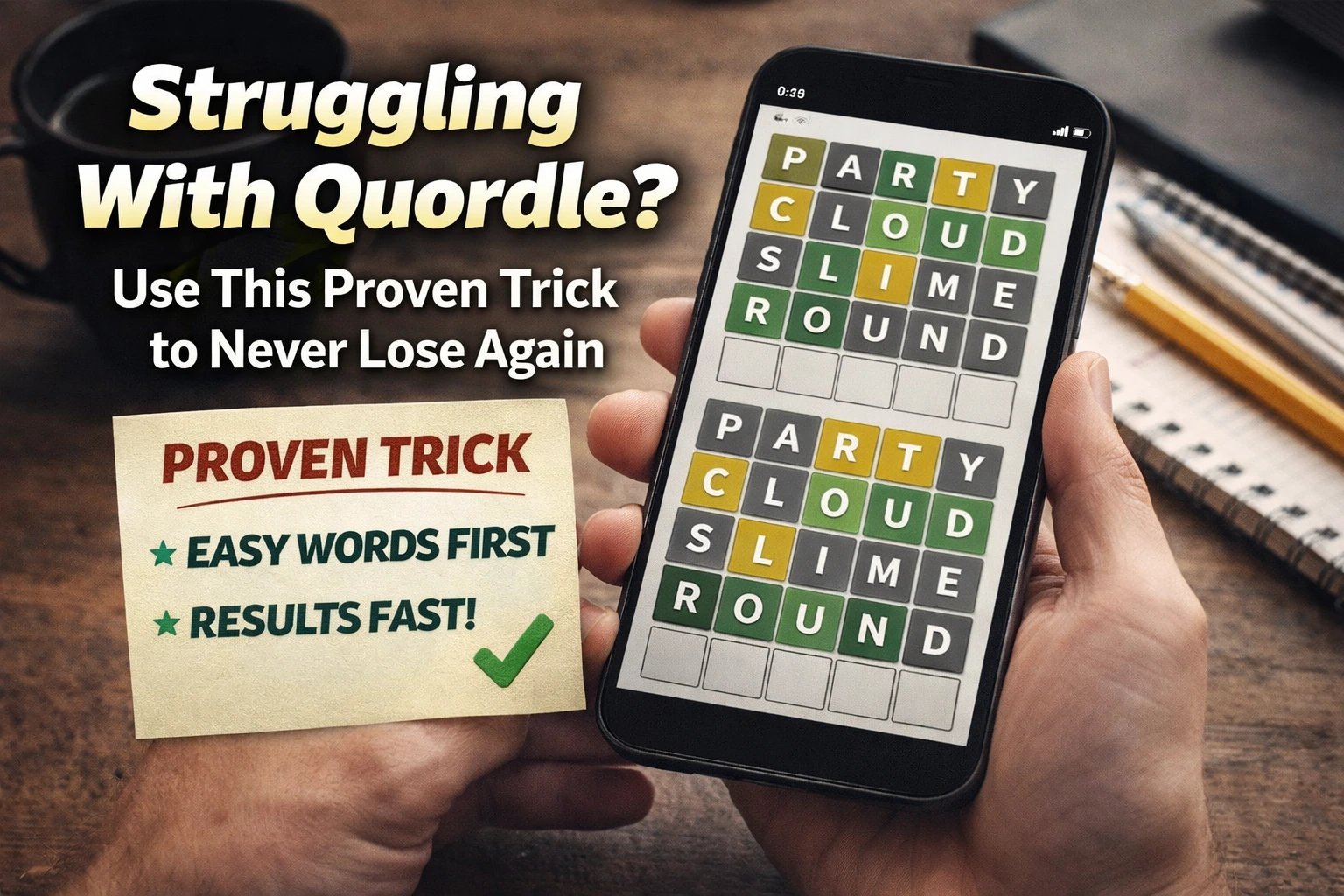
What Is Octordle and How Does It Work
Octordle is a Wordle variant where you solve eight five letter words simultaneously. Type a word and press enter, and your guess is scored in all eight grids with the familiar green, yellow and gray feedback. You get thirteen guesses to solve all eight words. Solve every word within thirteen guesses and you win. Leave even one unsolved and the round is a loss. The game runs free in your browser on the official Octordle game site, with a daily puzzle and practice modes.
The jump from Dordle or Quordle to Octordle is bigger than it looks. With eight grids, you cannot hold every confirmed letter in your head. A working octordle strategy therefore relies on systems: opener pairs that front load information, a fixed reading order for the grids, and clear rules for when to switch from exploring to solving.
The 13 Guess Budget: Your Most Precious Resource
Thirteen guesses sounds generous until you divide it by eight words. That is barely more than one and a half guesses per word if you played them separately, which is why every guess must work for multiple grids. Think of your thirteen guesses as a budget. Spend the first four or five on exploration, gathering letters across all eight words. Spend the rest on solving, converting confirmed letters into finished words. Players who explore too long run out of time. Players who solve too early waste guesses on words they have not mapped yet. A sound octordle strategy spends the budget deliberately.
Track your spending as you play. After guess five, you should have useful information in most grids. After guess eight, at least a few words should be solved or nearly solved. If you reach guess ten with nothing finished, shift into rescue mode, which we cover below.
Best Opening Pairs for Eight Grids
Your first two guesses matter more in Octordle than in any smaller variant because they test ten unique letters across all eight words at once. Strong opener pairs combine common vowels and consonants without repeating letters. Proven pairs include RAISE plus MOUND, CRANE plus POINT, and SLATE plus FIERY. Each pair covers the busiest letters in English, which means most grids will light up with greens and yellows after just two guesses. Our guide to the best Quordle starting words explains the information first logic behind these choices, and the same thinking drives winning octordle strategy openers.
Resist the urge to open with a clever or thematic word. In Octordle, the opener is a measuring tool, not a solution attempt. Its job is to reveal letters, not to guess a word. Pick workhorse openers that fit your octordle strategy and let the feedback guide you.
How to Read Eight Feedback Panels Without Panicking
Eight grids of colored tiles can overwhelm beginners. Fix a reading order and follow it every turn: scan left to right, top to bottom, and note only the new information each guess reveals. You are looking for grids that changed a lot, because those are the grids where your next guess should focus. Grids that barely changed need fresh letters. Grids with several greens are close to solved and can wait a turn. This triage habit is the core reading skill in any serious octordle strategy.
Do not try to memorize everything. Focus on patterns: which grids have a confirmed first letter, which have two or more greens, which are still mostly gray. Write the trickiest patterns down if it helps. External memory beats a strained brain when eight puzzles compete for attention, so write down the patterns your octordle strategy depends on.
The Two Phase Method: Explore Then Solve
Divide every round into two phases. In the explore phase, roughly guesses one through five, your goal is information. Choose words with fresh common letters, avoid repeating grays, and spread your attention across all eight grids. In the solve phase, roughly guess six onward, your goal is completion. Pick the grid closest to solved, finish it, then move to the next. The transition point is the most important decision in octordle strategy: switch too early and you solve words blind, switch too late and the clock beats you.
A practical trigger for the switch is the three green rule. When three or more grids each show at least two greens, you have enough information to start solving. Before that point, keep exploring. This rule keeps your octordle strategy honest and prevents both premature solving and endless exploring.
Managing Grids That Fall Behind
In every round, one or two grids will lag while the others fill in. These stragglers lose more rounds than any other cause. When you spot a grid with almost no colored tiles after guess five, promote it to priority status. Dedicate your next explore guess to testing fresh letters that fit nowhere else, even if the word looks odd for the other grids. A single well aimed guess can revive a dead grid and save the round. Ignoring stragglers is the quietest way to lose at Octordle, and fixing them is a hallmark of mature octordle strategy.
Watch for the trap of over serving solved grids. Once a word is finished, it needs nothing more from you. Every guess after that should serve the unsolved grids only. Players who keep typing letters for finished words are spending budget with zero return.
Rescue Tactics for Your Last Three Guesses
When you reach guess eleven with words still unsolved, stop exploring entirely. List the confirmed letters for each remaining word, generate the most likely candidates, and commit. Do not test new letters now. Every remaining guess must be a genuine solution attempt. If two candidates fit a pattern, pick the one with more common letters. If a grid has you stuck between two words, use a guess that distinguishes them only if you have guesses to spare, which at this stage you do not. Decisive commitment is the whole of late game octordle strategy.
Count your remaining words against your remaining guesses before each of the final turns. If you have three words and three guesses, each guess must solve a word. There is no room for information gathering. This clarity actually helps: constraints force decisions, and decisions finish words.
Common Octordle Mistakes That Waste Guesses
Most lost Octordle rounds come from a handful of repeatable errors that a disciplined octordle strategy prevents.
- Repeating gray letters across grids. A letter gray everywhere is dead. Retyping it wastes a guess in all eight grids at once.
- Exploring past guess seven. Information without time to use it is worthless. Switch to solving on schedule.
- Tunneling on one grid. Finishing a single word early feels productive while seven other grids stall.
- Forgetting yellows in quiet grids. A yellow in grid six matters as much as a green in grid one.
- Guessing without a plan in the final three turns. Late guesses must be solution attempts, not experiments.
Notice the theme: every mistake is a budgeting error. Our breakdown of common Nerdle mistakes shows the same lesson in a numbers game, and our how to play Dordle guide teaches the two grid version of this discipline. Octordle simply multiplies the stakes by eight.
Daily Practice Routine for Steady Improvement
Play the daily Octordle on the official Octordle game site to test your octordle strategy and spend two minutes reviewing each round. Note your opener pair, the guess where you switched from exploring to solving, and the grid that caused the most trouble. Most players discover one consistent leak: exploring too long, ignoring stragglers, or freezing in the final guesses. Fix one leak per week. Cross training helps too. Learning to share Wordle results with friends adds accountability to daily practice.
Set a modest target first: solve all eight words three days in a row before chasing faster solves. Consistency proves your octordle strategy works. Speed comes later.
Frequently Asked Questions About Octordle Strategy
These are the questions players ask most about octordle strategy.
How many guesses do you get in Octordle?
Thirteen. Every guess counts in all eight grids, so budget them between exploring and solving.
Is Octordle free to play?
Yes. The official Octordle game runs free in your browser with daily and practice modes.
What are the best starting words for Octordle?
Pairs that cover ten unique common letters, such as RAISE plus MOUND or CRANE plus POINT. See our best Quordle starting words guide for the full logic.
How is Octordle different from Quordle?
Octordle has eight words and thirteen guesses, while Quordle has four words and nine guesses. The extra grids demand stricter budgeting, which is why a dedicated octordle strategy matters.
Can I play Octordle on my phone?
Yes. The game works in mobile browsers, though eight grids are easier to read on a larger screen.
Where can I find more Octordle guides?
Start with our Octordle guides section for more lessons that sharpen your octordle strategy.



16 Comments