
Quordle Grid Priority: Which Grid to Solve First
Every Quordle game asks the same quiet question after the opening guesses. You have four grids, each partly solved, and only a few guesses left. Which grid deserves your next guess? The answer is not always the one that looks closest. Smart quordle grid priority is a skill of its own, and it separates steady winners from players who scramble.
This guide teaches quordle grid priority from the ground up: how to scan, how to rank grids by solvability, and how to spend each guess where it pays most. You will learn drills that build the habit in a week of practice.
What Grid Priority Means in Quordle
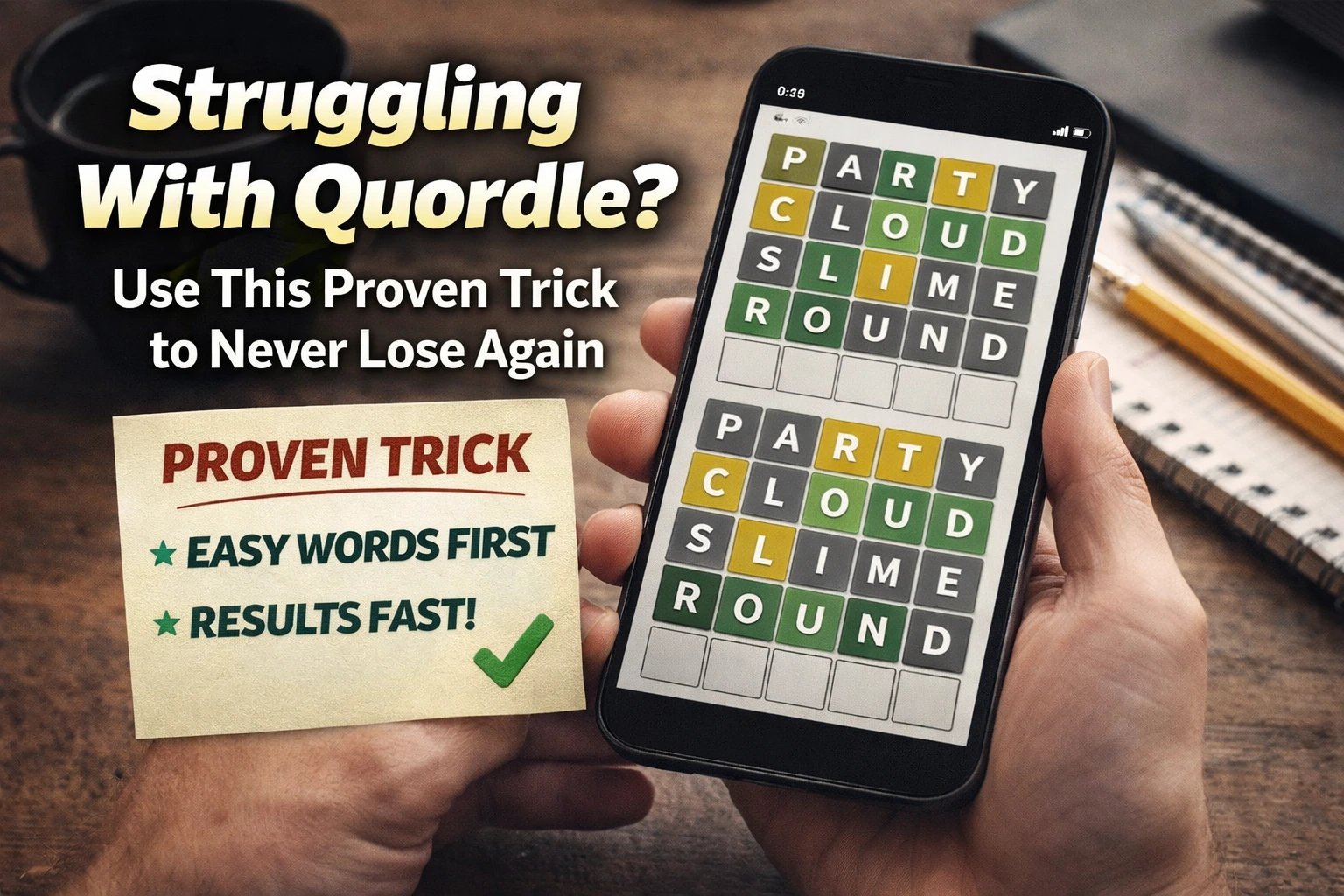
Quordle grid priority means choosing the order in which you finish the four grids. Because every guess counts in all four grids at once, the order matters. A guess aimed at the right grid can solve it in one move and feed clues to the others. A guess aimed at the wrong grid can stall everywhere.
Think of priority as triage. You rank the grids from most solvable to least solvable, then work the top of the list. The ranking changes after every guess, so quordle grid priority is a living habit, not a one time plan. The official Quordle site shows all four grids side by side, which makes this scan easy to practice.
Scan All Four Grids Before You Choose
Before each guess from the third round on, pause and scan. Look at each grid for ten seconds and ask one question: how close is this to solved? Count the green letters, note the yellows, and feel the size of the remaining letter pool. This short ritual is the foundation of quordle grid priority.
Most players skip the scan and play the grid their eyes land on first. That habit costs games. The Quordle common mistakes guide lists skipping the scan among the top errors. Build the scan into your routine and your priority choices get sharper immediately.
Solve the Grid With the Most Green First
The simplest priority rule is also the strongest. The grid with the most green letters is usually the cheapest to finish. Two or three greens lock the word shape, and one focused guess often closes it out. Finishing a grid early frees your mind and feeds information to the rest.
There is a subtlety here that good quordle grid priority respects. A grid with two greens in the first two slots is more solved than a grid with three greens scattered in hard positions. Look at how much of the word is pinned, not just the count. Greens at the start or end narrow the pool faster than greens in the middle.
Attack Grids With Small Letter Pools
After greens, rank grids by the size of their possible word pool. A grid where you have ruled out most consonants might have only a handful of candidate words left. That grid is cheap to solve, so it earns high quordle grid priority even with few greens showing.
Practice estimating pool size. If the remaining pattern fits common endings and your eliminated letters have cleared the clutter, the grid is nearly solved. One confident guess closes it. The Quordle pillar on starting words explains how strong openers shrink these pools early, which makes priority decisions easier later.
Save Flexible Grids for Later
The flip side of priority is knowing what to postpone. A grid with few clues and a wide open letter pool is expensive to solve directly. Guessing at it now burns guesses with little return. Give it low quordle grid priority and let guesses aimed at other grids reveal its letters for free.
This feels wrong to many players. The least solved grid looks like the biggest problem, so instinct says attack it. But guesses are shared across grids, so solving an easy grid first often drops two or three useful letters into the hard one. Patience with hard grids is a winning form of quordle grid priority.
Let Yellow Clusters Guide Your Priority
Yellow letters are priority signals. A grid with three yellows is rich in information, because each yellow pins a letter to a new position. That grid is often one clever anagram away from solved, so it deserves high quordle grid priority.
Work yellows actively. Write down the yellow letters on paper or in your head and permute them against the known greens. If the permutation clicks fast, the grid jumps to the top of your list. If nothing fits, drop it down the list and move on. The Quordle yellow letters guide teaches the rearrangement skills that make this judgment quick.
When Two Grids Fight for Attention
Sometimes two grids look equally solvable. This is where quordle grid priority gets interesting. The tiebreaker is information value: which grid, if solved, teaches you the most about the others? Pick the grid whose letters overlap most with the unsolved grids.
Shared letters are the currency of Quordle. If grid one needs an R and grid three is swimming in unknown consonants that include R, solving grid one first tests R everywhere at once. Think in terms of shared letters and your quordle grid priority will feel almost automatic. This is also where the Quordle trap words guide helps, because trap patterns often hide in the grid you ignored.
Priority Mistakes That Waste Guesses
The most common priority mistake is solving grids in screen order, top left to bottom right. Screen order has nothing to do with solvability, and following it wastes the advantage of choice. Another mistake is tunnel vision: spending three straight guesses on one stubborn grid while easier grids sit unsolved.
A third mistake is emotional priority, chasing the grid that frustrates you instead of the grid that rewards you. Good quordle grid priority is cold and numerical. Rank by greens, pool size, and yellow richness, then follow the ranking. If you catch yourself breaking the ranking out of frustration, stop and rescan.
Priority Drills for Practice Mode
Drill one: play practice rounds where you are not allowed to guess at the same grid twice in a row until two grids are solved. This forces constant rescanning and builds quordle grid priority as a reflex. Drill two: after each guess, say your grid ranking out loud, one through four, before typing the next word.
Drill three: replay a lost game from memory and identify the moment your priority went wrong. Most losses have a clear turning point where a different grid choice would have changed the outcome. The Quordle practice mode guide shows how to set up unlimited rounds for these drills. Ten focused rounds will reshape your instincts.
Grid Priority in the Endgame
In the final two or three guesses, quordle grid priority becomes survival. Rank the remaining grids by guesses needed, not by closeness. A grid that needs exactly one guess outranks a grid that needs two, even if the second looks closer. Solve the certain one first, then spend everything on the last puzzle.
Also watch for the shared guess trick. Sometimes one word advances two grids at once because it tests letters both need. In the endgame, that word is the best play even if it solves neither grid outright. The Quordle endgame guide covers these final round tactics in depth, and they pair perfectly with priority thinking.
Frequently Asked Questions About Quordle Grid Priority
Should you always solve the easiest grid first? Almost always. The exceptions are rare, usually involving a shared letter trick in the endgame. When in doubt, solve the easiest grid first.
How often should you rescan? After every guess from round three onward. The ranking shifts fast, and a thirty second old ranking can mislead you. Fast rescans are the heartbeat of quordle grid priority.
What if all four grids look equally hard? Then play an information rich elimination guess aimed at the most common unknown letters. This is a neutral move that improves all four rankings at once. The official Quordle site rewards this patient style of play.
Does priority matter in the first two guesses? Less so, because openers are about coverage, not targeting. Priority thinking starts once clues exist, usually from the third guess onward.
Keep these answers handy during practice. Quordle grid priority questions come up every game, and having ready answers keeps your play smooth.
Build Your Own Priority Order
Here is a simple priority ladder to memorize. One, grids you can solve this guess. Two, grids with three or more greens. Three, grids with rich yellow clusters. Four, grids with small letter pools. Five, everything else. Run this ladder after every guess and your quordle grid priority will be sound.
Over time, personalize the ladder. Some players are great anagrammers and can promote yellow rich grids higher. Others read green patterns fast and promote those. The ladder is a starting point, and your own strengths shape the final version. Test changes in practice mode before trusting them in the daily.
Start your next game with the scan habit. Pause after the second guess, rank your four grids, and play the top of the list. With steady quordle grid priority, more of your games will end in calm, controlled wins. The official Quordle site is waiting for your next ranked run.


One Comment