Connections Beginner Week: 8 Proven Ways to Start Strong
Your first connections beginner week sets the tone for every solve that follows. Seven days is enough to learn the board, build smart habits, and start a real streak. This connections beginner week guide gives you eight proven ways to start strong, one day at a time.
Below you will find nineteen sections that walk you through each day. Follow them in order, take notes as you go, and by day seven you will solve with real confidence.
Day One: Learn the Board Layout
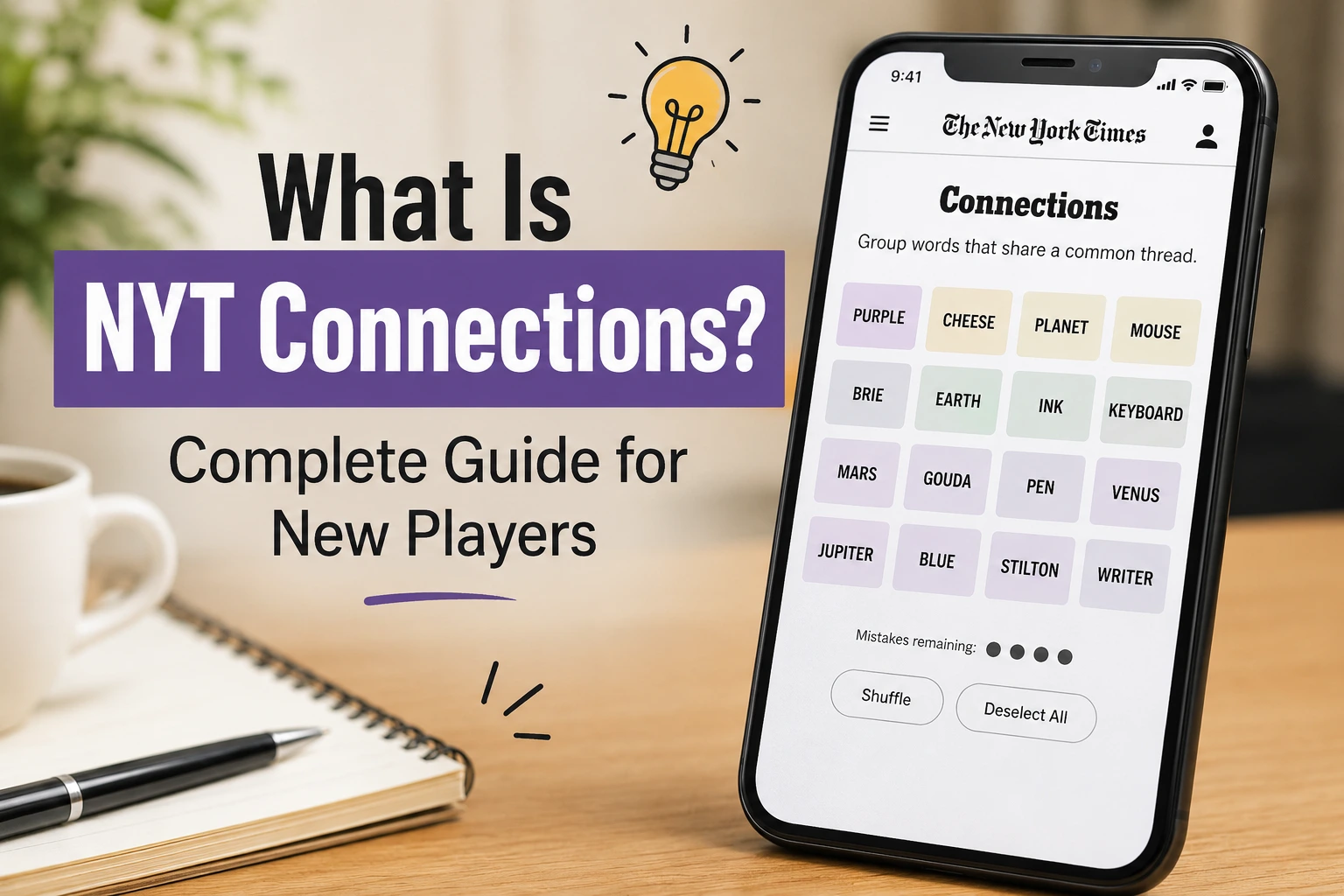
Start your connections beginner week by studying the board itself. Sixteen words sit in a four by four grid. Your job is to sort them into four groups of four. Each group shares one hidden thread. Spend day one just looking at how the words sit together. For the full rules, read our NYT Connections strategy guide.
Day One: Find Your First Easy Group
On day one of your connections beginner week, hunt the easiest group first. It usually hides in plain sight, with simple synonyms or everyday categories. Lock it in and feel the win. This early success teaches you what an easy thread looks like. Our yellow group guide shows you exactly where to look.
Day Two: Protect Your Mistake Budget
Day two of your connections beginner week is about your four mistakes. Every wrong guess costs one, and four misses end the game. Before you submit a group, pause and ask if you are sure. Beginners burn guesses on hunches, so build the pause habit now. Our mistake budget guide teaches careful spending.
Day Two: Try the Shuffle Button
Also on day two of your connections beginner week, press the shuffle button. It rearranges the sixteen words and breaks false patterns your eyes invented. Many beginners find a group right after a shuffle. Make shuffling a regular habit whenever the board looks stuck. It costs nothing and often reveals what you missed.
Day Three: Spot Your First Red Herring
Day three of your connections beginner week introduces the trap words. A red herring is a word that seems to fit two groups but belongs to neither. When a group feels too easy, look for the decoy. Learning this lesson early saves many mistake budgets later. Study more traps in our red herrings guide.
Day Three: Read the One Away Warning
Still on day three of your connections beginner week, watch for the one away message. It means three of your four words are right and one is wrong. Do not guess wildly. Instead, test each word against the group idea and swap the weakest one. Our one away hint guide walks you through it.
Day Four: Tackle the Purple Group
Day four of your connections beginner week faces the hardest group. The purple group loves wordplay, hidden phrases, and letter tricks. Do not fear it. Try reading the words out loud or looking for shared letters. Even attempting it teaches you how tricky groups think. Our purple group guide gives you tools to crack it.
Day Four: Study Trick Categories
Pair your purple practice with trick study on day four of your connections beginner week. Trick categories include fill in the blank phrases, homophones, and double meanings. When you know these patterns exist, you start seeing them. Keep a list of the trick types you meet. Our trick categories guide is the perfect study partner.
Day Five: Build a Solving Order
On day five of your connections beginner week, plan your order of attack. Most strong players lock the easy group first, then work toward the hard one. A set order keeps you calm when the board looks messy. Try easiest first for a few days and see how it feels. Our easiest first guide explains why it works.
Day Five: Time Your Solve
Also on day five of your connections beginner week, notice how long you take. You do not need to rush, but tracking time shows your progress. Most beginners get faster by the end of the week. A calm, steady pace beats frantic guessing every time. For pacing ideas, see our time management guide.
Day Six: Share Your Results
Day six of your connections beginner week is for sharing. Post your emoji grid with friends or in a community thread. Comparing solves shows you new ways to see the same board. Keep spoilers hidden and enjoy the discussion. Our share results guide shows the right etiquette.
Day Six: Review Your Week
On day six of your connections beginner week, look back at what you learned. Which day felt hardest. Which trap fooled you twice. Write down the patterns you now recognize. This review turns seven random solves into real skill. Our results analysis guide makes review simple.
Day Seven: Solve Without Help
Day seven of your connections beginner week is your solo test. Solve the whole board without hints, and trust the habits you built. You know the layout, the traps, and the warnings. Even if you miss, you will miss smarter than on day one. A clean solo solve proves your week worked.
Day Seven: Start Your Streak
Finish your connections beginner week by starting a real streak. Set a daily reminder so you never miss a board. A streak turns your new skill into a daily ritual. Our daily reminder guide helps you protect it from day one.
Set One Goal Per Day
During your connections beginner week, give each day one clear goal. Day one is learning the layout, day three is spotting traps, and so on. One goal keeps you focused without pressure. Small daily wins build the confidence that carries you past week one.
Keep Notes on New Patterns
A notebook supercharges your connections beginner week because patterns repeat. Write down every category type you see, from sports to wordplay. Review the list before each solve. Within weeks, you will recognize groups faster than players who never wrote anything down.
Ask for Hints the Smart Way
When you stall in your connections beginner week, ask for a nudge, not the answer. Tell a friend which words confuse you and what you ruled out. A small hint keeps the win feeling like yours. Smart questions get smart answers, and you learn more from a nudge than from a spoiler.
Celebrate Small Wins Daily
End each day of your connections beginner week with a small celebration. Found the yellow group fast. Dodged a red herring. Mark the win somehow. These moments train your brain to enjoy the puzzle, and enjoyment is what keeps you coming back. For daily structure, read our daily routine guide.
Bonus Drills
Finish your connections beginner week with three drills. First, solve one board on the official Connections page using your new solving order. Second, write down three patterns you learned this week. Third, set a daily reminder for next week. For ongoing tips, read our Connections game tips and our community tips guide.
When your connections beginner week ends, you are no longer a true beginner. You know the board, the traps, and the habits of strong players. Keep solving daily, keep learning, and watch your streaks grow.