

Connections Red Herrings: 8 Proven Ways to Spot Traps
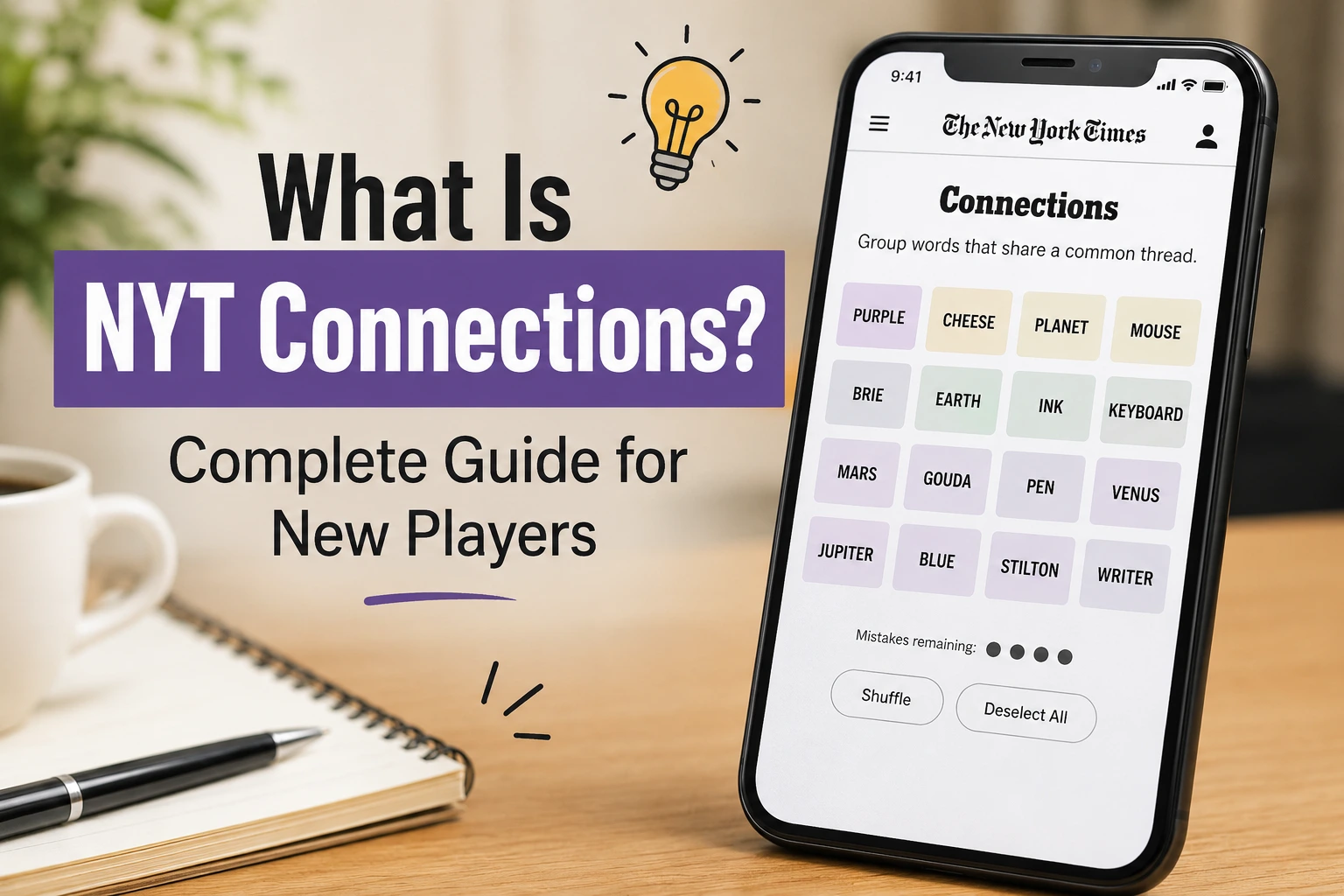
Connections red herrings are the traps that ruin clean boards. A red herring is a word that looks like it belongs to a group but actually belongs somewhere else, and spotting them saves your mistakes.
Why Connections Red Herrings Matter
Every Connections board plants decoy words, and connections red herrings are the reason smart players fail. Learning to spot traps protects your four mistakes and keeps perfect solves alive.
The puzzle designers place words that fit two groups on purpose. Only one grouping is correct, and the other is the trap. Players who hunt traps first solve faster and guess less.
Tip One: Count the Fits Before You Guess
When a group feels obvious, count how many words could fit it. If five or six words fit a four word category, some are red herrings. Pause and find the true four.
The Connections strategy pillar calls this the overfit test. Extra candidates are the classic sign that a trap is hiding in your group.
Tip Two: Find the Word With Two Homes
Every trap board has at least one word that fits two groups. That double fit word is the red herring. Find it and you unlock the board.
List each word’s possible groups on paper. The word with two strong homes is your prime suspect. Solving around it reveals the real groups. This is the core of connections red herrings defense.
Tip Three: Distrust the Easiest Group
When a group looks too easy, check it twice. Designers love hiding a trap word inside an obvious yellow group. The Connections yellow group guide warns that easy groups attract decoys.
Ask whether each member truly belongs or just looks right. Swap test every easy group before submitting. One swapped word often exposes the herring.
Tip Four: Watch for Near Categories
Red herrings often form a near category, a group that is almost right but not quite. Five words might look like fruits, but one is actually a color. The near category is the trap.
When you spot a near category, hunt the odd one out. The word that does not perfectly fit is either the herring or the key to another group. Either way, you learn something valuable.
Tip Five: Test With the Swap Method
Before submitting any group, try swapping each member with a leftover word. If the group still works after a swap, the link is too loose and a trap may be inside.
The Connections game tips guide teaches this swap check as daily habit. Tight groups survive swaps, loose groups fall apart. Trust only the tight ones.
Tip Six: Save Yellow for Last
Counterintuitive but powerful, leave the obvious group unsolved while you work harder ones. Traps usually target the easy group, so solving it last avoids the decoy.
Work green and blue first, where traps are easier to see. When the board shrinks, the real yellow reveals itself. Our Connections green group guide pairs well with this approach.
Tip Seven: Learn the Classic Trap Types
Traps repeat their tricks. Classic types include the double meaning word, the near category, the extra candidate, and the phrase fragment. Knowing the types makes them visible.
Study one trap type each week. When you can name the trap, you can dodge it. Your connections red herrings radar sharpens with every named pattern.
Tip Eight: Review Every Trap That Caught You
When a trap burns a mistake, write down exactly how it fooled you. Trap logs are the fastest way to build immunity, because designers reuse their favorite tricks.
Review the log every Sunday. Familiar traps stop working once you expect them. The Connections strategy pillar treats trap review as expert level study.
Frequently Asked Questions About Connections Red Herrings
What is a red herring in Connections. A word that seems to fit a group but belongs elsewhere. How many traps are on a board. Usually at least one or two, sometimes more on hard days. Do traps target yellow groups. Often yes, because obvious groups are easy to pollute. Can a word fit two real groups. No, each word belongs to exactly one group, which is why double fits reveal traps. Should I ever guess a group with five candidates. Never submit until you have the true four.
Win Like a Pro
Pros assume every board has traps. They count fits, find double home words, swap test every group, and solve the easy group last. That suspicious mindset is why their mistake count stays low.
Track your trap dodges for two weeks. If you spot traps before guessing most days, your radar is working. Keep it sharp with our Connections blue group guide.
Extra Connections Red Herrings Habits
Circle every word that could fit two groups before solving anything. Those circled words are your trap watch list. Check them against every group you build.
Another habit is the trap pause. When a group feels complete in under ten seconds, stop and swap test it. Fast groups are the ones most likely to hide a herring.
More Connections Red Herrings Study Ideas
Replay old boards and hunt only the traps. Ignore solving and just find every decoy word. This trap only drill trains the exact skill that saves mistakes.
Build trap boards for a friend. Planting decoys teaches you how designers think. When you can build a trap, you can spot one instantly.
Bonus Connections Red Herrings Drills
Drill one, the overfit count. Open the official Connections page and count fits for every candidate group. Drill two, the double home hunt. List every word with two possible groups. Drill three, the swap test. Swap each member of every group before submitting. Drill four, the near category scan. Look for groups that are almost right. Drill five, the trap log. Record every trap that fooled you and reread weekly.
Connections Red Herrings Practice Plan
Day one, count fits on every group you build. Day two, circle all double home words. Day three, swap test every group before submitting. Day four, leave yellow for last. Day five, study one classic trap type. Day six, log any trap that caught you. Day seven, review the week and note your best dodge.
Connections Red Herrings Warm Up
Before each puzzle, name three classic trap types from memory. This primes your suspicious mindset. Then solve slowly, because rushed players walk straight into traps.
Connections Red Herrings Quick Reference
Count the fits. Find double home words. Distrust easy groups. Watch near categories. Swap test everything. Solve yellow last. Learn trap types. Log every trap.
Connections Red Herrings Reflection Ritual
After each puzzle, ask three questions. Did a trap almost catch me. What type was it. How did I dodge it. Two minutes of reflection after every game builds trap immunity fast. The red herrings lose their power once you study them, so end every daily game with this ritual.



5 Comments