Connections First Guess Strategy: 8 Proven Ways to Open
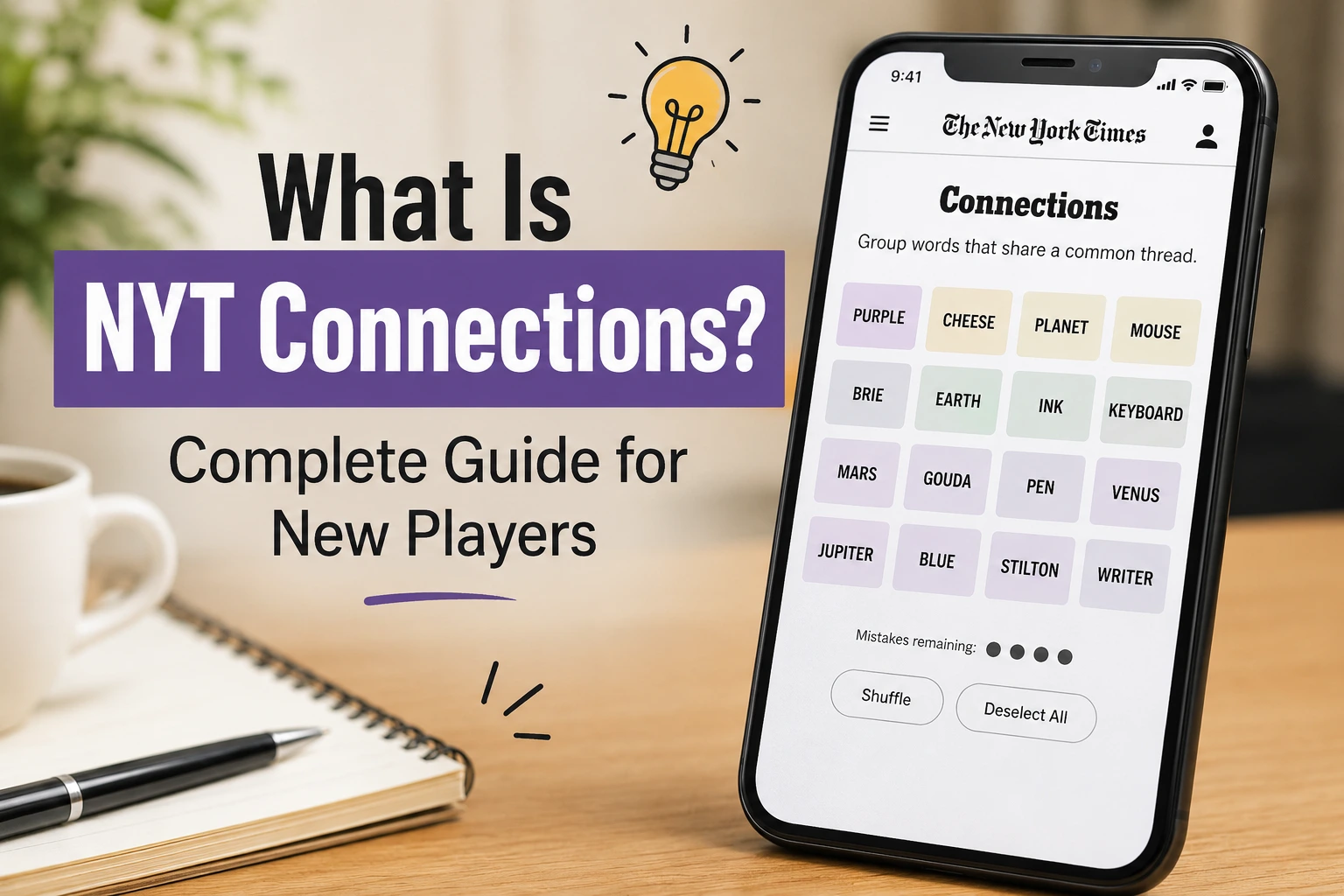
Connections first guess strategy decides whether your puzzle starts with momentum or a mistake. Your first guess sets the tone. A confident solve builds calm. A careless miss burns one of only four mistakes. Smart players treat the connections first guess strategy as a discipline, not a gamble. They read the board twice, shuffle once, find the easiest group, and test it before submitting. This guide teaches you eight proven ways to open every puzzle with a plan.
Why Connections First Guess Strategy Matters
The connections first guess strategy matters because mistakes are precious. Four mistakes end your game. Burning one on a lazy first guess leaves you with three for the entire puzzle, including the hard purple group. Players with a strong connections first guess strategy solve their first group in the opening minutes. That early win shrinks the board and removes decoys. Every group you solve makes the next one easier. The first guess is the highest leverage move of the game.
Tip One: Read the Board Twice First
Never guess on your first read. Read all sixteen words slowly, then read them again. The connections first guess strategy starts with patience. Your first read finds the obvious. Your second read finds the real. Many traps reveal themselves on the second pass, when the initial excitement fades. The Connections strategy pillar treats the double read as law. Two slow reads take two minutes. One careless guess can cost the game.
Tip Two: Shuffle Before Deciding
After your double read, press the shuffle button and read once more. The connections first guess strategy uses fresh layouts to break position bias. A group that survives the shuffle is trustworthy. A group that fades was a false neighborhood. The Connections shuffle button guide explains the rhythm. Three reads, one shuffle, then decide. This routine takes three minutes and prevents most opening mistakes.
Tip Three: Hunt the Yellow Group
Your first guess should almost always be the yellow group, the easiest one. The connections first guess strategy prioritizes safe wins. Yellow groups use plain categories like colors, animals, or foods. They rarely hide tricks. The Connections yellow group guide shows what easy groups look like. Find the plainest four words on the board. That is your opener. Save clever guesses for later, when the board is smaller.
Tip Four: Count the Fits
Before submitting your opener, count how many words could fit it. The connections first guess strategy demands the overfit test. If five or six words fit your four word group, a red herring is hiding inside. Pause and find it. The Connections red herrings guide teaches the count. Tight groups have exactly four candidates. Loose groups have extras. Never submit a loose group as your first guess. Tighten it first or pick another.
Tip Five: Swap Test the Opener
Even easy groups deserve the swap test. Try each member against the leftover words. The connections first guess strategy never skips verification. A swap test takes thirty seconds. The Connections game tips guide calls it the cheapest insurance in the game. Groups that survive swaps solve cleanly. Groups that wobble need rethinking. Your first guess should be your most tested guess, not your least.
Tip Six: Never Open With Purple
Wordplay groups tempt confident players. Resist. The connections first guess strategy bans purple openers. Purple groups hide letter tricks and puns that look obvious but mislead. Opening with a clever guess that fails burns a mistake and your confidence. The Connections purple group guide recommends saving wordplay for last. Clear yellow, green, and blue first. The leftover lock then solves purple for free.
Tip Seven: Watch the Clock on Your Opener
Give your first guess five focused minutes, then commit. The connections first guess strategy balances care with momentum. Staring for fifteen minutes drains the energy you need for hard groups. If two candidate groups both look strong after five minutes, pick the tighter one and swap test it. The Connections green group guide pairs well here, since green is a fine backup opener. Momentum matters. Decide and move.
Tip Eight: Learn From Every Opener
After each puzzle, review your first guess. Was it right. How long did it take. What trap did you dodge. The connections first guess strategy improves through reflection. The Connections strategy pillar treats opener review as expert study. Players who log their openers spot patterns in their mistakes. Maybe you rush yellows or overthink greens. The log tells you. Fix one opener habit per week.
Frequently Asked Questions About Connections First Guess Strategy
Should the first guess always be yellow. Almost always, unless yellow is hiding behind decoys and green is clearly tighter. How long should the opener take. About five minutes of focused reading and testing. Is it ever right to guess fast. Only when the group is airtight after the overfit test and swap test. What if I cannot find any group. Shuffle twice and read again, then pick the tightest trio plus its best partner. Does a wrong opener ruin the game. No, but it costs a mistake, so treat every opener with care.
Win Like a Pro
Pros open with calm precision. They read twice, shuffle once, find yellow, count fits, swap test, and submit. Their connections first guess strategy never varies. Track your openers for two weeks. If your first guess solves most days, your routine is solid. When the board opens, slow down. The first five minutes decide the next twenty. Patient openers win puzzles. Rushed openers donate mistakes.
Extra Connections First Guess Strategy Habits
Write your opener candidate on paper before submitting. Seeing it written exposes weak links. Another habit is the confidence scale. Rate your opener from one to ten. Submit only nines and tens. Your connections first guess strategy gets sharper when you quantify confidence. Keep an opener journal with the group, the time taken, and the result. Patterns emerge fast.
More Connections First Guess Strategy Study Ideas
Replay old puzzles and time your opener routine. Aim for under five minutes with full testing. Another study idea is the blind opener. Have a friend cover half the board and find yellow in the visible half. This trains quick category spotting. Study your misses hardest. Every wrong opener teaches a lesson about overconfidence. Review them weekly with a friend and compare routines.
Bonus Connections First Guess Strategy Drills
Drill one, the five minute opener. Open the official Connections page, start a timer, and run the full routine. Drill two, the trap dodge. Pick boards known for red herrings and practice the overfit test. Drill three, the confidence call. Rate ten candidate openers without submitting, then check your ratings against the answers. Ten minutes of opener drills beats a month of random guessing.
Connections First Guess Strategy Practice Plan
Day one, double read every board before any guess. Day two, add the shuffle read to your routine. Day three, hunt yellow first on every puzzle. Day four, run the overfit test on every opener. Day five, swap test every candidate group. Day six, time your opener and aim under five minutes. Day seven, review your opener journal for patterns. Repeat the plan for a month.
Connections First Guess Strategy Warm Up
Before each puzzle, recall your last opener. Was it clean. What made it work. This primes your routine. Then name the three steps you never skip, double read, shuffle, swap test. When the board loads, the routine runs itself. Warm players open with confidence. Cold players open with a guess and a prayer.
Connections First Guess Strategy Quick Reference
Read the board twice. Shuffle and read again. Hunt the yellow group. Count the fits. Swap test the opener. Never open with purple. Decide within five minutes. Learn from every opener. Write candidates on paper. Rate your confidence. Journal every opener. Drill the routine weekly.
Connections First Guess Strategy Reflection Ritual
After each puzzle, ask three questions. Was my opener clean. How long did my routine take. What would I change. Write the answers in your journal. Small reflections sharpen the highest leverage move in the game. When tomorrow’s board loads, your connections first guess strategy will be ready.