Connections Grouping Strategy: 8 Proven Ways to Plan
Connections grouping strategy is how you sort sixteen words into four groups of four without guessing blindly. Instead of submitting hunches, you plan, test, and only lock a group when all four words earn their place.
This guide shares eight proven ways to build a connections grouping strategy that works every day. You will learn how to scan the board, test theories safely, avoid decoys, and finish with a plan instead of luck. For the full game plan, see our NYT Connections strategy guide.
Why a Connections Grouping Strategy Matters
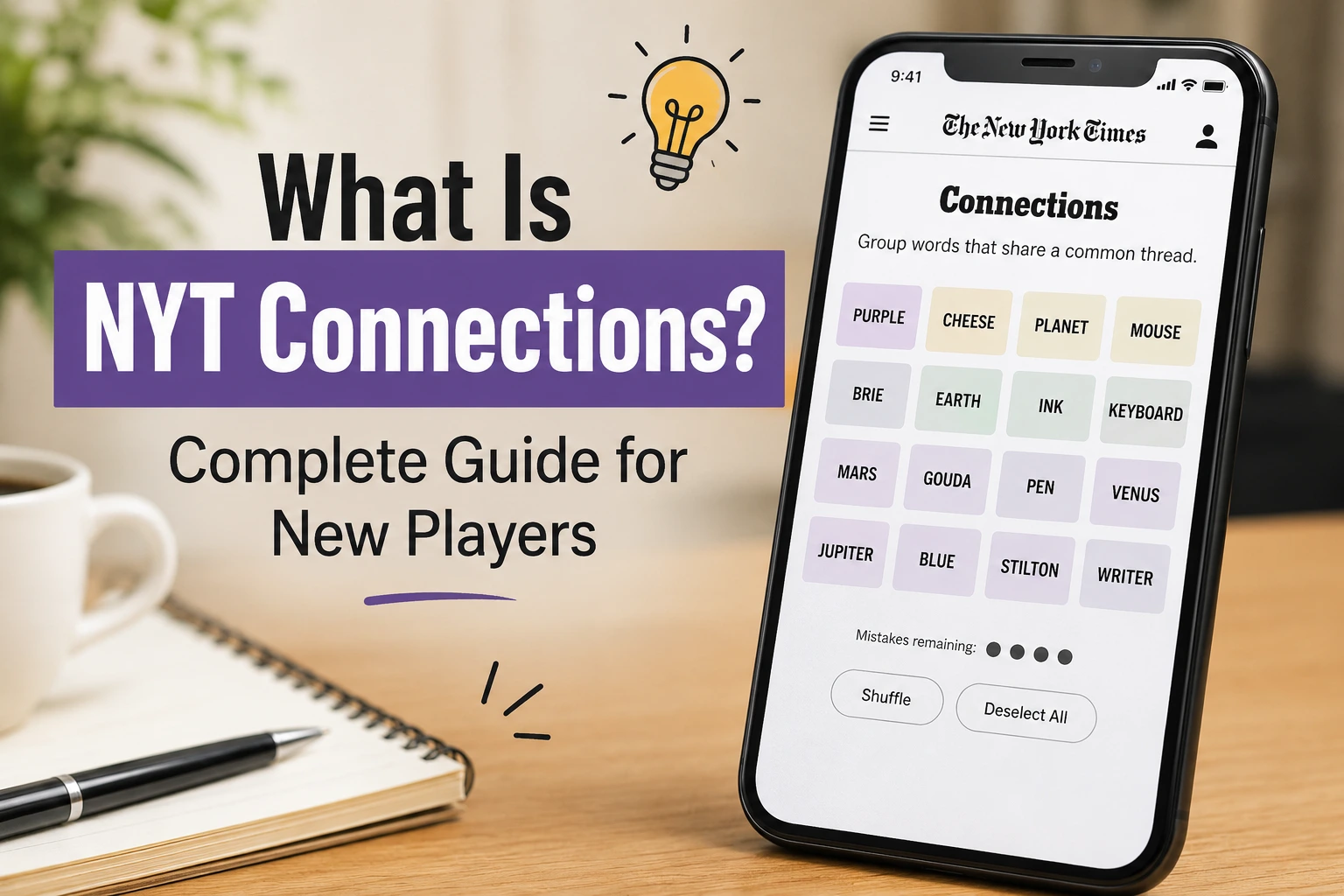
Every Connections board hides four clean groups and several decoy words that fit two themes. Without a connections grouping strategy, players guess at the first pattern they see and burn mistakes. With one, each guess is a planned step.
A grouping plan also protects your mistake budget. The four errors you get each day last longer when a connections grouping strategy tells you which groups to solve first and which to leave for last.
Tip One: Scan Before You Touch
Spend the first minute reading all sixteen words with no guessing. The best connections grouping strategy starts with a full board read, because early guesses come from half information. Note which words catch your eye and which confuse you.
Mark mental candidates as you scan: easy words, tricky words, and words that could fit two groups. This calm start is the foundation every planned grouping builds on.
Tip Two: Group by Theme on Paper
Before submitting anything, sort the words into possible groups on paper or in your head. A written connections grouping strategy lets you test four words together without spending a guess. Write each word once, then draw lines to its partners.
Paper grouping reveals gaps quickly. If a theme only has three words, the fourth is missing or wrong, and your careful plan saves a mistake before it happens.
Tip Three: Lock the Easiest Group First
Your first submit should be the group you are most certain about, usually the straightforward yellow one. A plan that starts with certainty banks an early win and shrinks the board. Our yellow group guide shows what easy looks like.
Our easiest first guide explains the order in detail. Starting easy is the least risky move in any connections grouping strategy.
Tip Four: Test Each Theory Against All Four Words
Never submit a group because three words fit. A real connections grouping strategy demands that every word earn its place. Ask of each word: does it fit the theme the same way as the other three?
This four word test catches decoys. A word that almost fits usually belongs to a harder group, and our red herrings guide teaches you how decoys hide. Your connections grouping strategy gets stronger every time the test saves a mistake.
Tip Five: Plan the Middle Groups Next
After the easy group, move to green, then blue. A patient plan follows the difficulty ladder our solving order guide describes. Each solved group removes decoys and makes the next one clearer.
Our green group guide and trick categories guide help with the middle stage. A patient plan never rushes the middle.
Tip Six: Save the Hardest Group for Last
The purple group is built from wordplay and letter tricks, so plan to face it with a small board. A connections grouping strategy that saves the hardest group for last turns elimination into a solver, because twelve solved words leave only eight to study.
Our hardest last guide covers the endgame in full. Ending with the hard group is the smartest part of any plan.
Tip Seven: Shuffle to Break Fixations
When a board stops making sense, shuffle it. A fresh layout breaks the reading patterns that lock your brain onto one wrong theory. Use the shuffle as a reset button, not a decoration.
After shuffling, read the board again as if it were new. Players who shuffle find groups they had walked past for minutes, which makes it a quiet hero of every connections grouping strategy.
Tip Eight: Review the Plan After Every Puzzle
When the puzzle ends, ask what your connections grouping strategy did well and where it broke. Did you skip the scan? Did a decoy fool you? One honest note per day compounds into real skill.
For more daily habits, see our Connections game tips page. A reviewed plan improves faster than one that is never checked.
Frequently Asked Questions
How long should planning take?
A good connections grouping strategy takes about two minutes of scanning before the first guess. That feels slow, but it saves far more time than recovering from wrong guesses.
What if two groups look equally easy?
Pick the one with the most obvious theme and save the other. A connections grouping strategy always keeps a backup group in case the first theory cracks.
Should I write groups down or memorize them?
Writing is better, especially for the tricky purple group. A written plan cannot be scrambled by a shuffle or a moment of doubt.
Where do I learn the whole game plan?
Our NYT Connections strategy guide covers the complete approach, and this page focuses on planning.
Win Like a Pro
Top players treat every board like a small project. Their plan has phases: scan, sort, solve easy, solve middle, finish hard. They rarely guess, and they almost never panic.
That structure is learnable. A week of planned play will make grouping feel natural instead of forced.
Extra Habits That Support Your Plan
- Read all sixteen words aloud once before your first guess.
- Keep a short list of themes you have seen before, like colors, animals, and sports.
- When stuck, study the words you have ignored, not the ones you have stared at. Our purple group guide shows where ignored words usually belong.
- Stop after two wrong guesses and rescan the whole board.
Study Ideas for Better Grouping
Replay yesterday’s puzzle from memory and rebuild the groups with your connections grouping strategy. Notice where the plan would have caught the decoy that beat you.
You can also study solved boards online. Cover the answers, apply your connections grouping strategy, and compare your plan to the real groups.
Bonus Drills
Drill one: open the daily puzzle at NYT Connections, write four planned groups on paper, and only then start guessing. Count how many of your planned groups were correct.
Drill two: time your scan. Aim for a full board read in under ninety seconds. Speed scanning trains the first phase of your plan.
Practice Plan
Week one, practice the scan: no guesses in the first two minutes. Week two, add paper grouping before every submit to your daily plan.
Week three, add the four word test for every theory. By week four, planning should feel like one smooth routine.
Warm Up
Before the daily puzzle, warm up by grouping eight random words into two themes. This short drill fires up the sorting muscle your plan depends on.
A warm brain plans better. Cold players guess, and warm players group.
Quick Reference
- Scan all sixteen words before your first guess.
- Group words on paper before submitting.
- Solve the easiest group first.
- Test every theory against all four words.
- Follow the difficulty ladder: easy, medium, hard.
- Save the hardest group for last.
Reflection Ritual
After each puzzle, ask one question: did my connections grouping strategy hold today? If yes, note the best moment. If no, note where guessing replaced planning. One sentence in a notes app is enough.
Over a month, these notes show your planning improving, which makes every future plan sharper.
Mastery Checklist
- You scan the full board before guessing.
- You sort groups on paper first.
- You solve easy groups first.
- Every theory passes the four word test.
- You shuffle when the board stops making sense.
- You finish the hard group last.