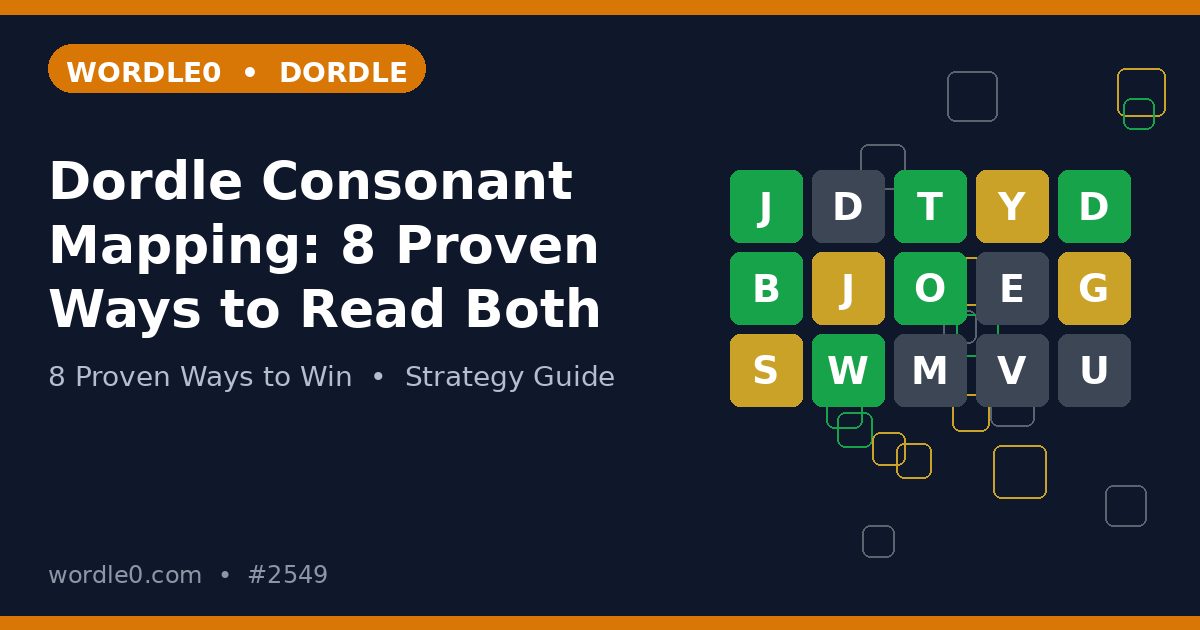
Dordle Consonant Mapping: 8 Proven Ways to Read Both Grids
Dordle consonant mapping is the skill of reading what the consonants tell you after your opening guesses. Two grids, seven guesses, and a handful of colored tiles can feel overwhelming, but the consonants carry most of the information. Learn to map them and both grids start talking to you.
You will get 8 proven ways to use dordle consonant mapping every time you play. Learn how to read the second guess like a map, track consonant positions across both grids, and turn gray tiles into useful clues. Each way is simple on its own, and together they make every guess after the opener much smarter.

Why Dordle Consonant Mapping Matters
Consonants matter because they outnumber vowels in most answers. Your openers reveal vowels quickly, but the game is usually won or lost on consonants. A player who reads consonant clues well solves with guesses to spare, while a player who ignores them keeps guessing blindly.
After guess one and guess two, the board is full of consonant information. Gray consonants rule out whole word families, yellow consonants need new homes, and green consonants anchor positions. Good dordle consonant mapping turns that colored mess into a clear plan.
New to the two grid format? Our Dordle beginner guide explains the rules before you start mapping consonants. Knowing the board is the first step toward reading it.
Way One: Read the Second Guess Like a Map
Guess two is the most important guess in the game. By then you know some vowels and a few consonant colors, so guess two should test the biggest unknown consonants. Pick a word that covers fresh consonants instead of repeating what you already know.
Before you type guess two, list the untouched consonants in your head. Strong dordle consonant mapping means choosing words that split the unknown consonants into groups, so the colors tell you which group holds the answer.
Way Two: Track Consonants Separately Per Grid
The two grids can need very different consonants. A letter that is gray in the left grid might still be alive in the right grid, so track each grid separately. Mental notes like left needs T and R, right needs S and L keep the maps clean.
Our Dordle keyboard reading guide shows how to use the on screen keyboards as live maps. Pair it with smart dordle consonant mapping and neither grid can hide.
Way Three: Treat Gray Consonants as Gifts
Gray tiles feel like failures, but they are some of the best clues. Every gray consonant removes dozens of possible words from your mental list. Players who celebrate gray consonants guess smarter, because they know what is gone.
After each guess, pause and name the new gray consonants out loud in your head. This tiny habit is the heart of dordle consonant mapping, because it forces your brain to actually use the elimination instead of just seeing it.
Way Four: Hunt the Common Consonant Pairs
Consonants love company. Pairs like T H, S T, N D, and R K appear together in countless answers. When one consonant of a pair turns green or yellow, test its partner soon. This pattern thinking turns single tiles into whole word shapes.
Practice the common pairs until they feel automatic. Good dordle consonant mapping pairs pattern memory with live tile colors, so you see word families forming before the answer is obvious.
Way Five: Compare the Two Keyboards
Dordle shows a keyboard for each grid, and comparing them is a superpower. A consonant that is yellow on both keyboards is almost certainly in both answers. A consonant gray on one but untouched on the other still has hope.
Make the keyboard comparison part of your between guess routine. Our Dordle starting words guide gives openers that light up the keyboards early, so your dordle consonant mapping starts from guess one.
Way Six: Use Position Habits
Consonants have favorite spots. S loves the start, T loves the end, H loves the middle after a vowel. When a consonant is yellow, try its favorite positions first. Position habits cut the number of slots you need to test.
Combine position habits with the colors on both grids. Smart dordle consonant mapping means every yellow consonant gets a most likely home before you waste a guess on a random slot.
Way Seven: Probe the Stubborn Consonants
Some consonants stay yellow for three guesses straight. Instead of shuffling the same letters forever, play one probe word that tests several stubborn consonants in new positions. One probe can settle what three guesses could not.
Our Dordle endgame guide shows how probes save tight finishes. In dordle consonant mapping, the probe is the tool of last resort and the tool of first choice when you are truly stuck.
Way Eight: Review Your Consonant Mistakes
After every game, ask which consonant fooled you. Did you replay a gray letter? Did you ignore a yellow pair? One honest answer per game builds the pattern memory that makes future mapping faster and sharper.
Keep a short note of repeat offenders for a month. Watching the list shrink is the clearest proof that your dordle consonant mapping is improving.
Frequently Asked Questions About Dordle Consonant Mapping
What exactly is consonant mapping? It is the habit of tracking which consonants are confirmed, misplaced, or eliminated on each grid, and using that map to choose smarter guesses.
Should vowels or consonants come first? Vowels first, because they are few and reveal structure fast. Then let consonant mapping take over from guess two onward.
How do I stop reusing gray consonants? Name the gray consonants after each guess before you type the next word. The pause habit ends the most common mapping mistake.
Does this work for both grids at once? Yes, and that is the point. Map each grid separately, then compare the maps to find consonants that help both answers.
Read Both Grids Like a Pro
Tomorrow, plan guess two around fresh consonants, name the gray letters after every guess, and compare the two keyboards between guesses. Small mapping habits beat big lucky guesses. Within weeks your dordle consonant mapping will feel like reading, not guessing.
Extra Dordle Consonant Mapping Habits
Write down your guess two plan before typing it. A written plan stops impulse guesses and makes the mapping deliberate instead of accidental.
Study one word family per week, like words ending in TCH or starting with STR. Family knowledge makes consonant maps resolve into answers much faster.
More Dordle Consonant Mapping Study Ideas
Pair these habits with our keyboard reading guide and our starting words guide to keep your maps accurate from guess one. Mapping works best when the opening gives you plenty of consonant colors to read.
Replay an old game and map only the consonants, ignoring the vowels. The consonant only review shows how much information you were leaving on the table in dordle consonant mapping.
Bonus Dordle Consonant Mapping Drills
Play one game where you may not reuse any gray consonant. The no repeat drill builds the elimination habit fast.
After guess two, write down every confirmed and eliminated consonant for both grids. The written map drill makes the invisible visible.
Play a game focusing only on consonant pairs like T H and S T. The pair drill teaches you to see word shapes instead of single letters.
Compare the two keyboards after every guess for a week. The comparison drill turns a quick glance into a reliable habit.
Play one game where guess two must contain five new consonants. The fresh consonant drill forces the most informative second guess.
Track how many guesses it takes you to place every yellow consonant. A falling number proves your dordle consonant mapping is working.
End each week by naming your worst consonant mistake. One honest admission keeps your mapping honest.
Score your mapping confidence from one to ten after every game. An honest dordle consonant mapping scorecard separates real progress from lucky games.
Play one game naming gray consonants out loud after each guess. The spoken drill locks the elimination into memory.
Practice yellow consonant placement with a friend watching. Explaining your slot choices out loud sharpens position habits.
Review every lost game for the consonant that beat you. Fresh memories show the mapping gap clearly, and one fix per review compounds fast.
Keep a list of consonant pairs you miss most often. A visible target list makes your dordle consonant mapping practice focused.
Play a probe heavy game after guess three. The probe drill teaches fast information gathering when consonants hide.
Teach the map each grid separately rule to a friend who plays Dordle. Explaining it out loud makes it your own habit.
Run your practice sessions on the official Dordle site, where the real boards never change, so your dordle consonant mapping practice stays consistent.