Dordle Speed Play: 8 Proven Ways to Play Faster
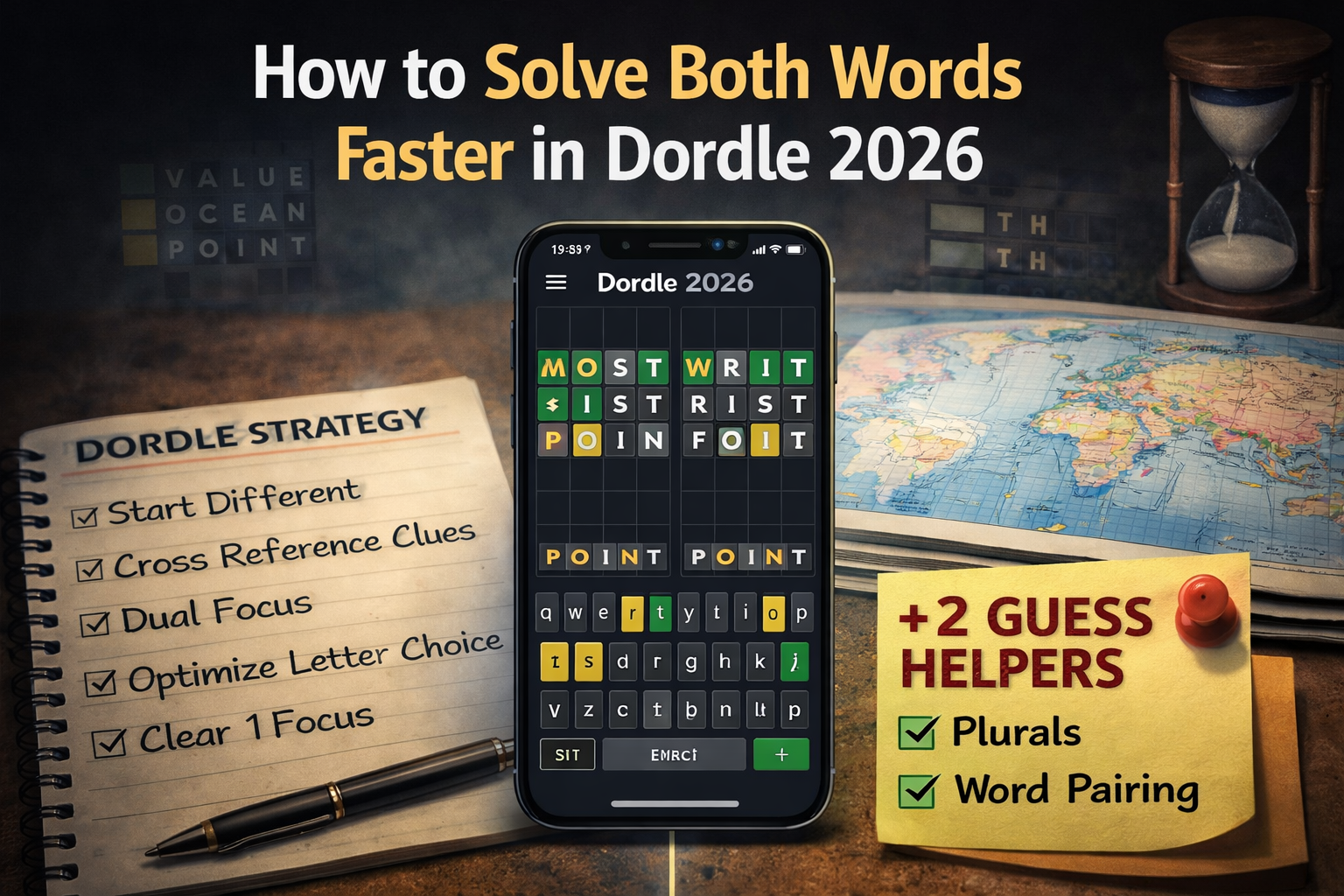
Dordle speed play turns the daily double puzzle into a personal race against the clock. Two grids, seven guesses, and a ticking timer you set yourself can feel tense, but the right habits let you finish in minutes without sacrificing wins. This is not an official timed mode, because Dordle has no built in timer, so every speed run is a self imposed challenge on your own pacing.
You will get 8 proven ways to use dordle speed play every time you sit down. Learn how to set a fair target time, plan faster openers, read both grids at a glance, and keep your cool when the seconds add up. Each way is simple on its own, and together they turn slow careful solving into fast confident play.
Why Dordle Speed Play Matters
Speed play matters because it sharpens the habits that win calm games too. When you train yourself to read the grids quickly, your normal games get easier, because the same pattern reading happens with time to spare. A player who can finish in five minutes can also finish in fifteen minutes with more accuracy.
Most slow games are not slow because the words are hard. They are slow because of hesitation, rechecking, and wasted guesses. Good dordle speed play removes those pauses without removing the thinking. You still plan, you still read, you just do both with a clear system instead of wandering.
New to the two grid format? Our Dordle beginner guide explains the rules before you start racing the clock. Knowing the board is the first step toward speeding up.
Way One: Set a Personal Target Time
A speed run needs a finish line. Before you start, decide your target time for the whole game, like eight minutes or ten minutes. A clear target focuses your mind and stops you from dawdling on guess one. Start generous and tighten the target as you improve.
Use your phone timer or a simple stopwatch and keep it where you can glance at it. The point of dordle speed play is friendly pressure, not panic. If the timer is making you sloppy, add two minutes and try again next game.
Way Two: Lock In a Fast Opening Pair
Deciding your opener during the game wastes time. Pick two fixed opening words and use them every speed run, so guess one and guess two are automatic. Familiar openers also light up both grids in ways you already know how to read.
Our Dordle starting words guide gives opener pairs built for two grids. When the opening is muscle memory, smart dordle speed play really begins at guess three.
Way Three: Read Both Grids in One Sweep
Stop studying one grid while forgetting the other. After each guess, sweep your eyes across both grids in a fixed pattern: left grid colors, right grid colors, then the keyboard. One practiced sweep takes seconds and keeps both answers in your head at once.
Slow readers stop and restart on every guess. Trained dordle speed play readers do the same sweep every time, so the brain knows what is coming. Practice the sweep in relaxed games first, then bring it to speed runs.
Way Four: Decide Before You Type
Typing while still thinking is the biggest time leak in speed play. Stare, decide, and only then type the full word. A thirty second think followed by a five second type is faster than two minutes of type, delete, and retype.
This rule also protects accuracy. Every calm dordle speed play session follows the same rhythm: read the sweep, pick the word, type it once, press Enter. Hesitation typing causes the typos that cost you precious guesses.
Way Five: Solve the Clearer Grid First
When one grid is nearly solved and the other is a mystery, finish the clear one first. A solved grid frees your mind and often reveals letters that help the stubborn grid. This priority call takes seconds but saves minutes of bouncing back and forth.
Our Dordle endgame guide shows how to close out tight finishes. Good dordle speed play is mostly good endgame play done a little faster.
Way Six: Keep a Guess Budget in Your Head
Seven guesses disappear fast under time pressure. Before guess four, ask yourself how many guesses each grid still needs. If both grids need three guesses each, you are on track. If one grid needs four, start probing instead of guessing blindly.
Budget awareness stops the classic speed play failure: solving one grid perfectly and running out of guesses for the other. Our Dordle guess budget guide teaches the same counting skill that speed play depends on.
Way Seven: Use Probe Guesses When Stuck
A probe guess is a word you play to test letters, not to solve. When you are stuck between two possible words, one probe can settle both options at once instead of wasting a guess on the wrong answer. Probes feel slow but they are the fastest way through a deadlock.
In dordle speed play, probes shine because they prevent the long stare. Instead of burning ninety seconds thinking, spend twenty seconds on a probe and let the colors decide. One confident probe beats three timid guesses.
Way Eight: Review Your Time After Every Game
The speed run is not over when the grids are solved. Look at your time and ask where the minutes went. Was guess two slow? Did you retype a word? One honest answer per game gives you next game’s practice target.
Track your times in a simple note for a month. Watching the numbers fall is the best motivation in dordle speed play, and the log shows exactly which habit is paying off.
Frequently Asked Questions About Dordle Speed Play
What is a good first target time? Ten minutes for the full game is a fair start for most players. Tighten it by one minute each week you beat it comfortably.
Does the game have an official timer? No, Dordle has no built in timer. Speed play is a self paced challenge, so set your own target and treat it as personal training.
Should I use the same openers every time? Yes, fixed openers remove decisions and build pattern memory. Change them only when you have a clear reason, not mid run.
What if I keep losing under pressure? Slow the target down, not your brain. Speed built on sloppy habits collapses, while speed built on clean habits lasts.
Play Faster Like a Pro
Tomorrow, set a ten minute target, use your fixed opener pair, and follow the read, decide, type rhythm on every guess. Small steady gains beat one heroic fast game. Within a month your dordle speed play times will surprise you.
Extra Dordle Speed Play Habits
Warm up with one relaxed game before any timed run. Cold thumbs and a cold brain are slow, and a five minute warm up removes the fumbling from your real attempt.
Play speed runs at the same time of day. A consistent routine removes the small decisions that eat seconds, and your brain learns to switch into fast mode on schedule.
More Dordle Speed Play Study Ideas
Pair these habits with our beginner guide and our guess budget guide to keep your faster play accurate as well. Speed without accuracy is just losing faster, so train both together.
Watch one of your old slow games and count the hesitation pauses. Most players find three to five minutes of pure staring. Cutting that in half is the easiest speed gain you will ever make in dordle speed play.
Bonus Dordle Speed Play Drills
Play one game with a twelve minute target and no other changes. The single target drill teaches calm pacing without changing your whole method.
Replay a solved game from memory as fast as you can. The replay drill builds typing speed and grid reading without the pressure of unknown words.
Time only your first three guesses across five games. Early game speed is a separate skill, and this drill isolates it until your openers are automatic.
Play one game where you must decide each guess within twenty seconds. The decision deadline drill ends the long stare that kills speed.
Practice the grid sweep with a friend watching the timer. Explaining what you see out loud forces the sweep to stay quick and complete.
Play a game using only probe guesses after guess three. The probe heavy drill teaches fast information gathering when answers hide.
Track your guess two time across two weeks. A falling number proves your dordle speed play opener habits are working.
End each week by naming your slowest habit. One honest admission keeps your training focused on the real leak.
Score your calmness from one to ten after every timed game. An honest dordle speed play scorecard separates real progress from lucky fast games.
Play one game at your normal pace, then the next at target pace. The contrast pair shows exactly what changes when the clock matters.
Time how long you spend between guesses. Shorter gaps mean cleaner thinking, and the gap drill makes the pauses visible.
Compare your speed run wins and losses monthly. A steady win rate at faster times means your dordle speed play is truly improving.
Teach the read, decide, type rhythm to a friend who plays Dordle. Explaining it out loud makes it your own habit.
Keep a note of your best time and try to beat it by thirty seconds. A visible target keeps fast play motivating.
Practice one game with the timer hidden until the end. The blind clock drill teaches internal pacing without timer anxiety.
Review every lost speed run the same day. Fresh memories show the slow moments clearly, and one fix per review compounds fast.
Run your timed sessions on the official Dordle site, where the real board and keyboard never change, so your dordle speed play times stay comparable from week to week.