

Worldle Border Clues: 8 Proven Ways to Read Neighbor Lines
Worldle border clues are the neighbor lines hiding inside every silhouette. When the outline shows straight or jagged land edges instead of open sea, those edges are borders with other countries, and they tell you exactly where the target sits on the map. Players who read borders turn the silhouette into a neighborhood map.
This guide gives you 8 proven ways to read worldle border clues like a cartographer. You will learn how to count borders, spot famous neighbor shapes, and combine land edges with arrows and distance. With these skills, every line on the outline becomes a pointer to the answer.
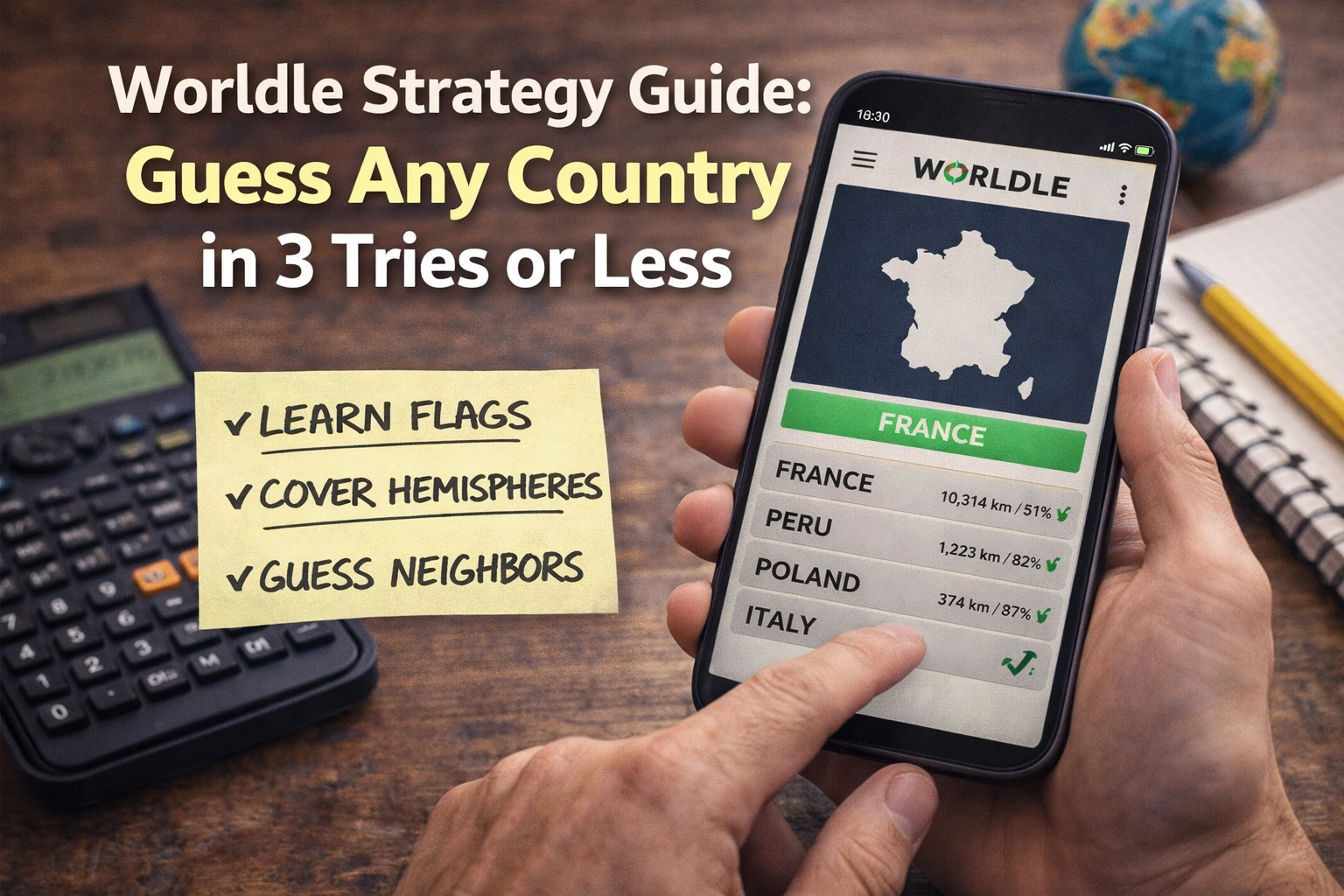
Why Worldle Border Clues Matter
Most countries share land borders with neighbors, and those borders shape the silhouette you see. A country with many neighbors looks very different from one with only one or two. Reading those land edges tells you the region before the first arrow even appears.
Strong worldle border clues reading also pairs with the landlocked test. If the whole outline is borders with no sea, the target is landlocked, and your guesses should skip every coastal country. Our Worldle landlocked countries guide covers that angle, because borders and landlocked status are two sides of the same coin.
Way One: Count the Land Edges
Look at the silhouette and count how many sides look like land borders rather than coast. Many borders means a busy neighborhood in the middle of a continent. Few borders means a country on the edge of a landmass or a peninsula. This count alone narrows the map enormously.
Make the border count your first silhouette habit. When you read worldle border clues by number, a many neighbor outline sends you to the heart of continents, while a one neighbor outline sends you to famous pairs. The count is the fastest fact the outline gives you.
Way Two: Learn the Famous Neighbor Pairs
Some countries are famous for sharing one long border with a single giant neighbor. When the silhouette shows one dominant straight edge, think of those famous pairs. These games solve fast, because only a few countries in the world wear that shape.
Study the great single border pairs until their outlines feel familiar. Our Worldle country shapes guide helps you memorize them. When worldle border clues point at a famous pair, your first real guess can be a confident strike. Neighbor knowledge is free points.
Way Three: Combine Borders With the Continent
A border count means more once you know the continent. Many borders in the middle of Africa means something different from many borders in the middle of Europe. Stack the two facts and the candidate list shrinks to a neighborhood you can actually name.
Always read the border and the region as a pair. Our Worldle continent clues guide sharpens the second half. When you combine worldle border clues with a continent read, your second guess lands near the target. Two facts beat one fact every time.
Way Four: Use Borders to Confirm the Arrow
The first arrow points toward the target, and the borders confirm the neighborhood it points to. If the arrow says east and the silhouette shows many land edges, the target sits deep inside a continental cluster. If the arrow says west toward the sea, the borders should be few.
Let the arrow and the borders check each other. Our Worldle direction arrows guide keeps your arrow reading clean. When worldle border clues agree with the arrow, commit to the neighborhood and guess inside it. Agreement between clues is the signal to strike.
Way Five: Spot the Enclave Shapes
A few countries sit entirely inside another country, and their silhouettes show borders on every side with no sea at all. These enclave shapes are unmistakable once you have seen them. When the outline is all borders, think small and surrounded.
Memorize the handful of enclave countries so they never surprise you. This tiny piece of worldle border clues knowledge turns a confusing silhouette into an instant answer. Our Worldle first guesses guide helps you open well on shape days. The rarest shapes are the easiest to learn.
Way Six: Rule Out Islands When Borders Show
If the silhouette shows clear land borders, the target cannot be an island nation. It sounds obvious, yet players guess islands at bordered outlines because the island name feels familiar. The land edge is a hard fact; honor it.
Keep the island test and the border test as a pair of opposites. Our Worldle island nations guide covers the other side. Disciplined worldle border clues play means every land edge rules out the same island answers. Let the borders do the eliminating.
Way Seven: Practice Border Counting in a Row
Dedicate a practice session to border counting, where you name the number of land edges before looking at any arrow. Ten rounds of this drill will rewire how you see outlines. You will start noticing neighbor counts the way a local notices street names.
Practice play gives you unlimited silhouettes to count. Our Worldle practice mode guide sets up your training. When worldle border clues become instant, the daily game feels calmer, because the outline already told you the neighborhood. Counting becomes second nature.
Way Eight: Review Border Misses Every Week
Once a week, look at the games where the borders fooled you. Did you miscount the land edges? Did you guess an island at a bordered outline? Most players repeat the same one or two border errors. Finding yours is worth more than any new trick.
Keep a short log of border reads and what the correct read was. Our Worldle results analysis guide gives you a review template. Over a month, your worldle border clues accuracy will climb steadily. The players who improve fastest study their own misses.
Frequently Asked Questions About Worldle Border Clues
Can you really count borders from the silhouette?
You can estimate well enough to guide your guesses. The exact count matters less than the feel: many, few, or none.
What if the borders look like coastline?
Then let the arrow and distance decide. When the outline is ambiguous, the other clues pick the winner.
Do borders help with peninsulas?
They help a lot, because peninsulas mix one or two borders with long coasts. Our Worldle coastline clues guide pairs well with border reading.
Do border clues work near the equator?
They work everywhere, because neighbors exist on every continent. Our Worldle equator clues guide adds the middle line angle.
Read Neighbor Lines Like a Pro
Tomorrow, count the land edges before anything else, name the famous pairs, and let the borders confirm the arrow. That three step routine turns every outline into a neighborhood map. Your games will feel precise, confident, and much shorter.
Extra Worldle Border Clues Habits
Trace famous borders with your finger on a paper map once a week. When reading the news, notice which countries share long borders. Quiz yourself on neighbor counts during downtime. Small habits like these turn worldle border clues from a concept into an instinct you carry into every game without effort.
More Worldle Border Clues Study Ideas
Deepen your map reading with our Worldle clues pillar and test your border reads on the official Worldle site until the neighbor lines feel familiar. Try a week of border counting practice and log your neighborhood accuracy. Play five games where you write down the border count before guess one. With worldle border clues as your map, every line will point to the answer.

One Comment