
Worldle Continent Clues: 8 Proven Ways to Read Every Continent
Learning worldle continent clues is one of the fastest ways to turn a scattered map into a solvable puzzle. Every guess in Worldle hands you a distance in kilometers, a direction arrow, and a closeness score, and the shape of the country you see sits inside one of the great land masses of the earth. Players who can read worldle continent clues narrow the field from nearly two hundred countries to a single region in one move. This guide gives you eight proven ways to use continent knowledge so your guesses land closer and your wins come more often.
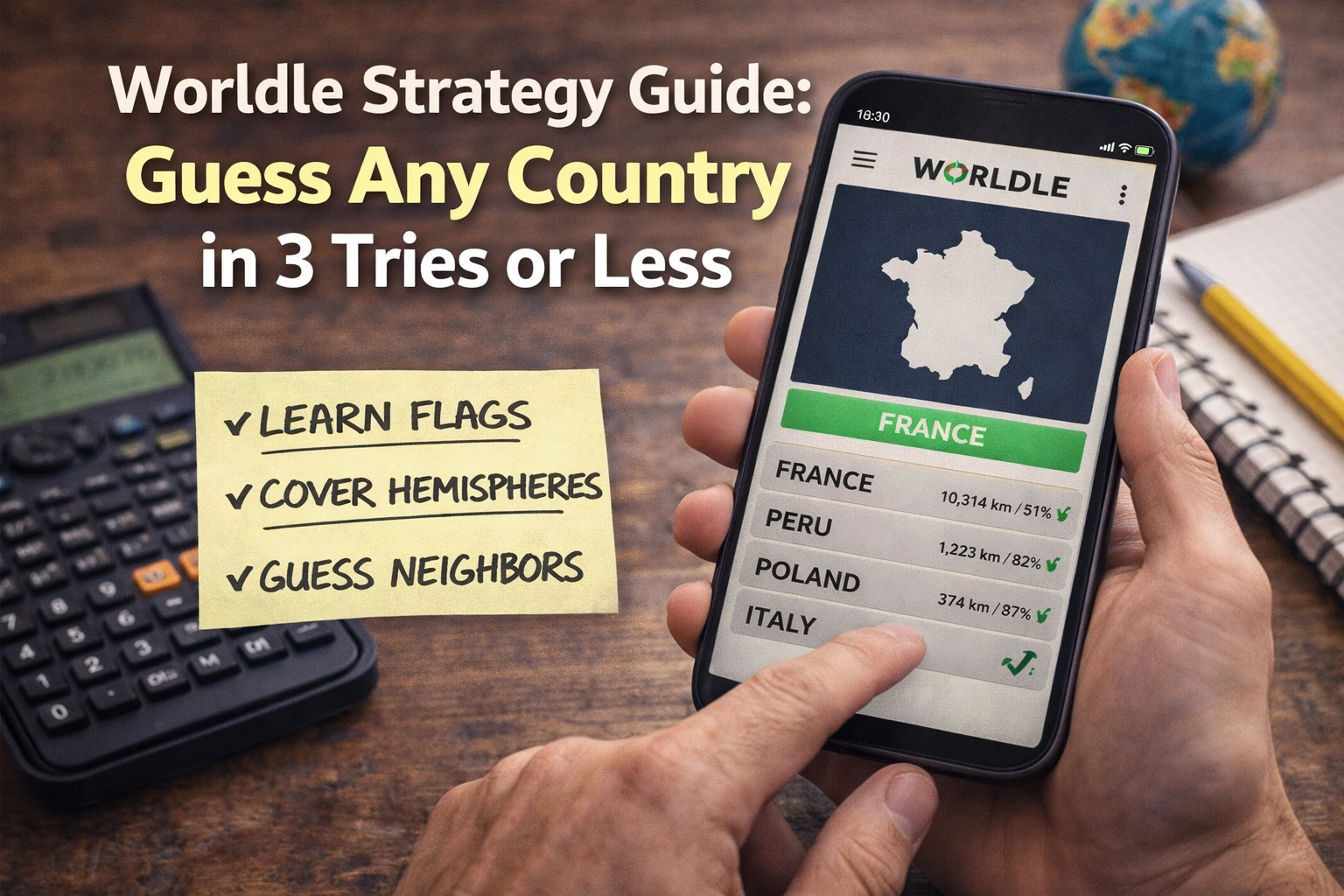
Why Worldle Continent Clues Matter
Worldle shows you the outline of a country and asks for its name. Without continent knowledge, that outline floats in a void. With strong worldle continent clues, the outline snaps into a familiar neighborhood at once. You stop guessing blind and start guessing inside a region.
Picture a shape you do not recognize. If your distance clue says you are 9,000 kilometers away from your opener, you know the answer sits on another land mass. That single read wipes out most of the world in one guess, and it comes from pairing the number with your continent map.
Way One: Learn the Six Continent Shapes by Heart
Start with the big picture. Learn where Africa, Europe, Asia, North America, South America, and Oceania sit, and learn their general outlines. When the daily shape appears, your first job is to place it inside one of these six regions. This habit makes worldle continent clues readable before you even type a guess.
Spend a few minutes each week looking at a blank world map. Name the continent each region belongs to, then name two or three countries inside it. Over a month, this simple drill builds the map memory that separates strong players from lucky ones. For a broader view of every hint type, read our guide on how to read Worldle clues.
Way Two: Use Distance Numbers to Jump Continents
The distance number is the fastest continent filter in the game. A guess in Europe that returns 12,000 kilometers points at the far side of the planet, which usually means Asia, Oceania, or the Americas. Our Worldle distance clues guide explains how to read these numbers with more precision.
Practice sorting distances into bands. Under 2,000 kilometers usually means the same continent. Between 3,000 and 6,000 usually means a neighboring region. Over 8,000 usually means the opposite side of the globe. Reading worldle continent clues this way turns one number into a map.
Way Three: Combine the Arrow With the Continent
The direction arrow tells you which way to move from your guess, and the continent tells you where the journey ends. If your arrow points southeast across a huge distance, draw the line on your mental map and see which continent it crosses. Our Worldle direction arrows guide shows how to read every arrow with care.
A common mistake is following the arrow without naming the continent. You drift across the map one guess at a time. Instead, name the target continent first, then pick a country inside it. This keeps worldle continent clues working together instead of alone.
Way Four: Start From a Central Country You Know
Pick an opener you know cold, and keep it the same every day. A central country gives you clean distance and direction feedback that is easy to read against the continent map. Our Worldle first guesses guide explains how to choose an opener that splits the globe.
When you always start from the same place, you learn its landmark distances by heart. You will know what 5,000 kilometers north feels like and what 10,000 kilometers east feels like. That memory is the foundation of fast worldle continent clues reading.
Way Five: Study Africa Region by Region
Africa breaks more streaks than any other continent because it holds so many countries players rarely see on maps. Break it into five regions in your mind: North Africa, West Africa, East Africa, Central Africa, and Southern Africa. Learning a few anchor countries in each region changes everything.
When your worldle continent clues point at Africa, guess one anchor country to find the region, then zoom in. This two step method saves guesses compared with naming random countries. For more ways to sharpen your daily play, see our Worldle practice mode guide.
Way Six: Study Europe, Asia, and the Americas
Europe is small and dense, so shapes there feel familiar, but the smaller countries can still surprise you. Asia is vast, which means distance clues spread across it and arrows matter more. North America and South America stretch long, so north to south arrows do a lot of work for you.
Give each of these regions one study session per week. Look at the shapes, name the neighbors, and play a few practice rounds focused on that region. Steady region study makes worldle continent clues feel natural instead of stressful.
Way Seven: Handle Island Nations With Continent Logic
Island nations cause trouble because their outlines look tiny and give little to read. The trick is to stop reading the shape and start reading the continent logic. The distance and arrow still tell you which ocean and which region the island belongs to.
Learn which oceans sit beside which continents. The Pacific islands sit with Oceania. The Caribbean islands sit with North America. The Atlantic islands near Africa sit with Africa. When worldle continent clues point at water, the ocean name is your region.
Way Eight: Drill Continent Clues Until They Are Instant
Knowledge only helps when it is fast. Set aside ten minutes a day for a continent drill. Open a blank map, point at random countries, and name their continent and region out loud. Speed matters because the daily puzzle rewards quick confident reads.
You can also drill inside the game. Play on the official Worldle site and force yourself to name the continent before your second guess. This small rule builds the habit that makes worldle continent clues automatic.
Frequently Asked Questions About Worldle Continent Clues
Do I need to memorize every country? No. You need the continent map, a few anchors per region, and the habit of naming the region before guessing. That trio covers most dailies.
What if the shape looks like nothing I know? Then trust the numbers. The distance and arrow will point you at a continent, and our guide to guessing countries faster shows how to finish from there.
Can I play more than once a day? Yes. Use the official Worldle site practice options or revisit past puzzles to drill the regions you miss most.
Read Continents and Win More
Strong worldle continent clues turn the world map from a maze into a menu. Learn the six continents, sort distances into bands, pair arrows with regions, and drill until the reads feel instant. Do this and your average guesses will drop.
Start today. Pick your opener, name the continent on every guess, and watch your geography grow. Your next streak starts with a map you actually know.
Extra Worldle Continent Clues Habits
Keep a small notebook of the regions that break your streaks. Write the continent, the country, and what confused you. Review it weekly and your weak regions will shrink.
Play one slow game each week with no time pressure. Read every clue twice, name the continent out loud, and enjoy the geography. Slow games build the deep map memory that fast games cannot.



4 Comments